

How Can Digital Libraries Improve Information Literacy?
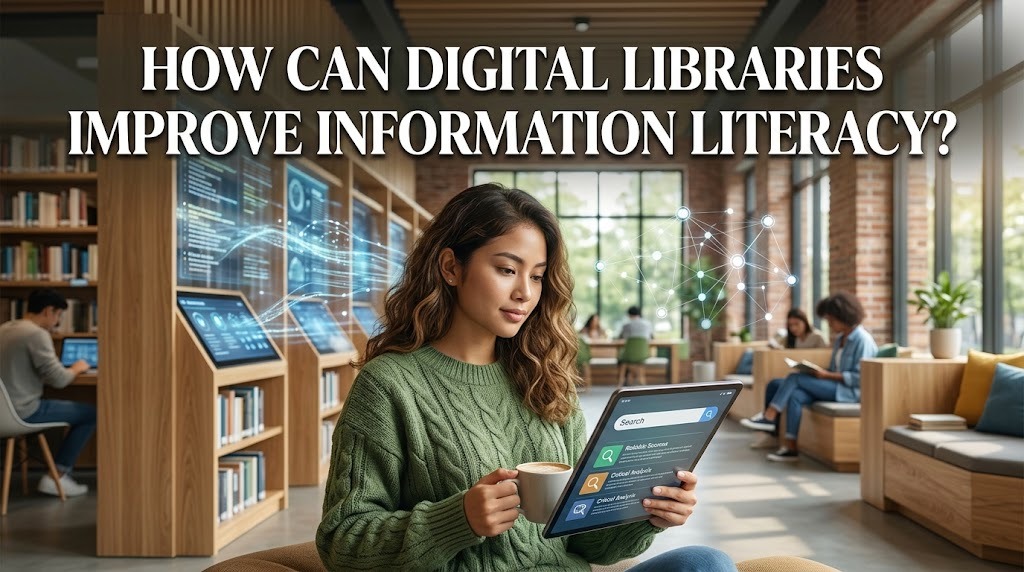
Information literacy is an important skill for students living in an increasingly digital world. Students encounter enormous amounts of information through websites, social media, online platforms, and academic resources every day. However, not all information available online is accurate, relevant, or trustworthy. Digital libraries can help students develop the ability to search, evaluate, understand, and use information responsibly. By using digital library resources regularly, students can strengthen important research skills that support both academic success and lifelong learning.
TEACHING STUDENTS HOW TO SEARCH FOR INFORMATION
Digital libraries can improve information literacy by helping students learn how to search for relevant information effectively. Instead of entering random words into a general search engine, students can learn to use specific academic keywords. Digital library systems often provide search functions based on titles, authors, subjects, keywords, and publication information. These features encourage students to think carefully about what information they actually need.
Students can also learn how to refine their searches when the first results are too broad or unrelated. They may use more specific terms, alternative keywords, or available filters to find better materials. This process teaches students that effective research requires strategy and patience. As students practice searching, they can become more confident in finding information that is directly connected to their academic needs.
HELPING STUDENTS EVALUATE SOURCE CREDIBILITY
Finding information is only one part of information literacy. Students must also determine whether a source is credible and appropriate for academic use. Digital libraries provide opportunities for students to examine authors, publishers, journals, publication dates, and other source details. These characteristics can help students understand where information comes from and whether it deserves further consideration.
Students can compare information from multiple sources to identify consistent evidence and different perspectives. They can also check whether claims are supported by research or reliable evidence. Developing this habit can reduce the risk of using inaccurate information in academic assignments. Over time, students can become more careful and critical when evaluating information both inside and outside digital libraries.
DEVELOPING CRITICAL READING SKILLS
Digital libraries can encourage students to read academic materials more critically. Critical reading means going beyond simply understanding the words and considering the evidence, arguments, assumptions, and conclusions presented by an author. Students can examine how a source supports its claims and whether the evidence is relevant to the topic. This approach can make reading a more active part of the learning process.
Critical reading is particularly important when students work with different sources that present different opinions. Instead of accepting every statement immediately, students can compare arguments and consider the quality of supporting evidence. This helps them develop independent judgments based on information rather than assumptions. Such skills are useful not only for assignments but also for making informed decisions in everyday life.
ENCOURAGING RESPONSIBLE USE OF INFORMATION
Information literacy also involves knowing how to use information ethically and responsibly. Digital libraries provide students with access to materials created by authors, researchers, and publishers. Students should understand that these resources are protected by intellectual property and should not simply be copied without proper acknowledgment. Learning about citation and attribution is therefore an important part of responsible digital research.
Students can practice recording source details and citing references according to the requirements of their institution or assignment. They should also understand the difference between paraphrasing, summarizing, and directly quoting a source. These practices can help prevent plagiarism and demonstrate respect for the work of other authors. Responsible information use also strengthens the credibility of students' own academic writing.
SUPPORTING INDEPENDENT RESEARCH AND LEARNING
Digital libraries can help students become more independent researchers. Instead of relying entirely on information provided by teachers, students can explore additional materials according to their own academic questions and interests. They can search for books, journals, and research publications that provide different perspectives on a topic. This process encourages curiosity and greater responsibility for their own learning.
Independent research also requires students to make decisions about which sources are useful and how information should be applied. They must organize their findings, compare evidence, and develop conclusions based on credible information. These activities strengthen information literacy through practical experience. As students become more familiar with digital research, they can apply these skills to future academic projects and professional situations.
CONCLUSION
Digital libraries can improve information literacy by helping students search effectively, evaluate sources, read critically, and use information responsibly. They provide an organized environment where students can practice important research skills while accessing academic materials. These skills are increasingly valuable because modern students face a constantly growing amount of digital information.
However, digital libraries are most effective when students actively develop good research habits. Students should question information, compare credible sources, understand citation practices, and avoid accepting online claims without evaluation. By combining digital library access with critical thinking and responsible information use, students can become more capable and independent learners.
Recent Posts

Bagaimana Sistem SKS pada Program Kuliah... 22.11.2026/35 View

How Does Technology Make Daily Evaluation... 21.11.2026/69 View

Apa Strategi Menghadapi Kesenjangan antara Kompetensi... 21.11.2026/70 View

Mengapa Inventaris Aset Penting bagi Kelancaran... 21.11.2026/67 View

When Should Musicians Join a Record... 21.11.2026/69 View
