

How Can Digital Libraries Increase Reading Interest Among Students?
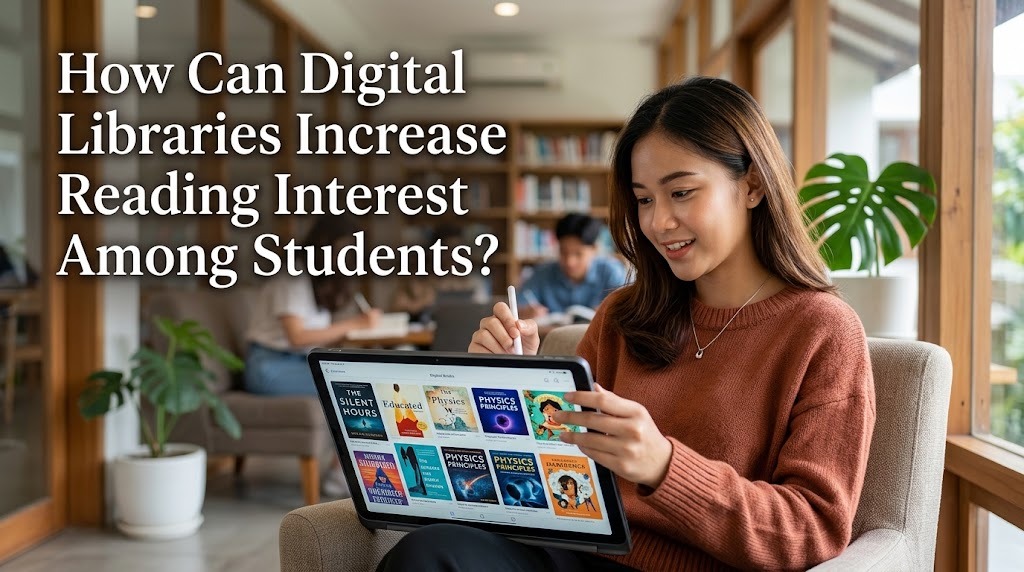
Reading is an important part of education because it helps students develop knowledge, vocabulary, critical thinking, and a deeper understanding of different subjects. However, some students may find reading less attractive when learning materials are difficult to access or limited to traditional formats. Digital libraries offer a modern approach by making books and academic resources easier to discover and access. Through digital platforms, students can explore a wide range of materials using devices they already use in their daily lives. This convenience can create a more interesting and flexible reading experience.
MAKING READING MATERIALS EASIER TO ACCESS
One of the main ways digital libraries can increase reading interest is by providing easy access to reading materials. Students can search for electronic books, journals, articles, and other educational publications without having to visit a physical library. This makes it easier to find materials that match their subjects, assignments, or personal interests. When resources are available through computers, tablets, or smartphones, students can read in places that are convenient for them. Easier access can remove some of the barriers that may prevent students from reading regularly.
Digital libraries can also provide students with a wider selection of materials than they might immediately find in a small physical collection. They can explore different authors, topics, genres, and academic subjects based on the resources available through their institution or library service. Having more choices can help students discover reading materials that are personally relevant. As students find resources they enjoy or consider useful, they may become more willing to develop regular reading habits.
PROVIDING A CONVENIENT READING EXPERIENCE
Convenience plays an important role in encouraging students to read. Digital libraries allow students to access reading materials without carrying several physical books from one location to another. Depending on the platform and access rights, students may be able to read materials directly online or use permitted features for later access. This makes reading easier to incorporate into daily activities.
Students can also choose when they want to read based on their individual schedules. They may read before class, during a break, at home, or while traveling between activities. This flexible reading environment can make reading feel less restrictive than relying only on a physical library. When reading becomes easier to fit into everyday routines, students may have more opportunities to practice it consistently.
OFFERING DIVERSE AND RELEVANT CONTENT
Students have different interests, academic goals, and reading preferences. Digital libraries can support these differences by offering access to diverse educational content. Depending on the collection, students may find materials covering science, technology, business, education, literature, social sciences, and many other fields. This variety gives students opportunities to explore subjects beyond their required coursework.
Relevant content can also make reading more meaningful. A student interested in technology, for example, may be more motivated to read articles or books related to digital innovation. Similarly, students working on academic projects can search for resources directly connected to their research topics. When students can easily discover information that matches their interests and needs, reading can become a more purposeful activity rather than simply an academic obligation.
SUPPORTING INTERACTIVE AND PERSONALIZED LEARNING
Digital reading can provide features that make the learning process more adaptable. Depending on the platform, students may have access to search functions, digital bookmarks, text navigation, and other reading tools. These features can help students locate specific information without manually searching through every page. Such tools can be useful when students are reviewing long academic publications or looking for particular concepts.
Digital libraries can also support different approaches to learning. Some students prefer reading an entire book, while others need to focus on specific chapters or sections related to their assignments. Search and navigation features can help students manage these different needs. However, students should still take time to read and understand the broader context instead of relying only on isolated keywords or short sections.
ENCOURAGING INDEPENDENT READING HABITS
Digital libraries can encourage students to become independent readers by giving them greater control over what they read and when they read it. Instead of depending entirely on materials selected by teachers, students can explore additional resources according to their academic interests. This freedom can encourage curiosity and motivate students to search for new information. Over time, independent exploration may help develop a stronger and more consistent reading habit.
Teachers and educational institutions can also support this process by introducing students to effective digital library strategies. Students can be encouraged to set reading goals, explore different subjects, and evaluate the quality of the sources they discover. Developing these habits can make reading a regular part of academic life. The goal is not simply to increase the number of materials students read, but to encourage meaningful, critical, and purposeful reading.
CONCLUSION
Digital libraries can increase reading interest among students by making educational materials more accessible, convenient, diverse, and flexible. Students can discover resources that match their academic needs and personal interests without depending entirely on physical library collections. Digital features can also make it easier to search, navigate, and organize reading materials. These advantages can encourage students to spend more time exploring information and developing their reading habits.
However, technology alone does not guarantee greater interest in reading. Students still need motivation, suitable materials, and guidance on how to use digital resources effectively. When digital libraries are combined with independent learning, relevant content, and responsible information use, they can become valuable tools for developing stronger reading habits among modern students.
Recent Posts

Bagaimana Sistem SKS pada Program Kuliah... 22.11.2026/35 View

How Does Technology Make Daily Evaluation... 21.11.2026/69 View

Apa Strategi Menghadapi Kesenjangan antara Kompetensi... 21.11.2026/70 View

Mengapa Inventaris Aset Penting bagi Kelancaran... 21.11.2026/67 View

When Should Musicians Join a Record... 21.11.2026/69 View
