

How Can Digital Libraries Provide Access to Knowledge Anytime?
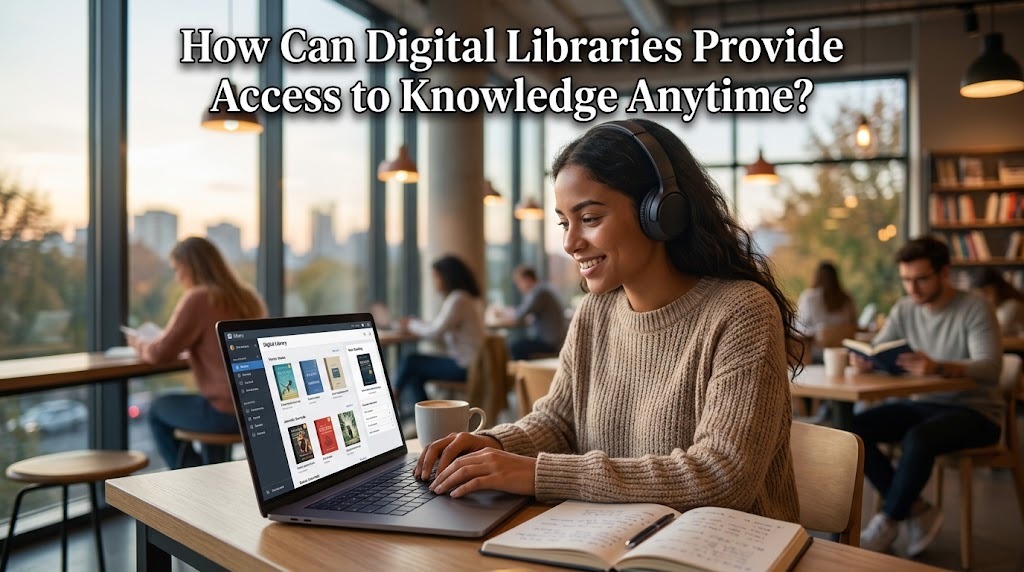
Access to knowledge is an important part of modern education because students need reliable information to study, conduct research, and develop new skills. Traditional libraries provide valuable resources, but access can sometimes depend on physical locations and operating hours. Digital libraries offer another approach by making electronic books, academic journals, research papers, and other educational materials available through digital platforms. This allows students to search for information without always needing to visit a physical library. As education becomes increasingly digital, anytime access to knowledge can support more flexible and independent learning.
PROVIDING 24 HOUR DIGITAL ACCESS
One of the main advantages of digital libraries is the ability to provide access to educational resources beyond traditional library hours. Students can search available digital collections at different times according to the services and access rights provided by their institution. A student studying late at night, for example, may be able to access an electronic book or journal without waiting for the physical library to open. This can be especially useful when students have assignments with deadlines.
Anytime access also helps students create study routines that match their individual schedules. They can read materials before class, during breaks, or while completing independent study at home. This flexibility reduces dependence on a specific physical location. However, continuous availability depends on factors such as internet access, platform maintenance, institutional subscriptions, and licensing conditions.
ACCESSING KNOWLEDGE FROM DIFFERENT LOCATIONS
Digital libraries make it possible for students to access many resources without being physically present inside a library building. With a suitable internet connection and authorized access, users can search for materials from home, campus, or other locations. This is particularly valuable for students participating in online and remote education. It can also support learners who live far away from their educational institutions.
Location flexibility can make research more convenient. Students working on an assignment can search for references without interrupting their activities to travel to a physical library. They can continue researching when they move between different learning environments. This convenience can encourage students to make information searching a more regular part of their academic routine.
OFFERING A WIDE RANGE OF EDUCATIONAL RESOURCES
Digital libraries can provide access to various forms of digital knowledge resources. Depending on the collection, students may find electronic books, scholarly journals, conference publications, research papers, reports, and other educational materials. Having different types of resources allows students to explore topics from multiple perspectives. It can also help them select materials that are appropriate for different academic tasks.
A diverse digital collection can support both required coursework and independent exploration. Students may search for additional explanations when a classroom topic is difficult to understand. They can also investigate subjects that match their personal interests and future academic goals. However, students should always consider the credibility, relevance, and publication details of the resources they choose.
SUPPORTING FAST AND EFFICIENT INFORMATION SEARCHES
Digital libraries can make knowledge easier to discover through search engines, keywords, filters, and digital catalogs. Instead of manually checking physical shelves, students can enter specific terms to locate potentially relevant materials. Search filters can further narrow results based on factors such as author, subject, publication date, or document type when those features are available. This can reduce the time required to locate useful references.
Efficient searching does not mean students should simply select the first result they see. They need to review titles, abstracts, publication information, and the actual content of sources before deciding whether they are useful. Learning how to search strategically can improve research efficiency while also strengthening students' information literacy. These skills can remain useful throughout higher education and professional life.
ENCOURAGING INDEPENDENT AND LIFELONG LEARNING
Anytime access to knowledge can encourage students to become independent learners. They do not always have to wait for classroom explanations or specific instructions before exploring additional information. Digital libraries can give them opportunities to investigate questions, read beyond course materials, and develop their understanding according to their own interests. This can encourage curiosity and greater responsibility for personal learning.
The benefits can extend beyond formal education. People can continue using digital information resources to develop professional knowledge or learn about new subjects throughout their lives, depending on available access. Students who become comfortable with independent digital research may find it easier to continue learning after graduation. In this way, digital libraries can contribute to a culture of lifelong learning and continuous knowledge development.
CONCLUSION
Digital libraries can provide access to knowledge anytime by combining digital collections, remote accessibility, flexible search systems, and diverse educational resources. Students can find academic materials without always depending on the location or opening hours of a traditional library. This flexibility can support online learning, academic research, independent study, and personal development.
Nevertheless, access to information should always be accompanied by responsible information use. Students need to evaluate sources carefully, respect copyright, and use appropriate references when completing academic work. When combined with critical thinking, digital literacy, and independent learning habits, digital libraries can make knowledge more accessible and support students throughout their educational journey.
Recent Posts

Bagaimana Sistem SKS pada Program Kuliah... 22.11.2026/35 View

How Does Technology Make Daily Evaluation... 21.11.2026/69 View

Apa Strategi Menghadapi Kesenjangan antara Kompetensi... 21.11.2026/70 View

Mengapa Inventaris Aset Penting bagi Kelancaran... 21.11.2026/67 View

When Should Musicians Join a Record... 21.11.2026/69 View
