

How Can Digital Libraries Support Online and Remote Education?
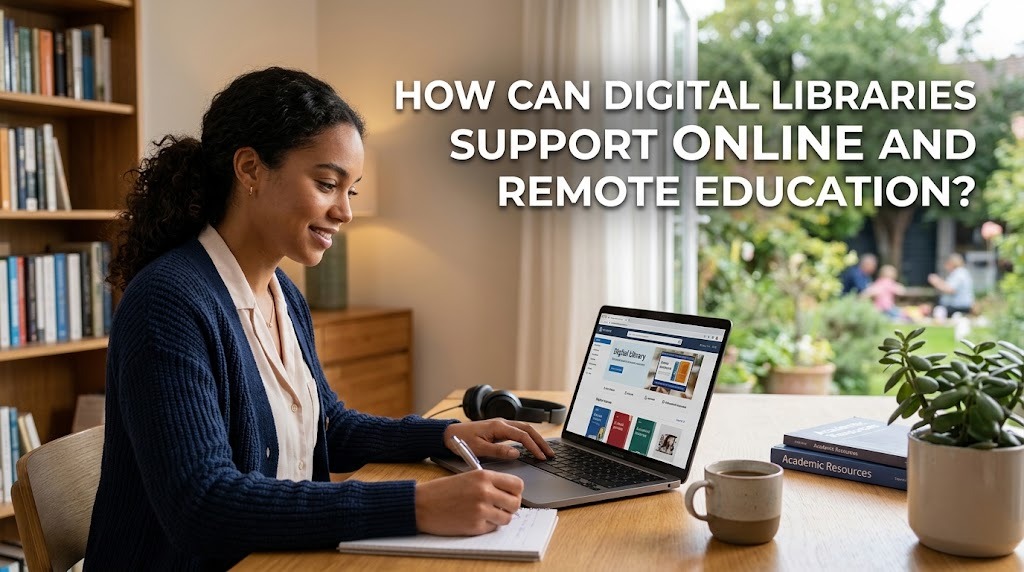
The development of digital technology has changed how students access information and participate in education. Online and remote learning allow students to study without always being physically present on campus, but they still need reliable learning materials to understand their subjects. Digital libraries can help meet this need by providing access to electronic books, academic journals, research papers, and other educational resources. Students can use these materials through digital platforms while studying from home or other locations. As online education continues to grow, digital libraries can become an important part of a flexible and accessible learning environment.
PROVIDING ACCESS TO LEARNING MATERIALS
Digital libraries support online education by giving students access to digital learning resources without requiring them to visit a physical library. Depending on the available collection and access rights, students can find electronic books, journals, research publications, and other academic materials. These resources can complement information provided during online classes. Students can also search for additional references when they need a deeper understanding of a particular topic.
This access is particularly useful for students who live far from educational institutions. Instead of depending entirely on printed materials, they can use digital resources from locations with suitable internet access. This can make remote education more practical and reduce some of the challenges associated with distance learning. However, students should always follow the access rules and licensing conditions of the digital library they use.
SUPPORTING FLEXIBLE ONLINE LEARNING
Online students often have different schedules and learning environments. Digital libraries allow students to search for resources according to their individual study schedules rather than depending entirely on physical library operating hours. They can access permitted resources before an online class, after completing other responsibilities, or during independent study sessions. This flexibility can help students organize their learning more effectively.
Flexible access also supports students who combine education with work, family responsibilities, or other activities. They can choose when to read academic materials and determine which resources are most relevant to their current coursework. This gives students greater control over their learning process. At the same time, students need good time management so that easy access to resources does not lead to procrastination.
SUPPORTING ASSIGNMENTS AND ACADEMIC RESEARCH
Online and remote education often require students to complete assignments independently. Digital libraries can provide academic references for assignments and research projects. Students can search for relevant publications, compare different sources, and gather information to support their arguments. This can be especially useful when an assignment requires evidence from scholarly or educational sources.
Digital library search tools can also make research more efficient. Students can use keywords, subjects, authors, titles, and available filters to narrow their searches. Instead of collecting information randomly from the internet, they can begin their research with organized academic collections. Nevertheless, students still need to evaluate the credibility, relevance, and publication details of each source before including it in their work.
CONNECTING STUDENTS WITH DIVERSE RESOURCES
Another benefit of digital libraries is that they can expose students to a wide range of educational materials. Depending on the collection, students may explore resources from different subjects, authors, institutions, and academic perspectives. This can help them develop a broader understanding of their coursework. It can also encourage students to explore topics beyond the materials directly provided by their instructors.
Access to diverse resources is particularly valuable for research-based learning. Students can compare ideas from multiple publications and identify similarities or differences between sources. This process can encourage critical thinking and help students form more informed conclusions. However, having many resources available does not mean students should use all of them, because quality and relevance should remain the main considerations.
DEVELOPING INDEPENDENT DIGITAL LEARNING SKILLS
Digital libraries can encourage students to develop independent learning and digital research skills. In remote education, students often have to take greater responsibility for finding information and managing their study activities. Learning how to search digital collections, identify useful sources, and organize references can strengthen their ability to learn independently. These skills can also be valuable beyond formal education.
Students should also develop information literacy when using digital libraries. They need to distinguish reliable academic information from unsupported claims and understand how to use sources responsibly. Proper citation is another important part of academic work because students must acknowledge the ideas and research of other authors. By developing these skills, students can become more confident and responsible digital learners.
CONCLUSION
Digital libraries can strongly support online and remote education by providing flexible access to academic resources, research materials, and learning content. They allow students to find useful references without always needing to visit a physical library. Digital collections can also support assignments, independent research, and flexible study schedules. These advantages make digital libraries a valuable complement to online classes and remote learning programs.
However, effective use of digital libraries requires more than simply accessing information. Students need to develop information literacy, research skills, time management, and responsible digital habits. When students know how to search, evaluate, organize, and properly cite information, digital libraries can help create a more effective and independent online learning experience.
Recent Posts

Bagaimana Sistem SKS pada Program Kuliah... 22.11.2026/35 View

How Does Technology Make Daily Evaluation... 21.11.2026/69 View

Apa Strategi Menghadapi Kesenjangan antara Kompetensi... 21.11.2026/70 View

Mengapa Inventaris Aset Penting bagi Kelancaran... 21.11.2026/67 View

When Should Musicians Join a Record... 21.11.2026/69 View
