

How Can Digital Technology Help Address Climate Change?
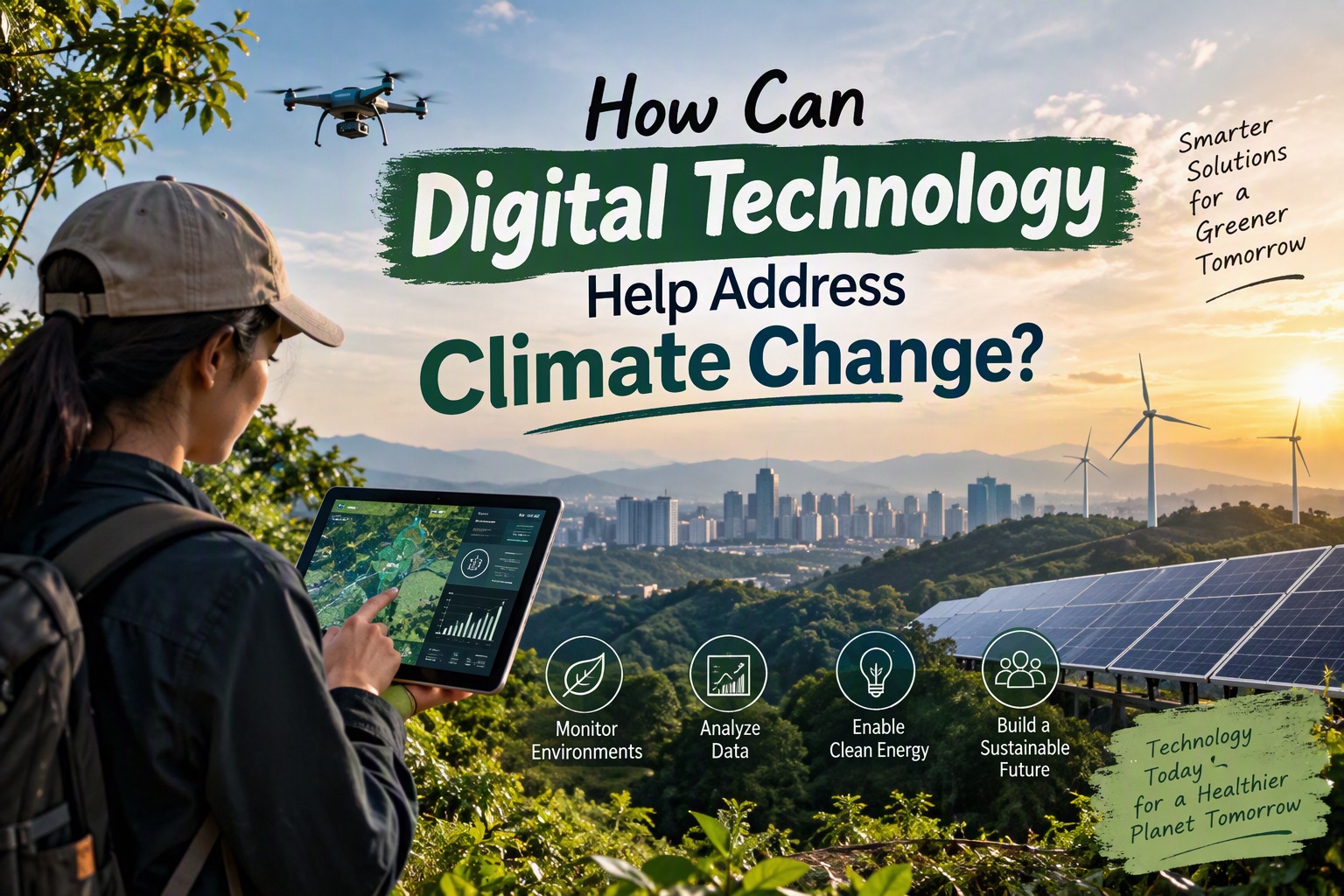
Climate change is one of the biggest challenges facing the world today. Rising temperatures, extreme weather, and changing rainfall patterns affect people, animals, and the environment. Although reducing greenhouse gas emissions requires action from governments, businesses, and individuals, digital technology can play an important role in addressing climate change. Tools such as artificial intelligence, satellite monitoring, and smart energy systems help people understand environmental problems and develop more effective solutions. By using these technologies responsibly, society can reduce emissions, improve energy efficiency, and protect natural resources.
UNDERSTANDING CLIMATE CHANGE THROUGH DIGITAL TECHNOLOGY
Digital technology helps scientists collect and analyze large amounts of environmental data. Satellites, sensors, and weather monitoring systems can track temperature changes, deforestation, rising sea levels, and greenhouse gas emissions. This information allows researchers to identify environmental risks and understand how climate patterns change over time. For example, satellite images can reveal forest loss, while digital weather models help predict floods and droughts. Accurate environmental data supports better planning and helps governments and communities prepare for climate-related challenges.
USING ARTIFICIAL INTELLIGENCE TO PREDICT CLIMATE RISKS
Artificial intelligence (AI) can analyze complex data to identify patterns and improve climate predictions. It can help researchers study extreme weather events, estimate energy demand, and identify areas at risk of flooding or wildfires. Early warning systems can use digital forecasts to give communities more time to prepare for dangerous conditions. AI can also help scientists compare possible climate solutions and evaluate their potential effects. However, AI systems must use reliable data and sufficient computing resources, because operating data centers also consumes electricity and can produce emissions when powered by fossil fuels.
IMPROVING RENEWABLE ENERGY AND ENERGY EFFICIENCY
Digital technology makes it easier to manage renewable energy sources such as solar and wind power. Smart grids use digital monitoring and automated controls to balance electricity supply and demand more efficiently. This is important because solar and wind energy production changes according to weather conditions. Smart meters and energy management systems can also help households and businesses understand their electricity use and reduce unnecessary consumption. By combining digital systems with cleaner energy sources, communities can lower carbon emissions and reduce dependence on fossil fuels.
SUPPORTING SUSTAINABLE TRANSPORTATION
Transportation produces a significant amount of greenhouse gas emissions, especially when vehicles rely on gasoline or diesel. Digital tools can help reduce these emissions by improving traffic management, public transportation, and travel planning. For example, navigation applications can suggest routes that avoid heavy traffic, while public transportation applications help passengers find convenient bus and train services. Electric vehicle charging systems can also manage charging times to use electricity more efficiently. When combined with walking, cycling, and reliable public transportation, these technologies can support cleaner and more efficient mobility.
HELPING BUSINESSES REDUCE CARBON EMISSIONS
Businesses can use digital platforms to measure their energy consumption, track emissions, and identify areas where resources are being wasted. Carbon tracking software helps organizations monitor emissions from buildings, manufacturing, transportation, and supply chains. Smart sensors can detect unnecessary energy use in offices and factories, allowing companies to improve their operations. Digital systems can also support remote meetings, reducing the need for some business trips. However, companies should assess the full environmental impact of their technology, including electricity consumption, equipment manufacturing, and electronic waste, rather than assuming that every digital solution automatically reduces emissions.
PROTECTING FORESTS AND NATURAL RESOURCES
Forests absorb carbon dioxide and provide habitats for many species, making their protection essential in the fight against climate change. Satellite imagery, drones, and geographic information systems help environmental organizations monitor forest conditions and detect illegal logging or land-use changes. Digital sensors can also support the monitoring of soil moisture, water quality, and ecosystem health. These tools help authorities identify environmental damage more quickly and direct conservation efforts to areas that need attention. Nevertheless, technology works best when combined with effective environmental laws, local community participation, and long-term conservation programs.
RAISING PUBLIC AWARENESS THROUGH DIGITAL PLATFORMS
Digital platforms allow people to learn about climate change and share practical ways to reduce their environmental impact. Educational websites, online campaigns, and social media can explain topics such as energy conservation, recycling, and sustainable consumption. Mobile applications may help users monitor electricity use, plan low-emission journeys, or find recycling services. Accessible climate information can encourage individuals to make more environmentally responsible decisions. However, users should check information against reliable scientific sources because misleading content can create confusion and weaken public understanding of climate issues.
CHALLENGES OF USING DIGITAL TECHNOLOGY FOR CLIMATE ACTION
Although digital technology offers many benefits, it also creates environmental challenges. Data centers, communication networks, and electronic devices require electricity, while manufacturing digital equipment uses raw materials and generates emissions. Electronic waste can also harm the environment when devices are not reused, repaired, or recycled properly. In addition, some communities lack reliable internet access, digital skills, or the funding needed to adopt advanced systems. To address these problems, governments and businesses should invest in renewable electricity, energy-efficient equipment, responsible recycling, and wider access to digital services.
CONCLUSION
Digital technology can help address climate change by improving environmental monitoring, predicting climate risks, increasing energy efficiency, and supporting sustainable transportation. It can also help businesses measure emissions, protect forests, and educate the public. However, technology alone cannot solve climate change. Its effectiveness depends on responsible use, clean energy, strong environmental policies, and cooperation between governments, businesses, researchers, and communities. By combining digital innovation with practical climate action, society can make meaningful progress toward a more sustainable and low-carbon future.
Recent Posts

Bagaimana Sistem SKS pada Program Kuliah... 22.11.2026/48 View

How Does Technology Make Daily Evaluation... 21.11.2026/76 View

Apa Strategi Menghadapi Kesenjangan antara Kompetensi... 21.11.2026/78 View

Mengapa Inventaris Aset Penting bagi Kelancaran... 21.11.2026/73 View

When Should Musicians Join a Record... 21.11.2026/78 View
