

How Can Digital Technology Improve Modern Logistics Management?
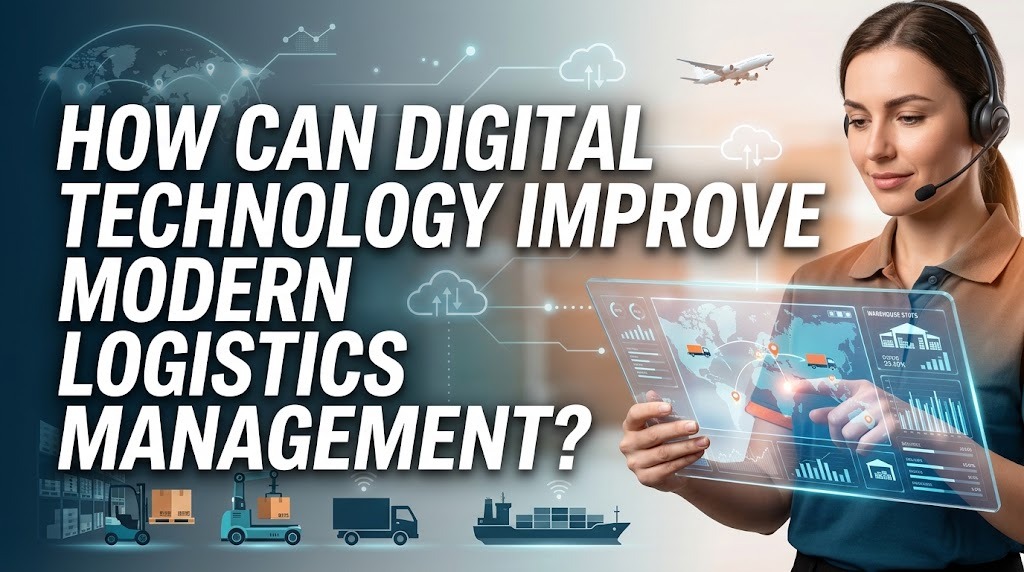
Digital technology has transformed modern logistics management by helping businesses move, store, and distribute products more efficiently. Companies increasingly use digital tools to monitor shipments, manage inventory, organize warehouses, and improve communication with suppliers and customers. Traditional logistics processes often depend on manual records, which can lead to errors, delays, and unnecessary expenses. With the support of technology, businesses can access accurate information, make faster decisions, and respond more effectively to changing customer demands. Digital technology in logistics management is therefore essential for improving productivity, reducing operational costs, and maintaining competitiveness in the modern business environment.
UNDERSTANDING DIGITAL TECHNOLOGY IN LOGISTICS
Digital technology in logistics refers to the use of software, electronic devices, and data-based systems to manage the movement and storage of goods. These technologies help businesses coordinate transportation, inventory, warehouse activities, and order fulfillment through connected systems. Instead of relying entirely on paperwork and manual communication, employees can access updated information through digital platforms.
For example, a distribution company can use logistics software to monitor incoming products, check available stock, and track customer deliveries. This information helps managers identify problems before they significantly affect operations. Digital integration also improves coordination between suppliers, warehouses, transportation providers, and customers. As a result, businesses can manage logistics activities more accurately and efficiently.
IMPROVING INVENTORY MANAGEMENT THROUGH DIGITAL SYSTEMS
Inventory management is one of the most important areas that benefits from digital technology. Inventory management software allows businesses to record incoming and outgoing products, monitor stock levels, and identify items that need replenishment. This reduces the risk of inaccurate records, excess inventory, and unexpected product shortages. Employees can also locate products more quickly because information is organized in a centralized system.
Businesses can use barcode scanners and RFID technology to identify products and update inventory records more efficiently. RFID uses radio waves to identify tagged items without requiring direct visual scanning in every situation. These tools can improve stock visibility and reduce manual counting errors. When combined with demand forecasting, digital inventory systems help businesses maintain appropriate stock levels and control storage expenses.
ENHANCING TRANSPORTATION AND REAL TIME TRACKING
Digital technology helps companies improve transportation planning and monitor deliveries more effectively. GPS tracking systems provide location information that allows logistics teams to follow vehicles and identify possible delays. Managers can use this information to adjust delivery schedules, communicate with drivers, and provide customers with more accurate updates. Better visibility also helps businesses respond to unexpected traffic conditions and other transportation problems.
Route optimization software can analyze delivery destinations, road conditions, vehicle capacity, and scheduling requirements to recommend efficient routes. This can reduce unnecessary travel, fuel consumption, and vehicle operating costs. Some systems also provide estimated arrival times and electronic delivery confirmations. Real time shipment tracking improves transparency and helps companies deliver products more reliably while strengthening customer confidence.
USING ARTIFICIAL INTELLIGENCE AND DATA ANALYTICS
Artificial intelligence and data analytics help businesses understand logistics performance and make better decisions. AI-powered systems can analyze historical sales, seasonal demand, delivery records, and other relevant information to identify patterns. These insights can help companies forecast product demand, plan inventory levels, and prepare for periods of increased activity. Better forecasting can reduce waste and prevent costly shortages.
Data analytics also helps managers evaluate important performance indicators, such as delivery time, transportation costs, warehouse productivity, and order accuracy. AI tools may support route planning, demand prediction, and the identification of unusual operational patterns. However, these systems depend on reliable data and appropriate human supervision. Combining data-driven insights with employee experience helps businesses make more informed decisions and improve logistics operations over time.
AUTOMATING WAREHOUSE AND ORDER FULFILLMENT PROCESSES
Digital technology can make warehouse operations faster and more organized by reducing repetitive manual tasks. Warehouse management systems help employees record product locations, manage stock movements, and organize picking and packing activities. Some warehouses also use automated conveyors, sorting equipment, and robots to move products between operational areas. These technologies can increase processing speed and reduce certain handling errors.
Automation is especially useful for businesses that process large numbers of orders or manage complex distribution networks. For example, an automated sorting system can direct packages toward the correct delivery area, reducing the time needed to prepare shipments. Electronic order processing can also connect customer purchases directly with inventory and shipping systems. Although automation requires investment, appropriate warehouse technology can improve productivity, support order accuracy, and reduce long-term operational inefficiencies.
STRENGTHENING COMMUNICATION AND LOGISTICS SECURITY
Effective communication is essential for coordinating suppliers, warehouse employees, transportation providers, and customers. Digital communication platforms allow businesses to share order updates, delivery schedules, and inventory information quickly. Integrated logistics systems reduce the need for repeated data entry and help different departments work with consistent information. This can prevent misunderstandings and make it easier to resolve delivery problems.
At the same time, businesses must protect the information stored in digital logistics systems. Cybersecurity measures, including access controls, data encryption, software updates, and regular backups, can help reduce the risk of unauthorized access and data loss. Employees should also receive training on safe technology use and recognize suspicious digital activity. By combining effective communication with appropriate security practices, companies can build logistics systems that are more reliable, coordinated, and resilient.
CONCLUSION
Digital technology improves modern logistics management by making transportation, inventory control, warehouse operations, and communication more efficient. Inventory software, GPS tracking, artificial intelligence, data analytics, and automation help businesses reduce errors, monitor performance, and make informed decisions. These tools can also improve delivery reliability and customer satisfaction when implemented appropriately. However, companies must consider implementation costs, employee training, data quality, and cybersecurity before adopting new systems. By choosing technology that matches their operational needs, businesses can reduce unnecessary expenses, increase productivity, and strengthen their competitiveness.
Recent Posts

Bagaimana Sistem SKS pada Program Kuliah... 22.11.2026/60 View

How Does Technology Make Daily Evaluation... 21.11.2026/87 View

Apa Strategi Menghadapi Kesenjangan antara Kompetensi... 21.11.2026/85 View

Mengapa Inventaris Aset Penting bagi Kelancaran... 21.11.2026/83 View

When Should Musicians Join a Record... 21.11.2026/87 View
