

How Can Educational Digitalization Improve Learning Access in Remote Areas?
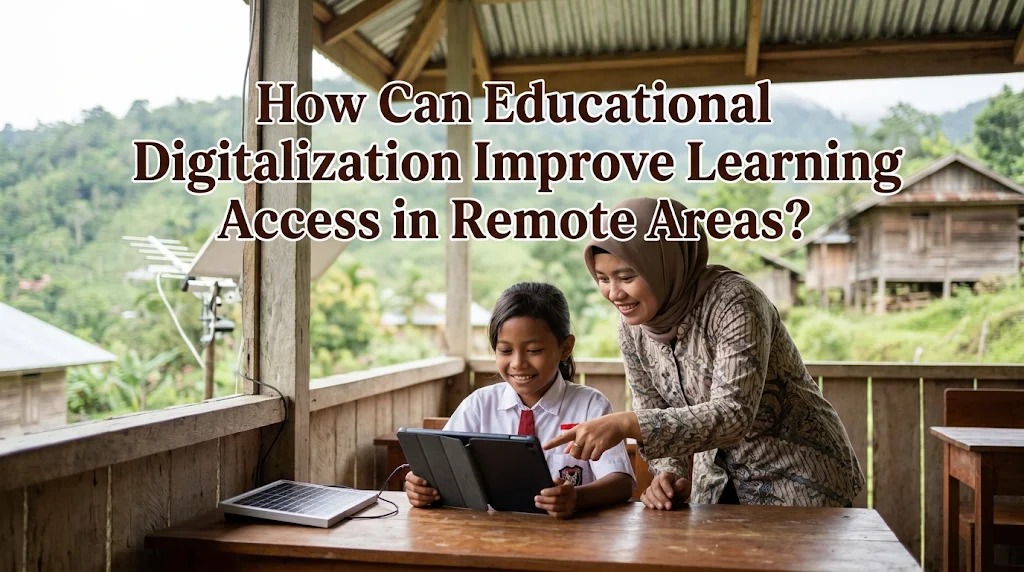
Educational digitalization has become an important solution for expanding access to education, particularly in remote areas. Many communities still face difficulties obtaining quality education because of long distances, limited school facilities, shortages of teachers, and inadequate transportation. These conditions can prevent students from receiving learning opportunities equal to those available in urban areas. Through digital technology, educational activities can become more accessible without requiring students to travel long distances.
Educational digitalization involves using internet connections, computers, smartphones, digital learning platforms, and other technological tools to support teaching and learning activities. These technologies allow students to access educational materials, communicate with teachers, and participate in online classes from different locations. When properly implemented, digital education can reduce geographical barriers and provide more learning opportunities for underserved communities. However, its success depends on reliable infrastructure, affordable technology, and support from schools, governments, and local communities.
EXPANDING ACCESS TO EDUCATIONAL MATERIALS
One of the main benefits of educational digitalization is the ability to provide learning materials to students in remote areas. Through digital libraries, electronic books, educational websites, and online learning platforms, students can access various educational resources without depending entirely on printed textbooks. They can explore subjects such as mathematics, science, languages, history, and technology through different learning materials. This is particularly beneficial for schools that have limited libraries or insufficient educational resources. Digital access allows students to obtain additional information that may not be available in their local communities.
Furthermore, digital learning materials can be accessed repeatedly according to students' learning needs. Students can download resources, watch recorded lessons, and review explanations whenever they have an internet connection. This flexibility helps them understand difficult subjects without depending entirely on classroom schedules. Teachers can also distribute digital materials to students more efficiently. As a result, digital educational resources can help reduce information gaps between students in remote and urban areas.
CONNECTING STUDENTS WITH TEACHERS THROUGH ONLINE LEARNING
Limited teacher availability is another challenge faced by educational institutions in remote areas. Some schools have difficulties finding teachers for particular subjects, which can affect the quality and variety of learning experiences. Educational digitalization can help address this problem through online classes, video conferences, and virtual learning platforms. Students can receive explanations from teachers who are located in different cities or regions without requiring physical meetings. This creates opportunities for students to learn subjects that may not be adequately supported by local educational facilities.
Online communication tools also make it easier for teachers to provide guidance and feedback. Students can ask questions through discussion forums, messaging applications, or virtual classrooms. Teachers can explain complicated topics, assign exercises, and monitor student participation through digital platforms. However, online instruction should be supported by effective teaching methods to maintain student engagement. Digital communication and virtual classrooms can strengthen educational connections when reliable internet access and appropriate supervision are available.
PROVIDING FLEXIBLE AND INCLUSIVE LEARNING OPPORTUNITIES
Educational digitalization allows students in remote areas to participate in learning activities with greater flexibility. Some digital platforms provide recorded lessons and downloadable materials that students can access according to their schedules. This is helpful for students who face transportation difficulties, have family responsibilities, or live far from school facilities. They can organize their study activities without always depending on fixed classroom schedules. This flexibility can help more students continue their education despite geographical and social limitations.
Digital education can also support students with different learning abilities and educational needs. Some platforms provide subtitles, audio explanations, adjustable text sizes, and interactive learning features. These facilities can make educational materials easier to understand and more accessible to students with different needs. Teachers can also provide alternative learning resources based on individual student abilities. Through inclusive digital learning, educational institutions can create more opportunities for students who previously experienced difficulties accessing conventional learning services.
REDUCING EDUCATIONAL COSTS AND GEOGRAPHICAL BARRIERS
Students living in remote areas often face additional expenses when accessing educational facilities. Long transportation distances, accommodation requirements, and limited availability of nearby schools can increase the financial burden on families. Digital education can help reduce some of these expenses by allowing students to access learning materials and participate in certain educational activities from home. They may also save money on printed textbooks when suitable digital resources are available. These advantages can make learning more practical for families with limited financial resources.
In addition, digital technology allows students to participate in educational programs offered by institutions outside their local communities. For example, students in rural villages can join online courses, language programs, and digital skills training without traveling to major cities. This expands their opportunities to gain knowledge and develop competencies needed for future education and employment. Nevertheless, digital education still requires access to suitable devices and internet services. Therefore, affordable internet access and digital infrastructure must be improved to ensure that geographical distance does not create further educational inequalities.
DEVELOPING DIGITAL SKILLS AND INDEPENDENT LEARNING
Educational digitalization does not only improve access to information but also helps students develop essential digital competencies. By using computers, smartphones, and educational applications, students become familiar with different forms of technology. They learn how to search for information, communicate online, create digital assignments, and use educational platforms. These skills are increasingly important because technology plays a significant role in higher education and the modern workplace. Developing digital literacy from an early age can help students prepare for future academic and professional challenges.
Digital learning also encourages students to become more independent when managing their education. They can search for additional explanations, review lessons, complete online exercises, and organize their study schedules. These activities help develop responsibility, problem-solving abilities, and self-discipline. However, students need guidance to distinguish reliable information from misleading content and avoid excessive use of digital devices. Teachers and parents should encourage responsible technology use so that students can benefit from digital literacy and independent learning without becoming overly dependent on technology.
OVERCOMING INFRASTRUCTURE AND TECHNOLOGY CHALLENGES
Although educational digitalization offers many advantages, its implementation in remote areas still faces significant challenges. One of the biggest problems is the limited availability of reliable internet connections. Some villages have weak network coverage, frequent electricity interruptions, and insufficient technological facilities. These conditions can make online classes difficult to access and interrupt students' learning activities. In addition, some families cannot afford computers, tablets, or smartphones that meet educational requirements.
To address these challenges, governments and educational institutions need to work together to improve digital infrastructure. Programs providing internet access, affordable devices, electricity facilities, and digital learning centers can help schools and communities participate in educational digitalization. Teachers also need training to use technology effectively and develop suitable learning materials for different conditions. Schools should consider offline learning resources and downloadable materials for areas with unstable internet connections. With sustainable infrastructure development, teacher training, and community support, digital education can become more accessible and effective for students in remote regions.
CONCLUSION
Educational digitalization can significantly improve learning access in remote areas by providing wider educational resources, connecting students with teachers, and reducing geographical barriers. It also offers flexible learning opportunities, supports independent study, and helps students develop digital skills that are important for the future. Through online platforms and digital learning materials, students can obtain educational experiences that may previously have been difficult to access.
However, successful implementation requires reliable internet connections, affordable devices, sufficient electricity, and teachers who understand how to use educational technology. Governments, schools, parents, and local communities must work together to address these challenges. By developing inclusive and sustainable digital education systems, geographical location will become less of a barrier to obtaining quality education and more students will have opportunities to achieve their academic goals.
Recent Posts

Bagaimana Sistem SKS pada Program Kuliah... 22.11.2026/33 View

How Does Technology Make Daily Evaluation... 21.11.2026/67 View

Apa Strategi Menghadapi Kesenjangan antara Kompetensi... 21.11.2026/67 View

Mengapa Inventaris Aset Penting bagi Kelancaran... 21.11.2026/65 View

When Should Musicians Join a Record... 21.11.2026/66 View
