

How Can Financial Staff Organize Company Transaction Records and Expenses?
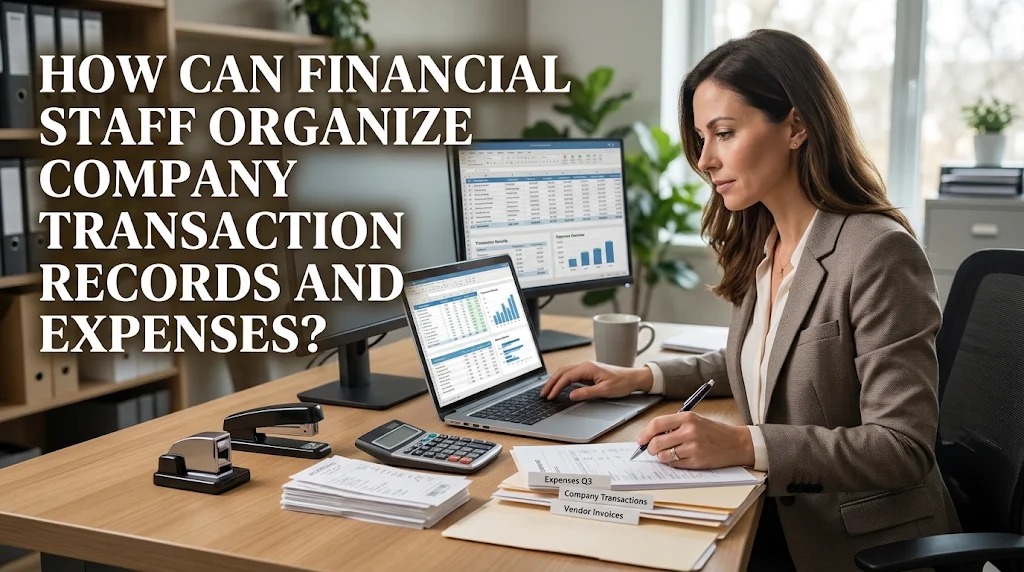
Organizing company transaction records and expenses is an essential responsibility of financial staff. Every business handles financial activities such as receiving customer payments, purchasing supplies, paying employees, and managing operational costs. Without proper documentation, companies may experience difficulties tracking expenses, preparing financial reports, and making informed financial decisions.
Financial staff must ensure that every transaction is recorded accurately, supported by appropriate documents, and stored in an organized system. They also need to classify expenses correctly, review financial information regularly, and maintain secure records. Accurate documentation, consistent recording procedures, and effective expense management help companies maintain reliable financial information and operate more efficiently.
ESTABLISHING A SYSTEM FOR RECORDING FINANCIAL TRANSACTIONS
The first step in organizing company transaction records is establishing a consistent recording system. Financial staff should ensure that every financial activity is recorded using the same procedures and accounting categories. This makes it easier to identify transactions, review financial information, and prepare reports.
Each transaction should include important details such as the transaction date, reference number, description, amount, payment method, and account category. For example, when a company purchases office equipment, financial staff should record the purchase date, supplier information, payment amount, and relevant expense or asset account. Complete information helps prevent confusion and makes future reviews easier.
Financial staff can use accounting software or spreadsheets to maintain transaction records. Companies with many financial activities may benefit from accounting systems that automatically organize transactions and update account balances. However, employees must still verify the information entered into the system.
A standardized transaction recording system improves consistency and reduces the risk of missing or duplicate entries. It also provides a reliable foundation for preparing financial statements and monitoring company expenses.
COLLECTING AND ORGANIZING SUPPORTING DOCUMENTS
Every financial transaction should have appropriate supporting documentation. These documents provide evidence that a transaction occurred and help financial staff verify the accuracy of recorded information. Common examples include invoices, receipts, purchase orders, payment confirmations, bank statements, and reimbursement forms.
Financial staff should collect these documents as soon as possible after a transaction takes place. They should check whether each document contains complete information, including the transaction date, amount, description, and relevant parties. Missing or unclear information should be confirmed with the responsible department before the transaction is finalized.
Documents should be organized according to a clear filing system. Financial staff can classify them by transaction type, date, department, supplier, or reference number. For example, all supplier invoices for a particular month can be stored together to make payment verification easier.
Both physical and digital documents should be protected from loss, damage, or unauthorized access. Complete and organized financial documentation makes it easier to verify transactions, prepare reports, and respond to internal or external audit requests.
CLASSIFYING COMPANY EXPENSES CORRECTLY
Correct expense classification helps companies understand how financial resources are being used. Financial staff should organize expenses according to the company's accounting system and reporting requirements. Common categories include employee salaries, transportation, office supplies, utilities, rent, marketing, and equipment maintenance.
Expenses may also be classified according to the department or business activity responsible for the cost. For example, marketing expenses can be recorded separately from production costs. This allows management to evaluate the spending patterns of different departments and identify areas that require improvement.
Financial staff must distinguish between expenses and other financial transactions. For example, purchasing equipment may be treated as an asset rather than an immediate operating expense, depending on the applicable accounting rules and the company's capitalization policy. Correct classification is important because it affects financial statements and budget reports.
Employees should follow established accounting procedures and ask for clarification when a transaction does not clearly fit an existing category. Accurate expense classification helps maintain reliable financial records and supports better cost control.
USING DIGITAL TOOLS TO MANAGE RECORDS AND EXPENSES
Digital tools can make transaction recording and expense management faster and more organized. Financial staff can use accounting software, spreadsheets, and document management systems to store information and process financial transactions. These tools help reduce manual work and make records easier to access.
Microsoft Excel is useful for organizing transaction lists, calculating expense totals, and comparing spending across different periods. Financial staff can use formulas, sorting, filtering, and PivotTables to examine financial data. Accounting applications can provide additional features such as invoice tracking, payment management, automatic calculations, and financial report generation.
Digital document management systems also allow employees to store invoices, receipts, and payment confirmations electronically. Files can be named according to standardized rules and organized into folders based on transaction dates or categories. This reduces the time needed to search for specific documents.
However, financial staff must protect digital records by using secure passwords, appropriate access permissions, and regular backups. Digital financial management tools are most effective when supported by accurate data entry, secure storage, and regular verification.
MONITORING EXPENSES AND RECONCILING TRANSACTION RECORDS
Organizing financial records is not a one-time activity. Financial staff must monitor transactions and expenses regularly to ensure that the information remains accurate and complete. Regular reviews help identify unusual spending, missing documents, duplicate entries, and incorrect amounts.
One important practice is comparing recorded expenses with the approved company budget. If a department spends more than expected, financial staff should investigate the reason and provide relevant information to management. This helps identify unnecessary costs and supports responsible financial decisions.
Financial staff should also perform account reconciliation by comparing internal transaction records with bank statements and other supporting documents. Differences may occur because of timing issues, missing transactions, bank charges, or recording mistakes. Employees must investigate these differences and make appropriate corrections based on valid evidence.
Regular monitoring helps companies maintain accurate account balances and identify potential financial problems early. It also improves the reliability of financial reports and supports effective expense management.
MAINTAINING FINANCIAL CONTROLS AND SECURE RECORDS
Financial controls help ensure that company transactions are properly authorized, recorded, and reviewed. Financial staff should follow company policies for approving purchases, processing payments, and managing financial documents. These procedures help protect company resources and reduce the risk of errors or unauthorized transactions.
One important control is separating financial responsibilities whenever possible. For example, the employee who prepares a payment should not be the only person responsible for approving it. This creates an additional opportunity to identify mistakes and prevent potential misuse of company funds.
Financial records should also be stored securely and retained according to company policies and applicable legal requirements. Confidential financial information should only be accessible to authorized employees. Digital documents should be protected through access controls and secure backups, while physical documents should be stored in appropriate filing systems.
Financial staff must maintain honesty and accountability when handling company records. They should never change transaction information without valid evidence or remove documents to hide financial activities. Strong internal controls, secure document storage, and professional integrity help maintain trustworthy financial records and protect the company from financial risks.
CONCLUSION
Financial staff can organize company transaction records and expenses by establishing consistent recording procedures, collecting supporting documents, and classifying financial activities correctly. They should also use digital tools to manage information, monitor expenses regularly, and reconcile transaction records with supporting evidence.
Maintaining secure financial records and following internal controls are equally important for protecting company resources and ensuring accountability. Accurate documentation, organized financial systems, and regular verification help companies prepare reliable reports, control spending, and make better financial decisions. By applying these practices consistently, financial staff can improve financial management and support long-term business stability.
Recent Posts

How Does Technology Make Daily Evaluation... 21.11.2026/56 View

Apa Strategi Menghadapi Kesenjangan antara Kompetensi... 21.11.2026/58 View

Mengapa Inventaris Aset Penting bagi Kelancaran... 21.11.2026/52 View

When Should Musicians Join a Record... 21.11.2026/53 View

Daily Evaluation or Daily Planning Which... 21.11.2026/60 View
