

How Can Financial Staff Prevent Errors in Financial Transaction Records?
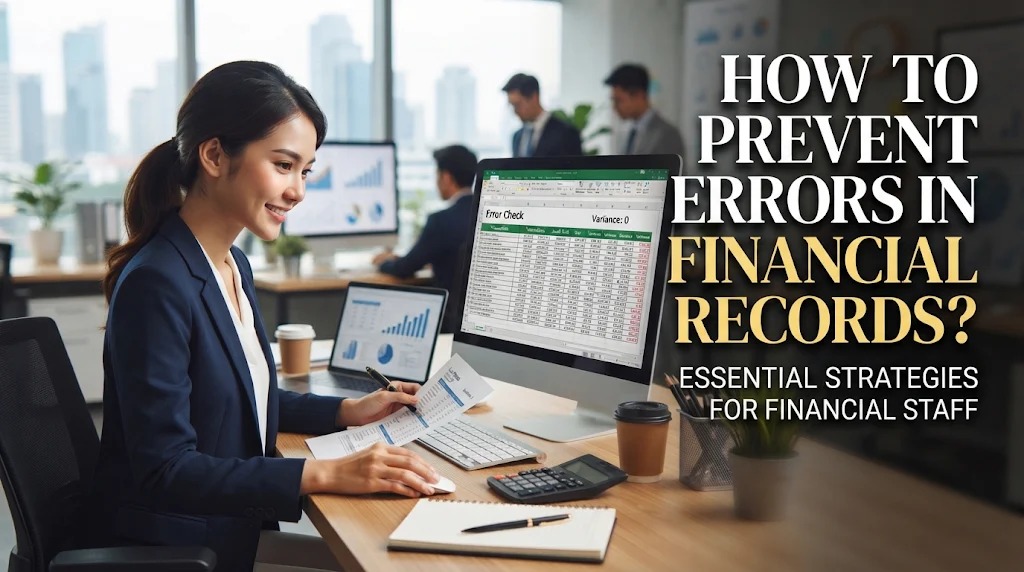
Accurate financial transaction records are essential for maintaining a company's financial stability and supporting reliable business decisions. Financial staff are responsible for recording income, expenses, payments, and other financial activities correctly. Even a small mistake in a transaction record can affect financial reports, create differences in account balances, and lead to problems during financial reviews.
Preventing errors requires more than careful data entry. Financial staff must follow established procedures, verify supporting documents, use appropriate accounting software, and review transactions regularly. Accuracy, consistency, and proper financial controls help ensure that every transaction is recorded correctly and that company financial information remains reliable.
VERIFYING TRANSACTION DOCUMENTS BEFORE RECORDING
One of the most effective ways to prevent recording errors is to check supporting documents before entering financial information into the accounting system. These documents may include invoices, receipts, purchase orders, payment confirmations, and bank statements. Financial staff should ensure that each document contains complete and accurate information.
Important details to verify include the transaction date, amount, description, payment method, and the names of the parties involved. For example, when recording a supplier payment, employees should compare the payment amount with the approved invoice and payment confirmation. This helps prevent incorrect amounts or duplicate transactions from being recorded.
Financial staff should also confirm that every transaction has appropriate authorization. Company policies may require approval from a manager or another authorized employee before certain payments can be processed. Proper document verification helps prevent inaccurate records, unauthorized transactions, and unnecessary financial corrections.
FOLLOWING STANDARDIZED FINANCIAL RECORDING PROCEDURES
Standardized procedures help financial staff record transactions consistently. Companies should establish clear guidelines for entering financial information, classifying accounts, approving payments, and organizing supporting documents. Employees must understand these procedures and apply them to every relevant transaction.
Financial staff should use the correct account categories when recording income and expenses. For example, office equipment purchases should not automatically be classified as routine office supplies because the accounting treatment may differ. Correct classification ensures that financial reports present the company's activities accurately.
Consistent recording procedures also help prevent duplicate entries and missing transactions. Financial staff can use transaction reference numbers, standardized descriptions, and organized filing systems to identify individual records more easily. Standardized accounting procedures improve consistency and make financial information easier to review.
USING ACCOUNTING SOFTWARE AND AUTOMATED TOOLS
Digital accounting tools can help financial staff reduce errors caused by manual calculations and repetitive data entry. Accounting software can organize transactions, calculate totals, update account balances, and generate financial reports. These features make financial recording faster and more systematic.
Financial staff can also use Microsoft Excel to organize transaction records and check financial calculations. Formulas such as SUM and SUMIF can help calculate totals, while sorting and filtering features make it easier to identify missing or unusual entries. However, employees must ensure that formulas and spreadsheet settings are correct before relying on the results.
Some accounting systems provide automatic notifications for duplicate invoices, missing information, or unusual transactions. These features can help employees identify potential problems before finalizing financial records. Nevertheless, automated tools cannot prevent every error, especially when incorrect information is entered by users.
Accounting software and automated verification are most effective when combined with careful employee supervision. Financial staff should review important transactions and confirm that the system produces accurate results.
RECONCILING FINANCIAL RECORDS REGULARLY
Account reconciliation is an important process for identifying and correcting differences between financial records. Financial staff compare information in the company's accounting system with external documents, such as bank statements, supplier statements, and payment confirmations. This process helps ensure that recorded transactions reflect actual financial activities.
For example, a company may record a payment in its accounting system, but the payment may not yet appear on the bank statement. This difference could result from a processing delay or an incorrect transaction date. Financial staff should investigate the reason before making any adjustments.
Regular reconciliation also helps identify missing entries, duplicate payments, incorrect amounts, and unauthorized transactions. Companies should establish appropriate reconciliation schedules based on their financial activities and reporting requirements. Regular account reconciliation helps maintain accurate balances and prevents small errors from becoming larger financial problems.
IMPLEMENTING INTERNAL CONTROLS AND EMPLOYEE REVIEWS
Internal controls are procedures that help protect company assets and maintain reliable financial records. Financial staff should follow approval requirements, access restrictions, and review procedures when handling financial transactions. These controls reduce the risk of mistakes and unauthorized financial activities.
One important control is the separation of financial responsibilities. Whenever possible, the employee who prepares a payment should not be the only person responsible for approving and recording it. Having different employees perform these tasks creates an additional opportunity to identify mistakes or irregularities.
Financial staff should also conduct regular reviews of transaction records. Supervisors or authorized employees can examine selected transactions, compare them with supporting documents, and check whether established procedures were followed. Internal controls and independent reviews help strengthen financial accuracy and accountability.
When an error is discovered, employees should correct it according to company procedures and maintain a clear record of the adjustment. They should also investigate the cause of the mistake to prevent similar problems from happening again.
MAINTAINING ACCURACY THROUGH TRAINING AND COMMUNICATION
Financial staff need appropriate knowledge and practical skills to maintain accurate transaction records. Training in accounting principles, financial software, documentation procedures, and company policies can help employees understand how to record transactions correctly. Regular training is especially important when the company introduces new systems or changes its financial procedures.
Clear communication between departments also helps prevent financial recording errors. For example, financial staff may need to confirm purchase details with the procurement department or verify employee reimbursement claims with the human resources department. Obtaining complete information before recording a transaction reduces the risk of incorrect entries.
Employees should feel comfortable asking questions when transaction details are unclear. They should never guess missing information or change financial figures without valid supporting evidence. Continuous training, clear communication, and professional responsibility help create a workplace culture that values financial accuracy.
Financial staff should also keep their knowledge of accounting standards and reporting requirements up to date. By improving their skills and following consistent procedures, they can perform their responsibilities more confidently and reduce the likelihood of financial errors.
CONCLUSION
Financial staff can prevent errors in financial transaction records by verifying supporting documents, following standardized procedures, and using reliable accounting software. Regular account reconciliation, appropriate internal controls, and careful employee reviews also help identify mistakes before they affect financial reports.
In addition, continuous training and clear communication between departments are essential for maintaining accurate financial information. Proper documentation, consistent verification, and professional accountability form the foundation of reliable transaction recording. By applying these practices consistently, financial staff can protect company resources, improve financial reporting, and support better business decisions.
Recent Posts

How Does Technology Make Daily Evaluation... 21.11.2026/56 View

Apa Strategi Menghadapi Kesenjangan antara Kompetensi... 21.11.2026/58 View

Mengapa Inventaris Aset Penting bagi Kelancaran... 21.11.2026/52 View

When Should Musicians Join a Record... 21.11.2026/53 View

Daily Evaluation or Daily Planning Which... 21.11.2026/60 View
