

How Can Government and Community Collaboration Strengthen National Literacy Movements?
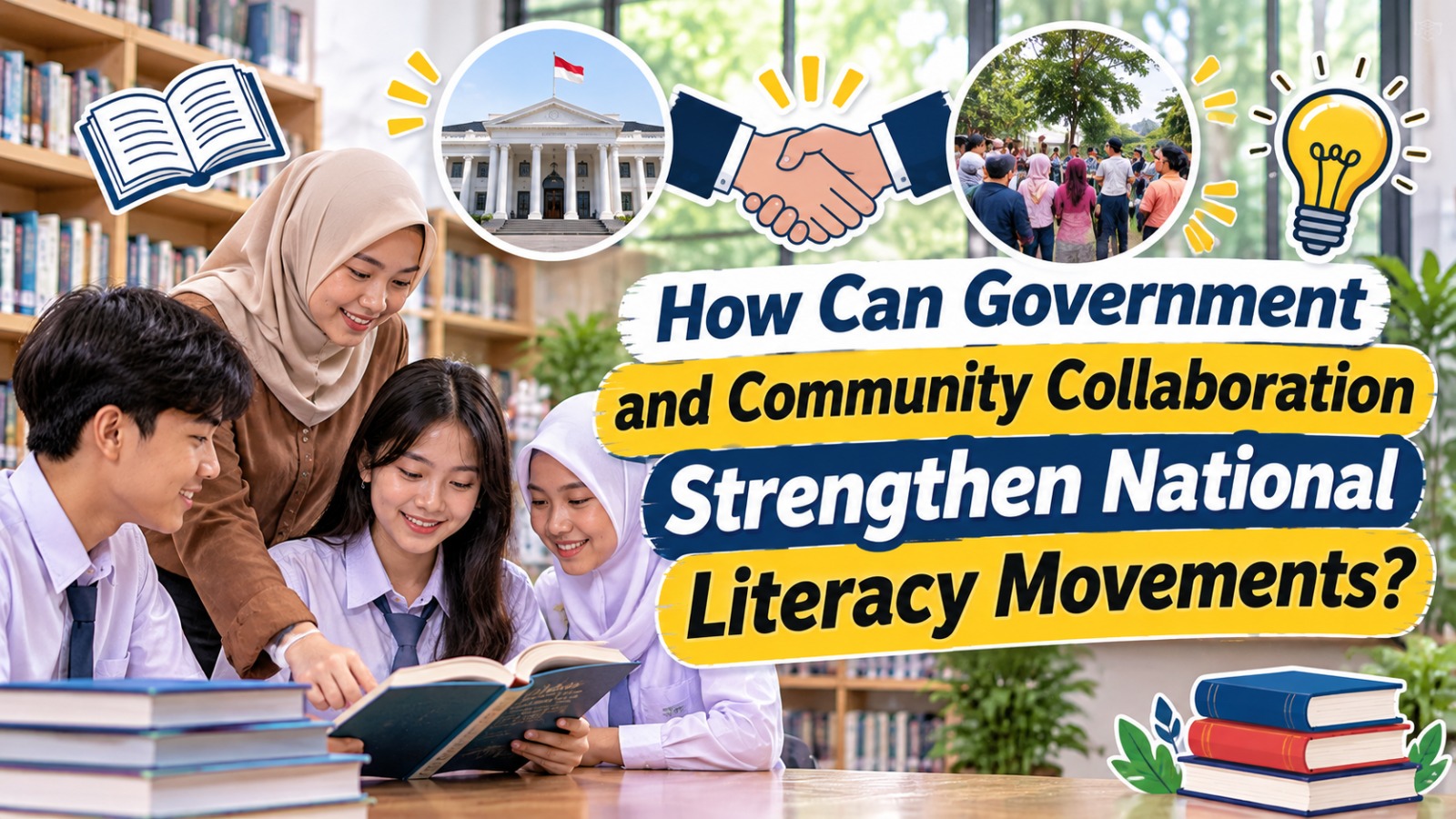
Government and community collaboration plays an important role in strengthening national literacy movements and improving the quality of education in society. Literacy is a fundamental ability that helps individuals understand information, communicate effectively, develop knowledge, and make responsible decisions. However, improving literacy levels across a country requires more than individual efforts because many communities still face challenges such as limited reading facilities, unequal educational opportunities, and low interest in reading.
The government has an important responsibility to establish educational policies, provide facilities, and support literacy programs. Meanwhile, communities can contribute by organizing reading activities, encouraging public participation, and creating environments that support continuous learning. When both parties work together, literacy programs can reach more people and address educational needs in different regions. This cooperation can help build an informed, educated, and competitive society.
THE IMPORTANCE OF GOVERNMENT AND COMMUNITY COLLABORATION IN LITERACY DEVELOPMENT
Government and community collaboration is essential for creating effective and sustainable national literacy movements. The government has the authority and resources to develop educational policies, allocate budgets, and provide public facilities. However, successful implementation also depends on community participation because local residents understand the educational challenges and needs within their surroundings.
Communities can help identify groups that need additional literacy support, including children, adults, and residents in areas with limited educational access. Their involvement allows literacy programs to become more relevant to local conditions and cultural backgrounds. For example, community organizations can work with local authorities to establish reading centers and organize educational activities in neighborhoods.
Furthermore, cooperation creates opportunities for sharing responsibilities and resources. Government institutions can provide books, training, and funding, while volunteers and community organizations can help manage programs and encourage participation. Through this partnership, national literacy movements can become more organized, inclusive, and sustainable.
PROVIDING ACCESSIBLE EDUCATIONAL FACILITIES AND READING RESOURCES
One important contribution of the government is providing accessible educational facilities and reading resources for the public. Public libraries, school libraries, community reading centers, and mobile library services can help people obtain books and educational materials more easily. These facilities are particularly important for communities that have limited access to bookstores or other learning resources.
The government can also support literacy development by providing books, digital learning materials, and educational equipment. However, the availability of facilities alone is not enough to guarantee successful literacy programs. Communities need to participate in maintaining these facilities, organizing activities, and encouraging residents to use the resources regularly.
For example, local organizations can establish community reading spaces in village halls, public buildings, or other accessible locations. Volunteers can organize storytelling sessions, reading discussions, and book-sharing programs for residents. By combining government support with community participation, educational resources can reach more people and create better opportunities for learning.
DEVELOPING CREATIVE AND SUSTAINABLE NATIONAL LITERACY PROGRAMS
National literacy movements need creative programs that encourage people to participate actively. The government can develop policies and educational campaigns that promote reading habits, while communities can adapt these programs to local interests and conditions. This approach helps ensure that literacy activities are not limited to formal educational institutions.
Schools, libraries, youth organizations, and community groups can organize activities such as reading competitions, storytelling events, writing workshops, and book discussions. These programs can attract different age groups and make literacy activities more enjoyable. Local communities can also introduce reading activities that incorporate regional stories, traditions, and cultural knowledge.
Sustainability is another important factor in developing successful literacy programs. Activities should be conducted consistently rather than only during national celebrations or special campaigns. Government institutions can provide long-term support through funding and program development, while communities can maintain participation through volunteers and local initiatives. Consistent cooperation helps establish reading as a regular habit in society.
UTILIZING DIGITAL TECHNOLOGY TO EXPAND LITERACY ACCESS
Digital technology provides opportunities to strengthen national literacy movements by expanding access to educational information. Through electronic books, online libraries, educational websites, and digital learning platforms, people can obtain learning materials without depending entirely on printed resources. These technologies can be especially beneficial for individuals who live far from conventional educational facilities.
The government can support digital literacy by improving internet infrastructure, providing access to digital educational resources, and organizing technology training programs. Meanwhile, communities can help residents understand how to use digital devices and online platforms effectively. Local volunteers can also introduce basic internet skills to children, adults, and older individuals who have limited technological experience.
In addition, digital literacy programs should teach people how to identify reliable information and recognize misleading content. The ability to evaluate online sources is increasingly important because false information can spread rapidly through social media. Through collaboration, government institutions and communities can encourage responsible internet use while making educational opportunities more accessible.
IMPROVING PUBLIC PARTICIPATION AND LITERACY AWARENESS
Public participation is one of the most important factors in determining the success of national literacy movements. Government campaigns may introduce literacy programs, but their impact will remain limited if communities do not understand their importance or actively participate. Therefore, increasing public awareness should become a shared responsibility.
Communities can promote literacy through neighborhood activities, social organizations, youth groups, and local educational events. Parents can encourage children to read at home, while community leaders can motivate residents to participate in reading programs. Schools can also cooperate with families to create activities that connect classroom learning with everyday experiences.
Government institutions can strengthen these efforts through public campaigns, educational information, and recognition for communities that actively support literacy development. Collaboration with universities, businesses, and nonprofit organizations can also introduce additional resources and volunteers. When people understand the benefits of literacy and feel involved in its development, they are more likely to support long-term educational initiatives.
EVALUATING LITERACY PROGRAMS AND STRENGTHENING NATIONAL EDUCATIONAL DEVELOPMENT
Evaluating literacy programs is necessary to determine whether government and community collaboration produces meaningful results. Evaluation helps identify successful activities, existing challenges, and areas that require further improvement. Without proper assessment, literacy programs may continue without addressing the actual educational needs of communities.
The government and community organizations can evaluate programs by examining participation levels, reading interest, access to educational resources, and improvements in literacy abilities. Feedback from teachers, parents, students, and local residents can provide useful information about program effectiveness. These findings can then become the basis for improving future activities and allocating resources more appropriately.
Furthermore, evaluation should consider differences between urban and rural areas because each region may face different literacy challenges. Some communities may need more reading materials, while others may require better internet access or basic literacy education. By developing solutions based on local needs, national literacy movements can contribute more effectively to equitable education, human resource development, and national competitiveness.
CONCLUSION
Government and community collaboration can strengthen national literacy movements by providing educational facilities, developing sustainable programs, utilizing digital technology, increasing public participation, and evaluating program effectiveness. These efforts create wider opportunities for individuals to improve their reading, writing, comprehension, and information-processing skills.
The success of national literacy development depends on continuous cooperation between government institutions, educational organizations, families, businesses, and local communities. Every group has an important contribution to make in creating an environment that supports reading and lifelong learning. With consistent collaboration, Indonesia can develop a more knowledgeable, critical, creative, and competitive generation that is prepared to face future challenges.
Recent Posts

Bagaimana Cara Menghadapi Haters di Dunia... 11.11.2026/35 View

Apa Cara Terbaik Membuktikan Profesionalisme Ketika... 11.11.2026/34 View

Bagaimana Cara Memanfaatkan Artificial Intelligence untuk... 11.11.2026/47 View

Mengapa Konten Kreator Sering Mendapat Komentar... 11.11.2026/36 View

Apa Manfaat Automasi dan Artificial Intelligence... 11.11.2026/36 View
