

How Can Governments Control Population Density?
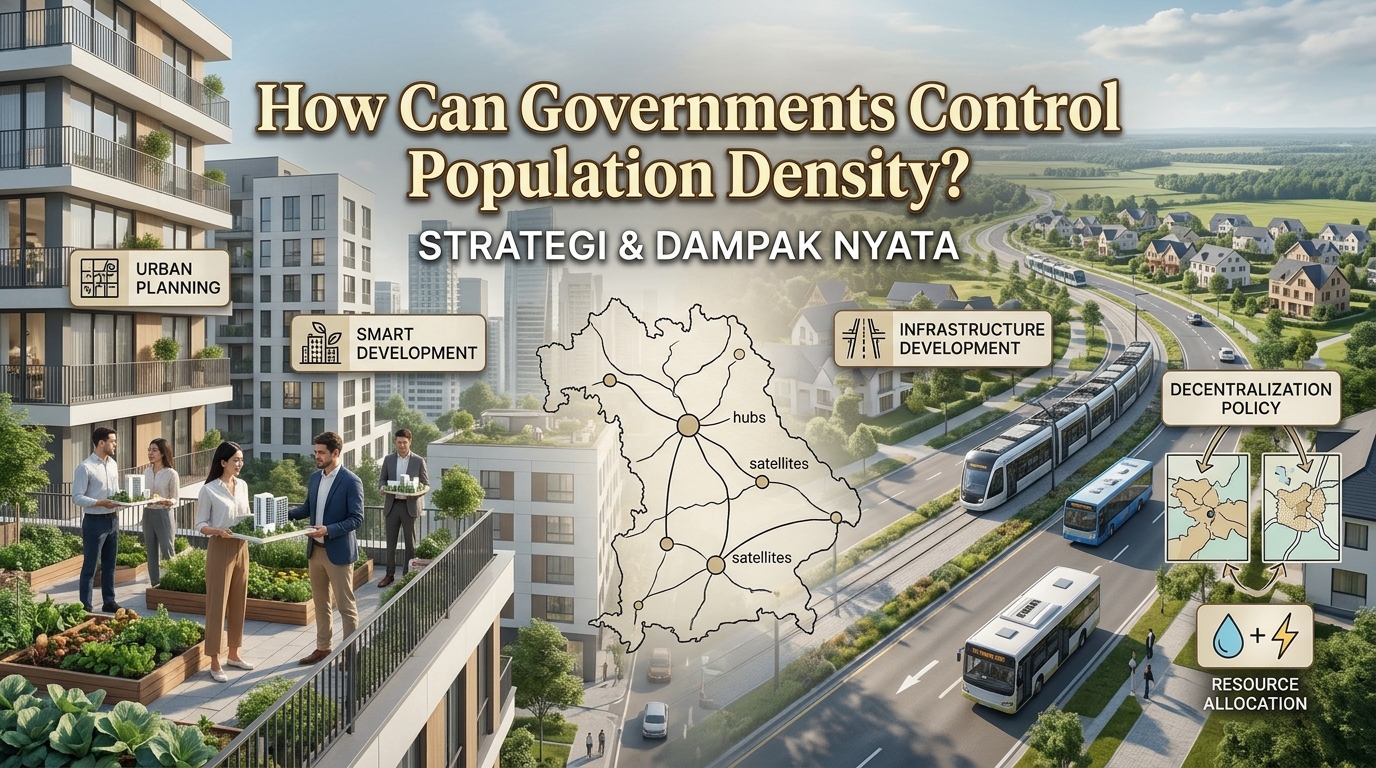
Population density refers to the number of people living within a specific area, usually measured in people per square kilometer. When population growth is not balanced with available land, housing, infrastructure, and public services, cities and other regions may experience serious challenges. Governments play an important role in managing population distribution and controlling excessive pressure on densely populated areas. They can do this through urban planning, regional development, housing policies, and improvements in public facilities. The goal is not simply to reduce the number of people but to create a more balanced population distribution and improve living conditions.
WHY DO GOVERNMENTS NEED TO CONTROL POPULATION DENSITY?
Governments need to manage population density because rapid population concentration can put pressure on essential resources and public facilities. Densely populated areas may experience traffic congestion, housing shortages, limited clean water supplies, and increased waste production. Schools, hospitals, and public transportation systems can also become overcrowded when their capacity does not match the number of residents. These problems may reduce public comfort and make daily activities more difficult. Effective population management helps ensure that infrastructure and public services can meet people's needs.
However, population density is not always a negative condition. Densely populated areas can support economic growth because businesses have access to larger markets and workers. Public transportation and other shared facilities may also operate more efficiently when residents live relatively close together. Therefore, governments should focus on managing population distribution and improving urban capacity, rather than simply trying to reduce population numbers. The right policies depend on each region's economic, social, environmental, and geographical conditions.
HOW CAN URBAN PLANNING HELP CONTROL POPULATION DENSITY?
Urban planning is one of the most important methods governments can use to manage population density. It involves organizing land use for housing, businesses, industries, public facilities, transportation, and green spaces. Through clear zoning regulations, governments can prevent uncontrolled construction and reduce excessive concentration in certain neighborhoods. They can also encourage residential development in areas that have sufficient infrastructure and access to essential services. Proper planning helps cities grow in a more organized and sustainable way.
Governments can also develop compact and well-connected urban areas to make better use of available land. For example, mixed-use neighborhoods can place housing, offices, shops, schools, and public facilities within convenient distances. This approach can reduce unnecessary travel and improve access to daily needs. However, compact development must include adequate public spaces, drainage, sanitation, and environmental protection. Good urban planning balances population needs with the long-term capacity of the city.
WHY IS REGIONAL DEVELOPMENT IMPORTANT?
Regional development can reduce excessive population concentration by creating better opportunities outside major cities. Many people move to large urban centers because smaller towns and rural areas may have fewer jobs, educational institutions, healthcare facilities, and transportation options. Governments can address this situation by investing in local industries, infrastructure, schools, hospitals, and digital connectivity. These improvements make smaller regions more attractive places to live and work. Balanced regional development can reduce pressure on major cities by spreading economic opportunities more widely.
Governments can also support local businesses, agriculture, tourism, and small industries to strengthen regional economies. When people can find stable employment near their hometowns, they may have fewer reasons to migrate to overcrowded urban centers. Developing new economic centers can also encourage investment and create employment opportunities in less populated areas. However, regional development requires long-term planning and cooperation between national and local governments. Its success depends on ensuring that new opportunities are sustainable and accessible to local communities.
HOW CAN HOUSING POLICIES MANAGE POPULATION DENSITY?
Housing policies influence where people live and how residential areas develop. Governments can provide affordable housing programs to help low- and middle-income families access safe and suitable homes. They can also encourage the construction of apartments and other housing types in locations with adequate transportation and public facilities. This allows urban land to be used more efficiently while accommodating growing populations. Housing development should be supported by reliable water, electricity, sanitation, and waste management systems.
In addition, governments need to prevent the growth of unsafe and overcrowded settlements. This can be achieved through better housing regulations, improvements to existing neighborhoods, and access to basic public services. Relocating residents should only be considered when necessary and must involve fair procedures, proper consultation, and suitable alternatives. Affordable and well-planned housing helps prevent uncontrolled settlement growth and supports healthier communities. These policies can improve living conditions without unfairly limiting people's right to live and work in cities.
WHAT ROLE DOES TRANSPORTATION PLAY IN DISTRIBUTING POPULATION?
Transportation systems influence population distribution because people often choose residential areas based on their access to workplaces, schools, and public services. Governments can improve this situation by expanding public transportation networks, including buses, trains, and other reliable transport services. Better connections between city centers and surrounding regions can make it easier for people to live outside the most crowded areas. This can encourage the development of new residential and economic centers. Reliable transportation also reduces dependence on private vehicles and helps limit traffic congestion.
Governments should coordinate transportation development with housing and land-use policies. Building new roads or train stations without proper planning may encourage uncontrolled construction and create new overcrowded areas. Instead, transportation projects should support planned growth and connect residents to essential facilities. Safe walking paths and cycling infrastructure can also improve mobility for shorter journeys. Integrated transportation planning helps distribute daily activities more efficiently across different parts of a region.
HOW CAN POPULATION POLICIES SUPPORT SUSTAINABLE DEVELOPMENT?
Population policies can help governments respond to demographic changes and prepare for future needs. These policies may include improving access to education, healthcare, reproductive health information, and voluntary family planning services. Such programs help individuals and families make informed decisions about their futures. Governments can also use population data to estimate future demand for schools, hospitals, housing, and employment. Accurate demographic information is essential for making effective development plans.
Sustainable population management must respect human rights and individual choices. Governments should not use coercive measures, discrimination, or forced restrictions to control population growth. Instead, they should focus on education, equal opportunities, healthcare access, and better living conditions. Policies must also consider environmental limits, including water availability, land resources, energy use, and waste management. This approach supports sustainable development while protecting the well-being and dignity of communities.
HOW DOES TECHNOLOGY HELP GOVERNMENTS MONITOR POPULATION DENSITY?
Technology allows governments to collect and analyze population information more efficiently. Geographic Information Systems (GIS) can display population distribution on digital maps and help identify areas with high concentrations of residents. Census data, satellite imagery, and administrative records can provide additional information about changes in population patterns. These tools help planners determine where new schools, hospitals, roads, and housing projects may be needed. Accurate information makes public planning more effective and evidence-based.
Governments can also use digital platforms to monitor infrastructure capacity and public service demands. For example, transportation data can help identify areas experiencing heavy traffic, while environmental monitoring can reveal pressure on water resources and waste systems. However, population data must be collected and managed responsibly to protect personal privacy. Technology should support public decision-making rather than replace consultation with local communities. Data-driven planning helps governments respond to population changes before problems become more difficult to manage.
CONCLUSION
Governments can control population density by improving urban planning, developing smaller regions, providing affordable housing, and expanding public transportation. They can also use population policies and modern technology to understand demographic changes and prepare suitable public services. These strategies help reduce excessive pressure on crowded areas while creating opportunities in other regions. However, population density should not always be viewed as a problem because well-managed urban areas can support economic growth and efficient resource use. The main goal of government population management is to create a balanced, inclusive, and sustainable distribution of people and resources.
Recent Posts

Bagaimana Sistem SKS pada Program Kuliah... 22.11.2026/33 View

How Does Technology Make Daily Evaluation... 21.11.2026/67 View

Apa Strategi Menghadapi Kesenjangan antara Kompetensi... 21.11.2026/67 View

Mengapa Inventaris Aset Penting bagi Kelancaran... 21.11.2026/65 View

When Should Musicians Join a Record... 21.11.2026/66 View
