

How Can Green Spaces Reduce Urban Flood Risk?
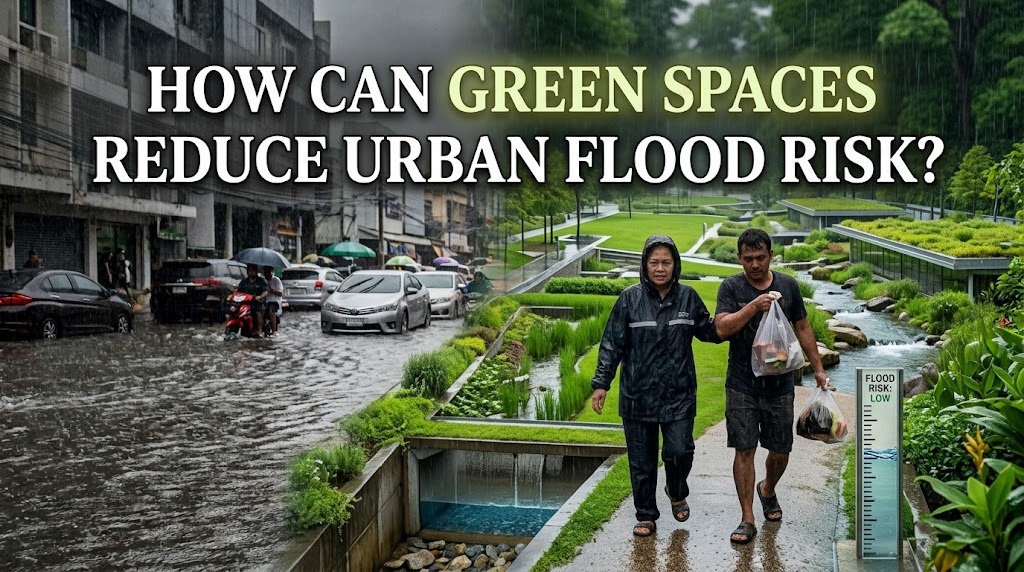
Green spaces play an important role in reducing urban flood risk by absorbing rainwater, slowing surface runoff, and providing natural areas where excess water can collect. Parks, gardens, urban forests, wetlands, and other vegetated areas help cities manage rainfall more effectively. Unlike concrete and asphalt, which allow little water to enter the ground, natural surfaces can support infiltration and temporarily store stormwater. Protecting and expanding green spaces is therefore an important strategy for making cities more resilient to heavy rainfall.
ABSORBING RAINWATER INTO THE SOIL
One of the main ways green spaces reduce flood risk is by allowing rainwater to infiltrate into the ground. Soil contains spaces that can hold water, while plant roots can create pathways that help water move below the surface. This process reduces the volume of water flowing directly into streets and drainage systems.
The amount of infiltration depends on soil conditions, vegetation, and the intensity of rainfall. Healthy, permeable soil generally absorbs more water than compacted or paved ground. By preserving natural soil and increasing vegetated areas, cities can reduce surface runoff during many rainfall events.
SLOWING SURFACE RUNOFF
Vegetation helps slow the movement of rainwater across the ground. Grass, shrubs, trees, and other plants create physical resistance that reduces the speed at which water travels toward drains, canals, and rivers.
Slower runoff gives more time for water to infiltrate into the soil or collect in designated storage areas. This can reduce the sudden pressure placed on drainage systems during heavy rainfall. Green spaces are particularly useful when connected across neighborhoods rather than concentrated in only one small location.
PROVIDING NATURAL WATER STORAGE
Some green spaces can temporarily store excess rainwater and release it gradually. Parks with low-lying areas, wetlands, rain gardens, and specially designed floodable landscapes can hold water during storms instead of allowing it to flow immediately into surrounding streets.
Wetlands are especially valuable because their soils and vegetation can retain water under suitable conditions. Urban parks can also be designed with depressions that temporarily fill during heavy rain and drain afterward. These approaches help reduce peak runoff and provide additional capacity when conventional drainage systems become overloaded.
REDUCING PRESSURE ON DRAINAGE SYSTEMS
Urban drainage networks can become overwhelmed when large amounts of rainwater enter them at the same time. Green spaces help reduce this pressure by absorbing, slowing, and temporarily storing some of the runoff before it reaches drains and waterways.
When integrated with drainage infrastructure, green spaces can help manage rainfall more efficiently. For example, rain gardens and vegetated drainage channels can capture water from nearby roads and rooftops. Although these features cannot replace all conventional drainage systems, they can complement pipes, canals, and retention facilities.
PROTECTING RIVERS AND NATURAL WATERWAYS
Vegetated areas near rivers and streams can help reduce erosion and improve the management of stormwater. Plant roots stabilize soil, while vegetation can slow runoff before it reaches waterways. These effects may reduce the amount of sediment carried into rivers and drainage channels.
Riverbank vegetation and protected floodplains can also provide space for rivers to expand during high-water events. When cities preserve these natural corridors, they may reduce the pressure on nearby neighborhoods. However, vegetation alone cannot prevent severe river flooding when water levels rise beyond the available storage capacity.
URBAN TREES AND THEIR ROLE IN FLOOD PREVENTION
Trees help manage rainfall in several ways. Their leaves and branches intercept some precipitation before it reaches the ground, while their roots can improve soil structure and support infiltration. Tree canopies may also slow the rate at which rainwater reaches paved surfaces.
The amount of water intercepted by trees varies according to species, canopy size, weather conditions, and rainfall intensity. During prolonged or extremely heavy rainfall, tree canopies become saturated and their ability to intercept additional water decreases. Even so, urban trees provide valuable support when combined with permeable ground, healthy soil, and other stormwater-management measures.
GREEN ROOFS AND RAIN GARDENS
Cities with limited ground-level space can introduce green infrastructure on rooftops and within developed neighborhoods. Green roofs use vegetation and growing media to retain some rainfall and release excess water more gradually. They can also reduce the amount of runoff entering drainage systems during smaller and moderate rainfall events.
Rain gardens are shallow, planted areas designed to collect runoff from roofs, sidewalks, and parking areas. Water can temporarily collect in these spaces before infiltrating into the soil or flowing through an appropriate drainage outlet. Both solutions can be incorporated into urban development projects to improve stormwater management without requiring large new parks.
REDUCING FLOOD RISKS IN DENSELY POPULATED CITIES
Densely populated cities often have limited land available for parks and other natural areas. However, smaller green spaces can still contribute to flood management when distributed strategically throughout neighborhoods.
Community gardens, roadside vegetation, school gardens, pocket parks, permeable courtyards, and planted public spaces can provide additional opportunities for infiltration and temporary water storage. Cities can also connect these features through green corridors that help manage runoff across larger areas. Their effectiveness depends on suitable design, regular maintenance, and the availability of permeable soil.
GREEN SPACES AND URBAN PLANNING
Effective flood management requires green spaces to be incorporated into broader urban planning strategies. Authorities can protect existing wetlands, establish parks in suitable flood-prone locations, require stormwater-management features in new developments, and prevent unnecessary construction over natural drainage paths.
Urban planners should also consider local soil conditions, topography, rainfall patterns, and the capacity of existing drainage systems. A green space designed without considering these factors may provide less flood protection than expected. Combining green infrastructure with engineered drainage, flood warnings, and responsible land-use planning generally offers a more comprehensive approach.
LIMITATIONS OF GREEN SPACES IN FLOOD PREVENTION
Although green spaces can reduce urban flood risk, they cannot eliminate flooding entirely. Extremely intense rainfall may exceed the infiltration and storage capacity of soil, parks, wetlands, and other vegetated areas. Flooding may also occur because of river overflow, coastal storm surges, blocked drains, or rising water levels beyond the capacity of local infrastructure.
Green spaces must therefore be maintained and designed according to local conditions. Compacted soil, poor drainage, insufficient storage, and inappropriate vegetation can limit their effectiveness. Cities should combine natural solutions with reliable drainage networks, flood-risk assessments, and emergency preparedness.
CONCLUSION
Green spaces reduce urban flood risk by helping rainwater infiltrate into the soil, slowing surface runoff, storing excess water, and reducing pressure on drainage systems. Urban forests, parks, wetlands, green roofs, and rain gardens can all contribute to better stormwater management when appropriately designed. However, their effectiveness depends on local environmental conditions and the intensity of rainfall. By protecting natural areas and integrating green infrastructure into urban planning, cities can improve flood resilience while creating healthier and more attractive environments for residents.
Recent Posts

Bagaimana Sistem SKS pada Program Kuliah... 22.11.2026/54 View

How Does Technology Make Daily Evaluation... 21.11.2026/83 View

Apa Strategi Menghadapi Kesenjangan antara Kompetensi... 21.11.2026/81 View

Mengapa Inventaris Aset Penting bagi Kelancaran... 21.11.2026/78 View

When Should Musicians Join a Record... 21.11.2026/82 View
