

How Can Higher Education Institutions Modernize Vocational Curriculum Content?
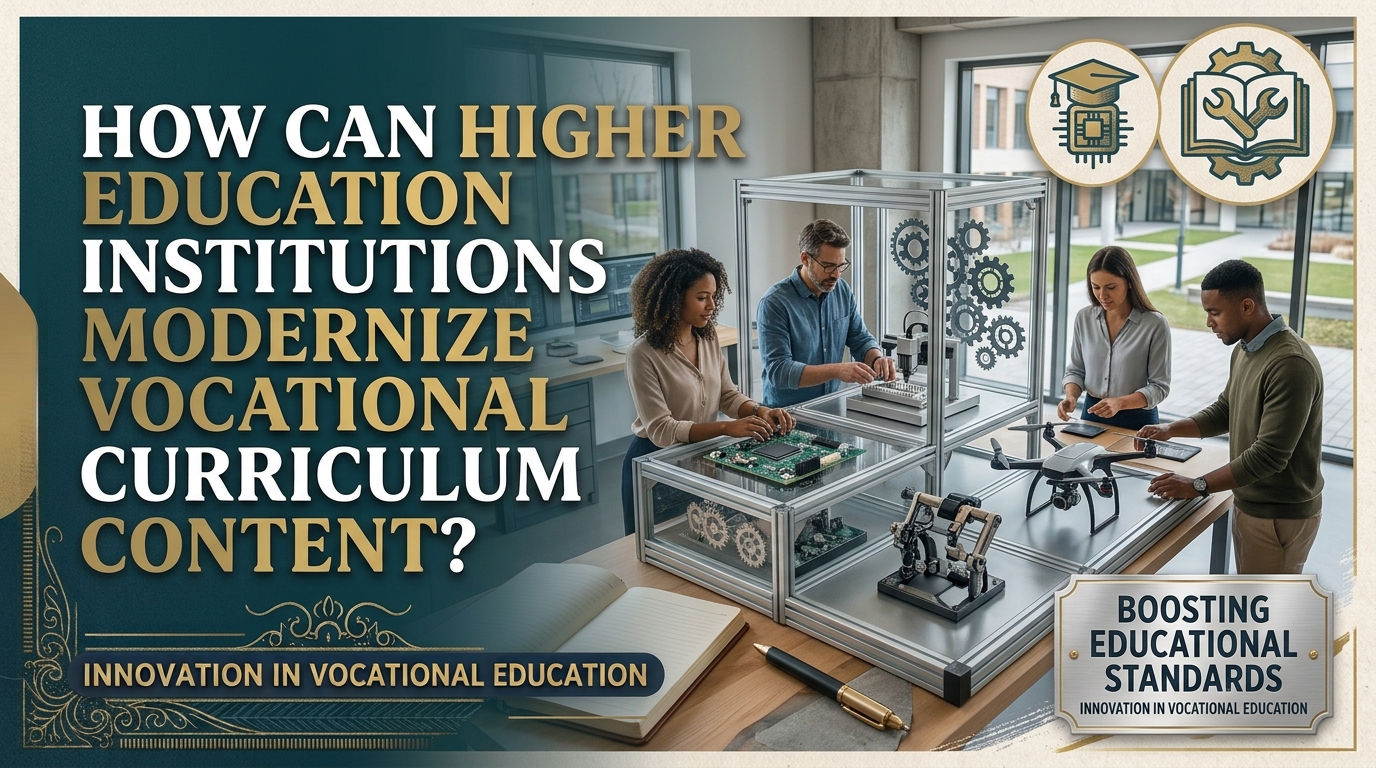
Higher education institutions must continuously update their academic frameworks to keep pace with rapid technological advancements and evolving workforce needs. High schools, polytechnics, and technical universities face increasing pressure to provide students with modern technical knowledge. Implementing a modernized vocational curriculum bridges the gap between traditional classroom learning and real-world corporate expectations. When universities integrate cutting-edge tools, practical projects, and digital learning platforms, students acquire high-value skills for the modern job market. However, administrative delays and outdated teaching materials often hinder rapid curriculum adaptation in higher education.
FOSTERING DIRECT COLLABORATION WITH INDUSTRY LEADERS
Universities can modernize learning materials effectively by establishing active partnerships with leading technology firms and corporate enterprises. Participating in industry curriculum co-creation allows corporate specialists to contribute directly to course modules and practical training programs. Industry experts provide real-time guidance on emerging technologies, operational software, and current workplace safety protocols.
Consequently, higher education institutions can eliminate obsolete subjects and replace them with market-aligned technical skills. Routine feedback from corporate partners ensures that classroom instruction directly mirrors current commercial practices. This collaborative approach guarantees that graduates possess exact skills requested by top employers worldwide.
EMBEDDING FLEXIBLE MODULAR LEARNING AND DIGITAL CREDENTIALS
Structuring degree programs into flexible modular courses enables universities to update specific topics without overhauling entire educational frameworks. Introducing micro credential programs allows students to earn specialized certifications in emerging fields such as artificial intelligence, cloud computing, or digital marketing. This targeted learning approach provides students with a distinct competitive advantage when entering the job market.
Furthermore, integrating interactive online learning platforms and virtual simulation tools enhances student engagement during practical sessions. Hybrid learning options enable institutions to introduce newly developed technical courses rapidly and cost-effectively. As a result, students acquire both foundational academic knowledge and practical operational expertise.
INVESTING IN FACULTY UPSKILLING AND ADVANCED RESEARCH
A modernized learning plan is only as effective as the university professors and instructors who deliver it daily. Higher education institutions must prioritize continuous faculty upskilling to help professors master modern software tools and advanced machinery. Sponsoring professional development workshops and industry externships keeps teaching staff aligned with modern industrial practices.
Additionally, encouraging professors to engage in applied research alongside industry partners elevates classroom instruction quality significantly. Instructors bring real-world problem-solving experience directly into university laboratories and lecture halls. Investing in educator expertise ensures long-term educational excellence and superior student mentorship.
UPGRADING CAMPUS LABORATORIES AND VIRTUAL SIMULATION TOOLS
Providing access to modern physical infrastructure is essential for delivering practical, hands-on technical education to students. Higher education centers must invest in modern laboratory facilities equipped with professional-grade software, robotics, and advanced machinery. Practicing on equipment identical to real workplace environments builds practical confidence in young learners.
Moreover, utilizing augmented reality and interactive simulation tools allows students to practice complex operational procedures safely. Simulation technology reduces material costs while enabling students to perform unlimited practical repetitions. Modernizing physical and digital facilities guarantees that university graduates are fully prepared for immediate workforce integration.
CONCLUSION
Higher education institutions can successfully modernize vocational curriculum content by combining industry partnerships, modular learning, and faculty upskilling. Upgrading laboratory infrastructure and introducing digital certifications ensures students receive world-class technical preparation. While structural modernization requires dedicated effort and investment, the long-term benefits for students, universities, and industries are immense. University leaders must act decisively today to update their academic content and eliminate skill mismatches. Modernizing technical education creates a resilient, highly skilled, and future-ready workforce for global economic growth.
Recent Posts

Bagaimana Sistem SKS pada Program Kuliah... 22.11.2026/54 View

How Does Technology Make Daily Evaluation... 21.11.2026/83 View

Apa Strategi Menghadapi Kesenjangan antara Kompetensi... 21.11.2026/82 View

Mengapa Inventaris Aset Penting bagi Kelancaran... 21.11.2026/78 View

When Should Musicians Join a Record... 21.11.2026/84 View
