

How Can Homeroom Teachers Handle Undisciplined Students at School?
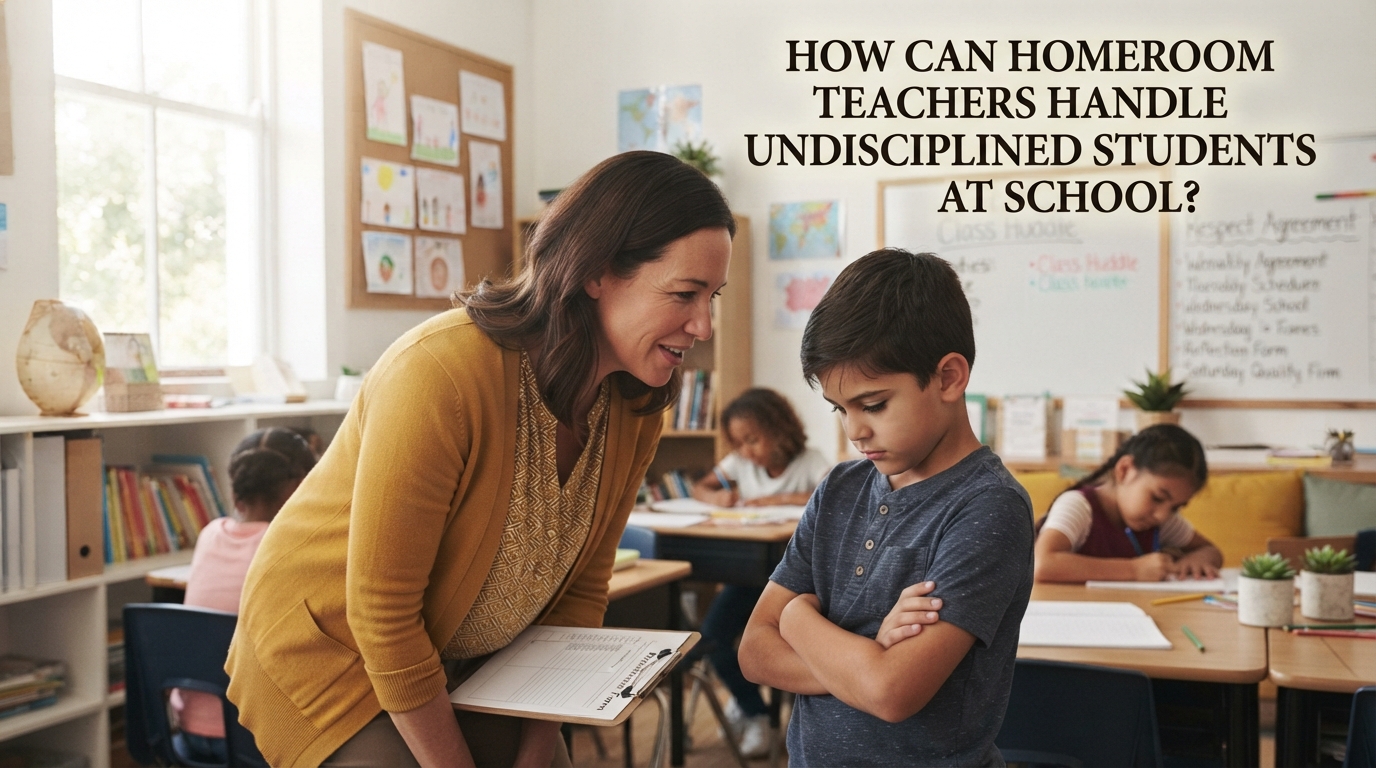
Handling undisciplined students is one of the challenges that homeroom teachers often face in school. Students may demonstrate inappropriate behavior, such as arriving late, ignoring classroom rules, disturbing classmates, failing to complete assignments, or showing disrespect toward teachers. These behaviors can disrupt learning activities and negatively affect the classroom environment if they are not addressed properly. Therefore, homeroom teachers need effective strategies to guide students toward more responsible and positive behavior.
A homeroom teacher should not focus only on punishment when dealing with undisciplined students. Instead, teachers need to understand the reasons behind students' behavior, establish clear expectations, and provide appropriate guidance. Every student has different personalities, family backgrounds, and emotional needs, so disciplinary approaches should be fair and constructive. By combining communication, supervision, and cooperation with parents, homeroom teachers can help students improve their behavior and develop stronger self-discipline.
IDENTIFYING THE CAUSES OF STUDENT MISBEHAVIOR
The first step in handling undisciplined students is understanding the reasons behind their behavior. Students may break school rules because of a lack of motivation, difficulty managing emotions, peer pressure, learning challenges, or problems at home. Some students may also struggle to understand classroom expectations or control their behavior in social situations. Identifying these factors helps homeroom teachers choose more appropriate solutions instead of making quick judgments.
Teachers can observe students' daily behavior, communicate with them privately, and discuss concerns with subject teachers when necessary. They should also consider whether the behavior happens regularly or only in certain situations. Understanding the underlying causes allows teachers to distinguish between occasional mistakes and repeated behavioral problems. This approach creates a foundation for effective student guidance and more meaningful behavioral improvement.
ESTABLISHING CLEAR CLASSROOM RULES AND EXPECTATIONS
Clear classroom rules help students understand which behaviors are acceptable and which actions may disrupt learning activities. Homeroom teachers should explain school regulations using simple and understandable language. Rules may include arriving on time, respecting classmates, completing assignments, maintaining cleanliness, and following teachers' instructions. Students should also understand the reasons behind these expectations.
Furthermore, teachers need to apply classroom rules consistently and fairly. They should avoid making exceptions based on personal preferences or treating certain students more favorably than others. Involving students in developing classroom agreements can also encourage them to take responsibility for maintaining a positive environment. With clear expectations, students can gradually develop discipline and responsibility.
COMMUNICATING WITH STUDENTS IN A CALM AND RESPECTFUL MANNER
Communication plays an important role in addressing student misbehavior. Homeroom teachers should approach undisciplined students calmly rather than responding with anger or excessive criticism. Speaking respectfully helps prevent unnecessary conflicts and makes students more willing to explain their actions. Teachers should also listen carefully before deciding how to handle a particular situation.
Private conversations are often more effective than criticizing students in front of their classmates. Teachers can explain which behavior needs improvement, why it is inappropriate, and what students should do differently. They should use constructive language that focuses on the behavior rather than labeling the student as a bad person. This method helps build mutual respect and trust between teachers and students.
APPLYING FAIR AND EDUCATIONAL CONSEQUENCES
When students repeatedly violate classroom rules, homeroom teachers may need to apply appropriate consequences. These consequences should be reasonable, consistent, and related to the behavior whenever possible. For example, students who damage classroom facilities may be asked to help restore or repair the damage under proper supervision. Students who disturb learning activities may need to discuss how their actions affect their classmates.
However, disciplinary consequences should never involve humiliation, physical punishment, threats, or discrimination. The main purpose is to help students understand the consequences of their actions and learn better ways to behave. Teachers should also follow school policies and applicable child protection regulations when addressing serious misconduct. By applying positive discipline, homeroom teachers can encourage behavioral improvement without damaging students' confidence.
PROVIDING POSITIVE REINFORCEMENT AND MOTIVATION
Positive reinforcement is an effective way to encourage students to develop better habits. Homeroom teachers can recognize improvements in punctuality, classroom participation, assignment completion, and respectful behavior. Appreciation does not always need to involve rewards because simple verbal encouragement can also make students feel valued. Recognizing progress helps students understand that positive changes are noticed and appreciated.
Teachers should focus on individual improvement rather than comparing students with one another. For example, a student who previously struggled to follow classroom rules should receive appropriate recognition when they demonstrate better self-control. This approach encourages students to continue improving instead of feeling discouraged by their past mistakes. Consistent positive reinforcement can strengthen student motivation and self-discipline.
COOPERATING WITH PARENTS AND GUARDIANS
Cooperation with parents is important when handling students who frequently demonstrate undisciplined behavior. Parents may provide information about students' habits, emotional conditions, and circumstances outside school that teachers do not directly observe. Homeroom teachers can arrange meetings or communicate through appropriate school communication channels to discuss behavioral concerns. These discussions should focus on finding solutions rather than blaming students or their families.
Teachers and parents can work together to establish consistent expectations and monitor behavioral improvement. For example, they can agree on strategies to encourage punctuality, responsibility, and regular completion of school assignments. Parents should also be informed about positive changes, not only behavioral problems. Strong cooperation between home and school creates a more supportive environment for student behavior development.
PROVIDING PERSONAL GUIDANCE AND EMOTIONAL SUPPORT
Some students demonstrate undisciplined behavior because they experience emotional difficulties, social pressure, or personal challenges. In these situations, homeroom teachers should provide opportunities for students to discuss their concerns in a safe and respectful environment. Teachers can help students recognize their emotions, understand the effects of their actions, and identify healthier ways to respond to difficult situations. This guidance can improve students' ability to manage their behavior.
Nevertheless, homeroom teachers should recognize the limits of their professional role. Students who experience serious emotional, psychological, or behavioral difficulties may need assistance from qualified school counselors or other professionals. Teachers should coordinate with relevant school staff and parents while respecting students' privacy. Appropriate support helps students develop emotional awareness and self-control.
MONITORING STUDENT BEHAVIOR AND EVALUATING PROGRESS
Handling undisciplined students requires continuous monitoring rather than a single conversation or disciplinary action. Homeroom teachers should observe whether students follow classroom rules, respect others, and demonstrate improvements in their daily behavior. Keeping appropriate behavioral records can help teachers identify patterns and evaluate the effectiveness of their strategies. These records should be handled responsibly and used to support students' development.
Teachers should also provide feedback and adjust their approaches when necessary. If a particular strategy does not produce positive results, they can discuss alternative solutions with parents, counselors, or school management. Students should be given reasonable opportunities to demonstrate improvement and take responsibility for their actions. Regular evaluation helps ensure that behavioral guidance remains consistent, fair, and effective.
CONCLUSION
Homeroom teachers can handle undisciplined students at school by identifying the causes of misbehavior, establishing clear classroom rules, communicating respectfully, and applying fair consequences. They should also use positive reinforcement, cooperate with parents, provide personal guidance, and monitor students' behavioral progress. These strategies help teachers address disciplinary problems while maintaining a supportive learning environment.
Ultimately, the purpose of handling undisciplined students is not simply to stop inappropriate behavior but to help them develop positive habits and become responsible individuals. Every student deserves fair treatment, appropriate guidance, and opportunities to improve. Through patience, consistency, and cooperation with families and school staff, homeroom teachers can encourage meaningful behavioral changes and support students' long-term development.
Recent Posts

How Does Technology Make Daily Evaluation... 21.11.2026/56 View

Apa Strategi Menghadapi Kesenjangan antara Kompetensi... 21.11.2026/58 View

Mengapa Inventaris Aset Penting bagi Kelancaran... 21.11.2026/52 View

When Should Musicians Join a Record... 21.11.2026/53 View

Daily Evaluation or Daily Planning Which... 21.11.2026/60 View
