

How Can Inspirational Teachers Build Students’ Learning Motivation?
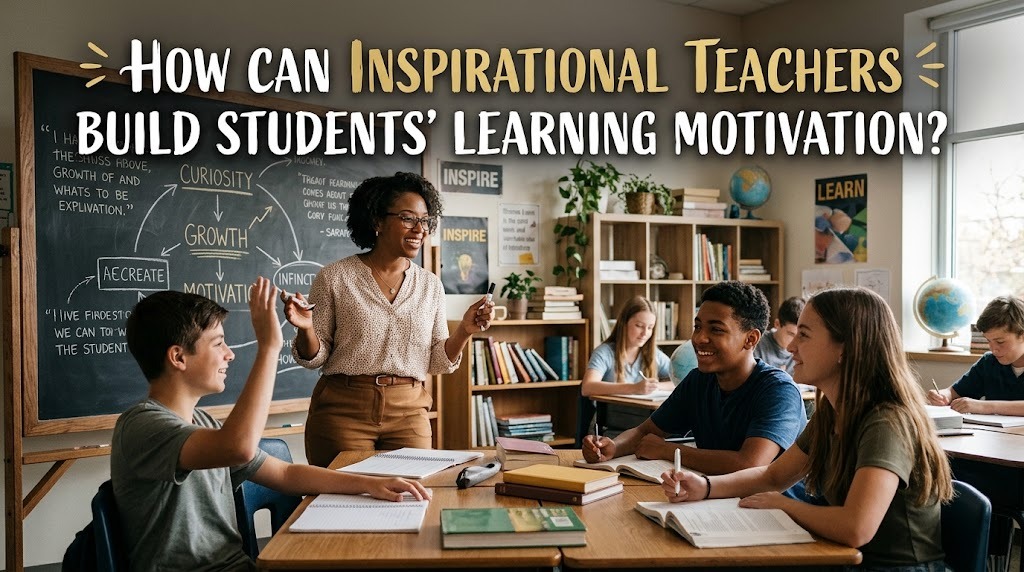
Inspirational teachers can play an important role in building students' motivation to learn. A teacher's approach to teaching, communication style, and ability to understand students can influence how learners respond to academic challenges. When students feel supported and encouraged, they may become more willing to participate, ask questions, and continue learning even when lessons become difficult.
Learning motivation is not created by teachers alone. Students' interests, family environment, friendships, personal goals, and learning experiences also influence their motivation. However, teachers can create a classroom environment that encourages curiosity, confidence, and a positive attitude toward learning.
CREATE A POSITIVE LEARNING ENVIRONMENT
A supportive classroom can make students feel more comfortable when participating in learning activities. Teachers can create this environment by treating students respectfully, listening to their opinions, and encouraging questions. When students do not fear being embarrassed for making mistakes, they may become more willing to express their ideas.
A positive environment can also encourage cooperation among classmates. Group discussions, collaborative projects, and classroom activities can make lessons more interactive. When students feel that the classroom is a safe place to learn and improve, their motivation may gradually increase.
CONNECT LESSONS WITH REAL-LIFE EXPERIENCES
Students are often more interested in learning when they understand how a subject relates to everyday life. Inspirational teachers can explain concepts through examples connected to students' experiences, future careers, technology, business, or community issues. This approach can help students see that classroom knowledge has practical value.
For example, a mathematics teacher can connect calculations with budgeting or business activities. A language teacher can use social media content, advertisements, or everyday conversations as learning materials. Relating lessons to real situations can make abstract concepts easier to understand and more meaningful.
GIVE ENCOURAGEMENT AND CONSTRUCTIVE FEEDBACK
Encouragement can help students recognize their progress and maintain motivation. Teachers can acknowledge effort, improvement, creativity, and persistence instead of focusing only on high grades. Specific feedback is particularly useful because it tells students what they have done well and what they can improve.
Constructive feedback should not make students feel that mistakes define their abilities. Instead, teachers can explain mistakes as opportunities to learn and develop skills. When students understand that improvement is possible through practice, they may become more willing to face challenging tasks.
APPRECIATE DIFFERENT LEARNING STYLES
Students do not always learn in exactly the same way. Some may understand concepts more easily through visual materials, while others benefit from discussion, demonstrations, practice, or hands-on activities. Inspirational teachers can vary their teaching methods to provide different opportunities for students to engage with the material.
Using presentations, videos, discussions, projects, simulations, and practical activities can make lessons more dynamic. Teachers do not need to use every method in every lesson. Choosing appropriate approaches based on the subject and students' needs can make learning more accessible and engaging.
ENCOURAGE STUDENTS TO SET GOALS
Clear learning goals can give students a sense of direction. Teachers can help students establish realistic academic targets and divide larger objectives into smaller steps. This can make difficult tasks feel more manageable and allow students to recognize their progress.
Goals should focus not only on grades but also on skills and personal improvement. A student might aim to understand a difficult concept, improve presentation skills, complete assignments on time, or become more confident when speaking in class. Achieving smaller goals can encourage students to continue working toward larger objectives.
MAKE LEARNING MORE INTERACTIVE
Traditional explanations are sometimes necessary, but students can become more engaged when they actively participate in the learning process. Teachers can use questions, discussions, quizzes, experiments, role-playing, and project-based activities to encourage active involvement.
Interactive learning can also give students opportunities to solve problems and make decisions. Instead of simply receiving information, students can explore concepts and apply what they have learned. This active participation can make lessons more memorable and encourage curiosity.
BUILD TRUSTING RELATIONSHIPS WITH STUDENTS
A teacher who understands students' concerns can provide more relevant support. Building trust does not mean removing academic expectations; rather, it involves treating students with fairness, respect, and empathy. Students may be more motivated when they believe their teacher genuinely wants them to succeed.
Simple actions can strengthen classroom relationships, such as remembering students' interests, listening carefully, and providing opportunities to discuss difficulties. Teachers can also recognize that students have different circumstances and may require different forms of support. A respectful relationship can create a stronger foundation for productive learning.
SHOW ENTHUSIASM FOR THE SUBJECT
Teachers' enthusiasm can influence the atmosphere of a classroom. When teachers demonstrate genuine interest in the subject, explain ideas with energy, and show curiosity themselves, students may become more interested in exploring the material. Enthusiasm can make even challenging topics feel more approachable.
Teachers can share interesting facts, practical applications, or examples that demonstrate why a subject matters. Their passion does not need to be exaggerated; genuine curiosity and clear explanations can be enough to make learning feel more meaningful. Students can also learn from observing how teachers approach problems and continue developing their own knowledge.
GIVE STUDENTS OPPORTUNITIES TO BE INDEPENDENT
Motivation can grow when students have some control over their learning. Teachers can provide choices about project topics, research methods, presentation formats, or ways to demonstrate understanding when appropriate. These choices allow students to connect assignments with their interests and strengths.
Independence should be accompanied by clear expectations and guidance. Teachers can establish deadlines, assessment criteria, and learning objectives while allowing students flexibility in how they achieve them. This balance can help students develop responsibility, decision-making skills, and confidence.
BECOME A ROLE MODEL FOR LIFELONG LEARNING
Inspirational teachers can demonstrate that learning does not stop after completing formal education. They can show curiosity, admit when they do not know something, explore new information, and continue developing their professional skills. This behavior can communicate that asking questions and learning from mistakes are normal parts of growth.
Teachers can also encourage students to develop habits such as reading, researching reliable sources, practicing skills, and reflecting on their progress. These habits can help students become more independent learners. Over time, students may begin to view education not simply as a requirement but as a way to develop their abilities and understand the world.
CONCLUSION
Inspirational teachers can build students' learning motivation by creating supportive classrooms, connecting lessons with real-life experiences, providing constructive feedback, and encouraging active participation. Strong relationships, meaningful goals, appropriate learning methods, and genuine teacher enthusiasm can also help students develop a more positive attitude toward education.
The role of a teacher is not to motivate every student in exactly the same way. Effective encouragement considers students' different interests, abilities, and circumstances while maintaining clear academic expectations. By helping students recognize their progress and understand the value of learning, teachers can contribute to stronger and more sustainable learning motivation.
Recent Posts

Bagaimana Sistem SKS pada Program Kuliah... 22.11.2026/58 View

How Does Technology Make Daily Evaluation... 21.11.2026/86 View

Apa Strategi Menghadapi Kesenjangan antara Kompetensi... 21.11.2026/84 View

Mengapa Inventaris Aset Penting bagi Kelancaran... 21.11.2026/82 View

When Should Musicians Join a Record... 21.11.2026/86 View
