

How Can International Cooperation Help Combat Global Warming?
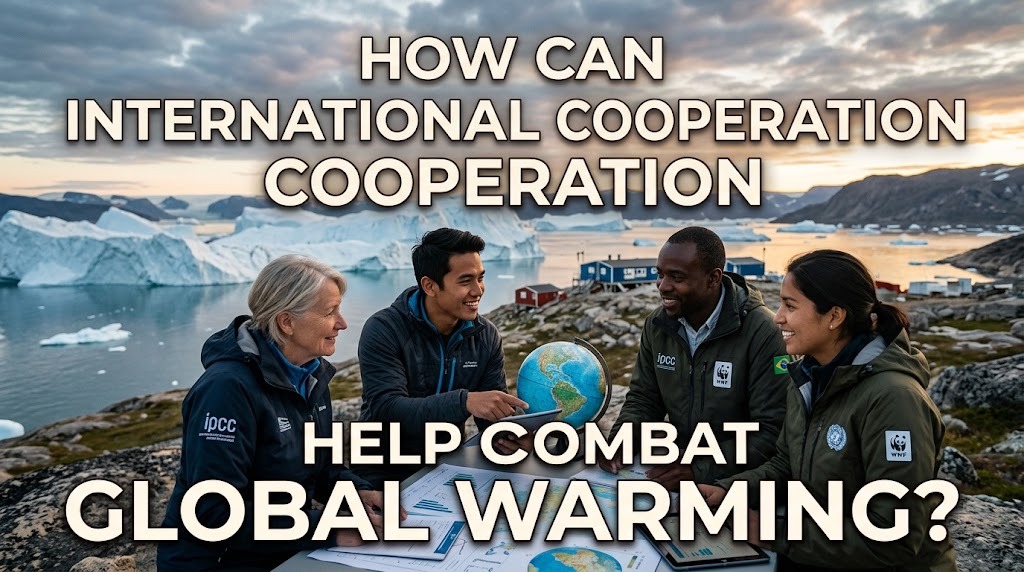
Global warming is a worldwide challenge that requires action from countries across the globe. Greenhouse gases released in one country contribute to the Earth's overall warming, regardless of where the emissions originate. Because climate change affects ecosystems, economies, public health, and communities across national borders, individual countries cannot address the problem effectively through isolated efforts alone.
International cooperation to combat global warming allows countries to establish shared goals, exchange scientific knowledge, develop cleaner technologies, and coordinate efforts to reduce greenhouse gas emissions. Cooperation can also help countries prepare for climate-related risks and support communities with limited resources. Through collective action, nations can strengthen their responses to climate change while considering their different circumstances and capabilities.
ESTABLISHING INTERNATIONAL CLIMATE AGREEMENTS
One important form of international climate cooperation is the development of agreements that encourage countries to reduce greenhouse gas emissions. The Paris Agreement, adopted in 2015, is a major international treaty designed to strengthen the global response to climate change. Its central temperature goal is to hold the increase in global average temperature to well below 2°C above pre-industrial levels and pursue efforts to limit it to 1.5°C.
Under the agreement, participating countries communicate national climate plans and are expected to strengthen their efforts over time. These plans can include measures related to renewable energy, energy efficiency, forest protection, and emissions reduction. International agreements provide a framework for countries to coordinate their actions and report progress. However, their effectiveness depends on the ambition of national commitments, implementation, transparency, and continued cooperation among participating countries.
SHARING CLEAN TECHNOLOGY AND SCIENTIFIC KNOWLEDGE
Countries have different levels of technological development, research capacity, and access to financial resources. International cooperation can help make cleaner technologies more accessible by supporting research partnerships, technical training, and the exchange of practical knowledge. Examples include renewable energy systems, energy-efficient buildings, low-emission transportation, and technologies that help industries reduce emissions.
Scientific collaboration is also important for understanding how the climate is changing. Researchers can share observations, climate models, satellite information, and data about oceans, forests, and extreme weather. This information can improve climate assessments and help governments develop policies based on scientific evidence. By combining expertise and resources, countries can accelerate climate technology development and improve their ability to respond to environmental challenges.
PROVIDING CLIMATE FINANCE AND SUPPORTING VULNERABLE COUNTRIES
Many countries face difficulties in reducing emissions and preparing for climate impacts because of financial constraints, limited infrastructure, or exposure to environmental hazards. International climate finance can help support projects such as renewable energy development, resilient infrastructure, coastal protection, and early warning systems. Financial assistance may come through international funds, development institutions, bilateral partnerships, or other arrangements.
Climate finance can support both mitigation and adaptation. Mitigation projects aim to reduce greenhouse gas emissions, while adaptation projects help communities manage risks such as flooding, drought, and extreme heat. Access to finance is especially important for countries and communities that face significant climate risks but have limited resources to respond. Effective support requires transparent management, appropriate project planning, and attention to local needs so that funding can produce meaningful and lasting benefits.
PROTECTING FORESTS, OCEANS, AND SHARED ECOSYSTEMS
Natural ecosystems play an important role in regulating the climate and supporting biodiversity. Forests absorb carbon dioxide, while oceans absorb heat and carbon from the atmosphere. However, deforestation, ecosystem degradation, and other human activities can weaken these natural functions and contribute to environmental damage.
Countries can cooperate to protect forests, restore degraded landscapes, reduce illegal wildlife and timber trade, and improve the management of marine environments. They can also share information about forest loss, ocean conditions, and environmental threats that cross national borders. International partnerships can support conservation projects and encourage sustainable land and resource management. Through global environmental protection, countries can preserve natural carbon stores while safeguarding ecosystems that provide food, water, livelihoods, and habitat for wildlife.
COORDINATING EMISSIONS REDUCTIONS AND PREPARING FOR CLIMATE RISKS
International cooperation can help countries identify opportunities to reduce emissions across energy, transportation, industry, agriculture, and waste management. Governments can exchange information about policies, establish common technical approaches where appropriate, and cooperate on infrastructure such as cross-border electricity networks. These efforts can support the transition toward lower-emission economies while allowing countries to adapt strategies to their national circumstances.
Cooperation is equally important for preparing for climate impacts that cannot be avoided entirely. Countries can share weather forecasts, disaster information, research, and early warning technology to improve preparedness for floods, droughts, heatwaves, and other hazards. Regional collaboration can be especially useful when rivers, oceans, ecosystems, and weather systems cross national boundaries. By combining climate change mitigation and adaptation, countries can reduce future warming while helping communities become more resilient to climate-related risks.
CONCLUSION
International cooperation helps combat global warming by establishing climate agreements, sharing scientific knowledge and clean technology, providing climate finance, protecting natural ecosystems, and coordinating emissions reductions. These efforts allow countries to combine resources and expertise to address a problem that affects the entire planet.
However, international commitments must be translated into effective national policies and practical action. Governments, businesses, research institutions, communities, and individuals all have roles in supporting climate solutions. Through transparent cooperation, consistent implementation, and stronger collective efforts, countries can make progress toward reducing greenhouse gas emissions and building a more sustainable future.
Recent Posts

Bagaimana Sistem SKS pada Program Kuliah... 22.11.2026/49 View

How Does Technology Make Daily Evaluation... 21.11.2026/77 View

Apa Strategi Menghadapi Kesenjangan antara Kompetensi... 21.11.2026/78 View

Mengapa Inventaris Aset Penting bagi Kelancaran... 21.11.2026/74 View

When Should Musicians Join a Record... 21.11.2026/79 View
