

How Can Lecturer Seminars Improve Teaching Competencies?
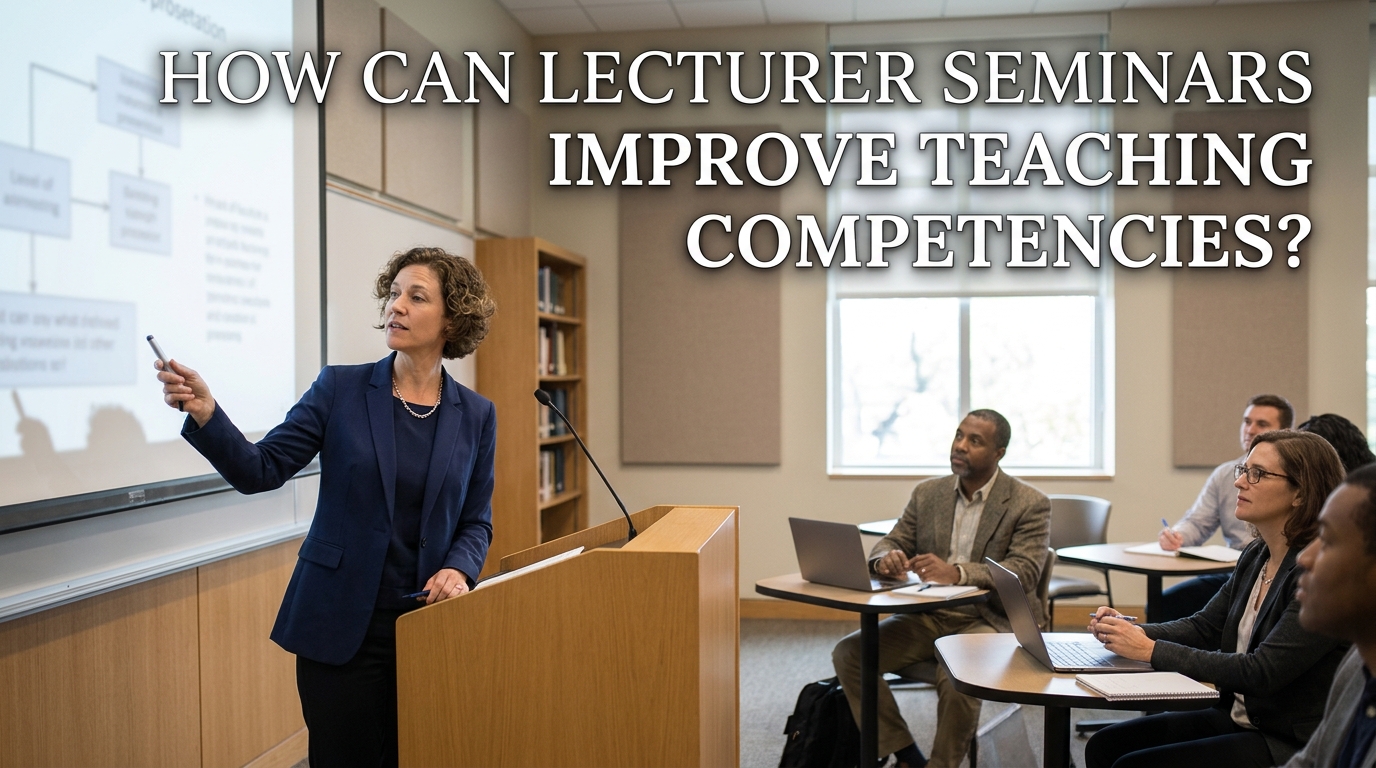
Lecturer seminars are valuable professional development activities that help educators strengthen their teaching competencies and improve the quality of higher education. Lecturers need more than subject knowledge to teach effectively. They must also communicate clearly, manage classrooms, design appropriate learning activities, and assess student progress. Through seminars, lecturers can explore new teaching strategies, exchange experiences, and learn practical solutions to educational challenges. When the knowledge gained is applied consistently, these activities can support more effective teaching and better learning experiences for students.
WHAT ARE TEACHING COMPETENCIES?
Teaching competencies are the knowledge, skills, and professional attitudes lecturers need to support effective learning. They include understanding academic subjects, explaining concepts clearly, planning lessons, managing classroom activities, and evaluating student performance. Lecturers also need communication skills, critical thinking, adaptability, and the ability to use educational technology appropriately.
Strong teaching competencies help lecturers create learning environments that encourage student participation and independent thinking. They also enable educators to recognize different learning needs and adjust their teaching methods when necessary. Because educational practices and student expectations continue to change, lecturers need opportunities to develop their abilities throughout their careers. Continuous professional development helps them maintain relevant skills and improve their teaching practices over time.
HOW DO LECTURER SEMINARS DEVELOP TEACHING SKILLS?
Lecturer seminars introduce educators to teaching methods, educational research, and practical classroom strategies. Speakers may demonstrate approaches such as problem-based learning, project-based learning, collaborative activities, and interactive discussions. These methods can help lecturers move beyond one-way presentations and encourage students to participate actively in the learning process. Participants can also discuss how to adapt these approaches to different subjects and academic levels.
Seminars provide opportunities for lecturers to exchange experiences and learn from colleagues who face similar teaching challenges. For example, a lecturer may discover new ways to explain difficult concepts or encourage quieter students to participate. Discussions and feedback can help participants identify strengths and areas that need improvement. By applying suitable strategies in their classrooms, lecturers can gradually develop more effective and engaging teaching practices.
HOW DO SEMINARS IMPROVE COMMUNICATION AND CLASSROOM MANAGEMENT?
Effective teaching requires lecturers to communicate information clearly and maintain a productive learning environment. Lecturer seminars can provide guidance on explaining complex concepts, asking meaningful questions, giving constructive feedback, and managing classroom discussions. These skills help students understand learning materials and feel more comfortable expressing their ideas. Clear communication can also reduce misunderstandings and support positive relationships between lecturers and students.
Classroom management is another important competency that seminars can address. Participants may learn how to establish classroom expectations, manage group activities, handle disruptions professionally, and encourage respectful interaction. They can also discuss approaches to maintaining student attention in face-to-face and online classes. Improved communication and classroom management help create an organized learning environment where students can focus on academic goals.
HOW CAN LECTURER SEMINARS SUPPORT THE USE OF EDUCATIONAL TECHNOLOGY?
Educational technology offers lecturers new ways to deliver materials, encourage collaboration, and assess student understanding. Seminars can introduce participants to learning management systems, digital presentation tools, online quizzes, and interactive learning platforms. Lecturers can learn how these tools support different teaching objectives and improve access to learning resources. Practical demonstrations are particularly useful because they allow participants to understand how a tool works before using it with students.
However, technology should support learning rather than replace thoughtful teaching. Lecturers need to consider accessibility, student privacy, academic integrity, and differences in digital skills. Seminars can help educators select appropriate tools and use them responsibly. Developing digital teaching competencies allows lecturers to combine technology with effective instructional methods and meaningful student interaction.
HOW DO SEMINARS STRENGTHEN ASSESSMENT AND FEEDBACK SKILLS?
Assessment helps lecturers determine whether students understand course materials and achieve the intended learning outcomes. Lecturer seminars can introduce different assessment methods, including quizzes, presentations, projects, portfolios, and performance-based tasks. Participants can discuss how to align assessments with learning objectives and use clear criteria to evaluate student work. These approaches can provide a more complete picture of student learning than relying on a single examination.
Seminars can also help lecturers improve the quality of feedback they provide. Constructive feedback should explain what students have done well, identify areas for improvement, and offer practical suggestions for further learning. Lecturers can explore ways to make feedback timely, specific, and fair. When assessment and feedback are used effectively, students can better understand their progress and take greater responsibility for improving their performance.
WHAT ROLE DOES COLLABORATION PLAY IN TEACHING DEVELOPMENT?
Collaboration allows lecturers to learn from different perspectives and share effective educational practices. During seminars, participants can discuss teaching challenges, exchange learning materials, and explore solutions to common problems. Working with colleagues from different disciplines may also inspire new approaches to interdisciplinary learning. These professional connections can continue after the seminar through mentoring, joint projects, and teaching communities.
Peer learning is particularly valuable because lecturers can compare ideas with experiences from real academic settings. For example, an educator who has successfully introduced group-based learning can share practical recommendations with colleagues who want to try the same approach. Participants can adapt these ideas to their own courses instead of relying entirely on theoretical explanations. Professional collaboration encourages continuous improvement and helps build a culture of shared responsibility for education quality.
HOW CAN UNIVERSITIES MEASURE THE EFFECTIVENESS OF LECTURER SEMINARS?
Universities should evaluate lecturer seminars to determine whether they contribute to meaningful improvements in teaching competencies. The evaluation can begin with participant feedback, knowledge assessments, and reflections on the seminar's relevance. Organizers can also review lesson plans, teaching materials, or other examples of how lecturers intend to apply what they have learned. These indicators help assess immediate learning outcomes, although they do not automatically prove long-term improvement.
A more complete evaluation examines teaching practices after the seminar. Universities may use classroom observations, peer reviews, student feedback, and discussions with participating lecturers to identify changes in instructional methods. They can also assess whether the changes support intended learning outcomes, while recognizing that student performance is influenced by many factors. Follow-up evaluation and ongoing support help institutions identify which seminar activities are most useful and where additional development is needed.
CONCLUSION
Lecturer seminars can improve teaching competencies by strengthening instructional skills, communication, classroom management, assessment practices, and the effective use of educational technology. They also encourage lecturers to exchange experiences, learn from colleagues, and explore innovative teaching approaches. These benefits are most meaningful when participants apply their new knowledge to actual classroom situations.
Universities should therefore design seminars around clear learning objectives, relevant topics, and practical activities. They should also provide opportunities for follow-up learning and evaluate changes in teaching practices over time. Through continuous professional development and collaborative learning, lecturer seminars can help educators become more effective and support better learning experiences for students.
Recent Posts

Bagaimana Sistem SKS pada Program Kuliah... 22.11.2026/49 View

How Does Technology Make Daily Evaluation... 21.11.2026/77 View

Apa Strategi Menghadapi Kesenjangan antara Kompetensi... 21.11.2026/78 View

Mengapa Inventaris Aset Penting bagi Kelancaran... 21.11.2026/74 View

When Should Musicians Join a Record... 21.11.2026/79 View
