

How Can Lecturer Seminars Support Academic Publication Development?
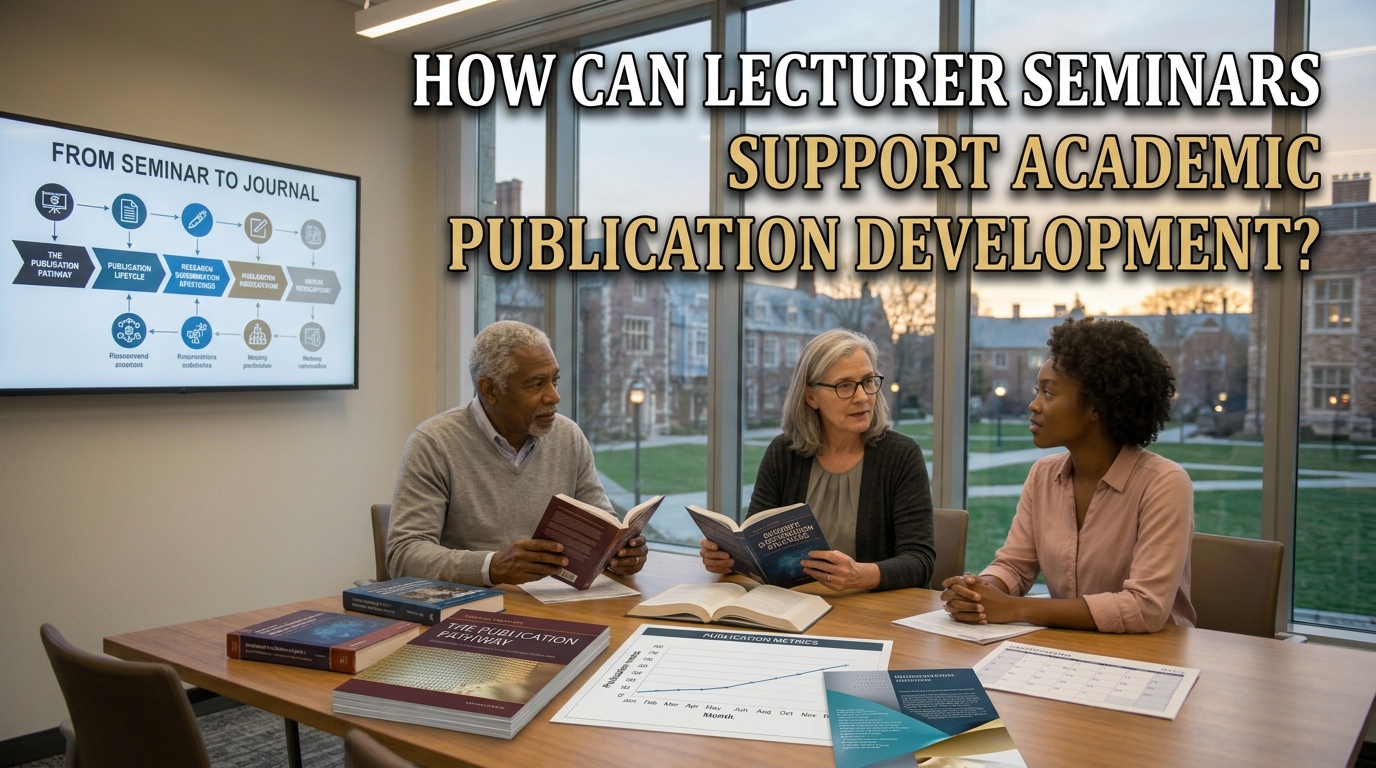
Academic publications play an important role in sharing research findings, developing knowledge, and improving the reputation of higher education institutions. However, preparing a quality academic paper requires more than conducting research. Lecturers must also understand academic writing standards, publication ethics, journal requirements, and effective research communication. Lecturer seminars provide a valuable opportunity to develop these skills through expert presentations, discussions, and collaboration. By participating in these activities, lecturers can improve their manuscripts and increase their readiness to publish research in reputable academic journals.
UNDERSTANDING THE ROLE OF LECTURER SEMINARS
Lecturer seminars are academic events where educators and researchers exchange ideas, discuss research findings, and learn about developments in their fields. These activities may include presentations, panel discussions, writing sessions, and practical training. They help lecturers understand current academic publication standards and the expectations of different journals. Participants can also learn how to present research questions, explain research methods, and communicate results clearly. As a result, seminars can strengthen the knowledge and confidence lecturers need to develop publishable academic work.
IMPROVING ACADEMIC WRITING SKILLS
Strong academic writing is essential for producing manuscripts that are clear, logical, and suitable for publication. Lecturer seminars can introduce participants to effective writing structures, including research abstracts, introductions, literature reviews, methodology sections, and conclusions. Experienced speakers may explain how to build convincing arguments and connect research findings with existing studies. Lecturers can also learn to avoid unclear sentences, unsupported claims, and unnecessary repetition. These skills help researchers prepare more readable, organized, and academically sound manuscripts.
UNDERSTANDING JOURNAL REQUIREMENTS
Every academic journal has its own submission guidelines, scope, formatting rules, and review procedures. Lecturer seminars can help participants understand how to select a journal that matches their research topic and intended audience. Speakers may explain author guidelines, manuscript formatting, citation styles, publication fees, and peer review processes. Lecturers can also learn to check a journal's credibility before submitting their work. Understanding these requirements reduces avoidable submission errors and helps researchers prepare manuscripts that meet the expectations of their chosen publications.
DEVELOPING RESEARCH QUALITY AND ORIGINALITY
Academic publications are stronger when they present reliable evidence, meaningful analysis, and a clear contribution to existing knowledge. Through seminars, lecturers can discuss research design, data analysis, literature review methods, and ways to identify research gaps. Feedback from other researchers may reveal weaknesses in an argument or suggest opportunities to improve the study. Participants can also learn how to use sources responsibly and distinguish their contributions from previously published work. This process supports research originality, methodological rigor, and responsible academic practice, which are essential elements of credible publications.
LEARNING ABOUT PEER REVIEW AND REVISION
Peer review is an important stage in many academic publication processes because it allows experts to evaluate a manuscript before publication. Lecturer seminars can explain how reviewers assess a paper's originality, methodology, clarity, and contribution to its field. Participants may learn how to respond to reviewers' comments professionally and revise manuscripts systematically. Practical exercises can help lecturers identify common weaknesses, such as unclear research objectives or insufficient explanations of findings. By understanding revision strategies, lecturers can become better prepared to improve their manuscripts and respond constructively to editorial feedback.
BUILDING ACADEMIC NETWORKS AND COLLABORATIONS
Academic publication development often benefits from cooperation among researchers with different areas of expertise. Lecturer seminars create opportunities to meet colleagues, exchange research interests, and identify potential collaborators. These connections may lead to joint research projects, co-authored papers, or interdisciplinary studies. Collaboration can also provide access to complementary skills, research perspectives, and resources that one researcher may not have independently. Through continued communication after a seminar, lecturers can build professional academic networks that support long-term research and publication activities.
PROMOTING PUBLICATION ETHICS
Publication ethics are essential for maintaining trust in academic research. Lecturer seminars can help researchers understand plagiarism prevention, accurate citation, appropriate authorship, data integrity, and the responsible use of research results. Participants may also learn why they must avoid fabricated data, duplicate submissions, and misleading reporting. Discussions of ethical case studies can help lecturers recognize difficult situations and make informed decisions. By applying these principles, lecturers can protect research credibility and academic integrity throughout the publication process.
USING SEMINAR FEEDBACK TO IMPROVE MANUSCRIPTS
Feedback is most valuable when lecturers use it to make specific improvements to their work. During seminars, participants may present research ideas, abstracts, or draft manuscripts and receive comments from experienced academics. They can use this input to clarify their research questions, strengthen their arguments, and improve the organization of their papers. However, not every suggestion must be accepted automatically; lecturers should evaluate feedback based on research evidence, journal requirements, and academic standards. A clear revision plan helps transform seminar discussions into practical improvements that support publication readiness.
CONCLUSION
Lecturer seminars can support academic publication development by improving writing skills, strengthening research quality, and increasing understanding of journal requirements. They also provide opportunities to learn about peer review, publication ethics, and research collaboration. However, attending a seminar alone does not guarantee that a paper will be accepted by a journal. Lecturers need to apply what they learn, conduct careful research, and revise their manuscripts consistently. With continuous learning, constructive feedback, and responsible research practices, lecturer seminars can become a valuable part of long-term academic publication development.
Recent Posts

Bagaimana Sistem SKS pada Program Kuliah... 22.11.2026/49 View

How Does Technology Make Daily Evaluation... 21.11.2026/76 View

Apa Strategi Menghadapi Kesenjangan antara Kompetensi... 21.11.2026/78 View

Mengapa Inventaris Aset Penting bagi Kelancaran... 21.11.2026/74 View

When Should Musicians Join a Record... 21.11.2026/78 View
