

How Can Lecturers Successfully Pass the Certification Process?
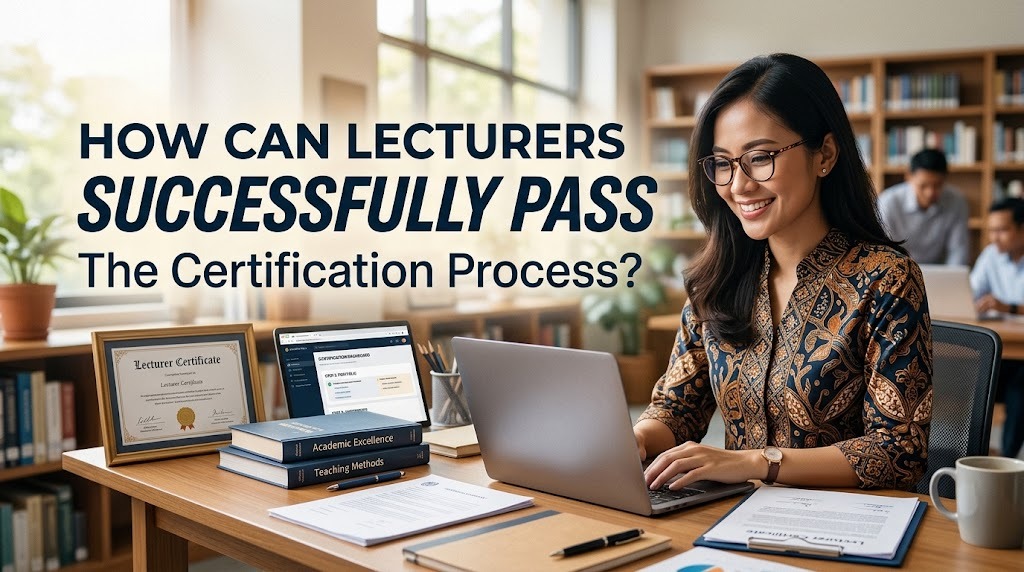
Passing the lecturer certification process requires careful preparation, accurate documentation, and a clear understanding of professional competency standards. Certification is intended to recognize lecturers who meet the qualifications and professional expectations established for higher education. Therefore, applicants need to demonstrate their abilities through the required administrative procedures and assessment activities.
For lecturers in Indonesia, the certification process may involve eligibility verification, document submission, professional portfolios, and competency assessments, depending on the applicable program. Preparing for each stage can help applicants avoid common mistakes and complete the process more systematically. By understanding the requirements and maintaining consistent professional performance, lecturers can improve their readiness for certification.
UNDERSTAND THE CERTIFICATION REQUIREMENTS
The first step toward successfully completing lecturer certification is understanding the current eligibility criteria and assessment procedures. Lecturers should review the official guidelines to identify the academic qualifications, employment conditions, registration requirements, and professional standards that apply to their certification pathway.
Applicants should not rely entirely on information from previous certification periods because government policies and technical procedures may change. They can obtain updated information through their universities and official higher education authorities. Understanding the requirements early allows lecturers to identify missing qualifications or documents before beginning the application process.
ENSURE THAT ACADEMIC AND EMPLOYMENT DATA ARE ACCURATE
Accurate institutional information is essential during lecturer certification verification. Applicants should check their academic qualifications, employment status, lecturer identification, institutional affiliation, and academic position. In Indonesia, some of this information may be verified through the higher education data system, including PDDikti.
If there are inconsistencies between official records and supporting documents, lecturers should contact their university's academic or human resources administration. Corrections may require additional verification, so it is better to resolve data problems before registration. Accurate information can help prevent administrative obstacles during the certification process.
PREPARE A COMPLETE AND RELEVANT PROFESSIONAL PORTFOLIO
A well-organized lecturer professional portfolio can help demonstrate an applicant's academic experience and professional contributions. Depending on the certification guidelines, the portfolio may contain evidence of teaching activities, research achievements, community service, academic publications, and professional development.
Lecturers should ensure that every piece of evidence is relevant, accurate, and supported by appropriate documentation. Materials should be arranged according to the required format rather than collected without a clear structure. A complete portfolio makes it easier for evaluators to review the lecturer's professional activities and understand how they meet the established criteria.
DEVELOP TEACHING COMPETENCE AND PROFESSIONAL PERFORMANCE
Successfully completing certification also requires lecturers to demonstrate the competencies expected of professional educators. Teaching competence includes preparing learning materials, explaining academic concepts, managing classroom activities, evaluating student progress, and providing appropriate academic guidance.
Lecturers can strengthen these abilities by reviewing their teaching methods, participating in professional training, and requesting feedback from colleagues or students through appropriate institutional procedures. They should also maintain professional ethics and demonstrate responsibility in their academic activities. Consistent performance is important because professional competence involves more than preparing documents for a single assessment.
FOLLOW OFFICIAL INSTRUCTIONS AND MONITOR THE APPLICATION
Another important way to improve readiness is to follow every stage of the official lecturer certification process carefully. Applicants should pay attention to registration schedules, document formats, assessment instructions, and submission deadlines. Missing an administrative requirement or misunderstanding an instruction can create unnecessary difficulties.
Lecturers should regularly monitor their application status through authorized institutional or government channels. If additional information or corrections are requested, they should respond according to the instructions and within the specified period. Keeping copies of submitted documents and official notifications can also make it easier to track progress and communicate with the responsible administration.
CONCLUSION
Lecturers can prepare to pass the certification process by understanding the current requirements, ensuring accurate academic records, preparing a complete professional portfolio, and developing their teaching competence. Following official instructions and monitoring application progress are also important steps in completing the process systematically.
However, certification is not achieved through document preparation alone. Lecturers must demonstrate professional competence, maintain academic integrity, and fulfill their responsibilities in teaching, research, and community service. By combining careful preparation with consistent professional development, lecturers can approach professional certification with greater readiness and confidence.
Recent Posts

Bagaimana Sistem SKS pada Program Kuliah... 22.11.2026/45 View

How Does Technology Make Daily Evaluation... 21.11.2026/73 View

Apa Strategi Menghadapi Kesenjangan antara Kompetensi... 21.11.2026/75 View

Mengapa Inventaris Aset Penting bagi Kelancaran... 21.11.2026/71 View

When Should Musicians Join a Record... 21.11.2026/75 View
