

How Can Literacy Movements Increase Reading Interest Among Communities in the Digital Era?
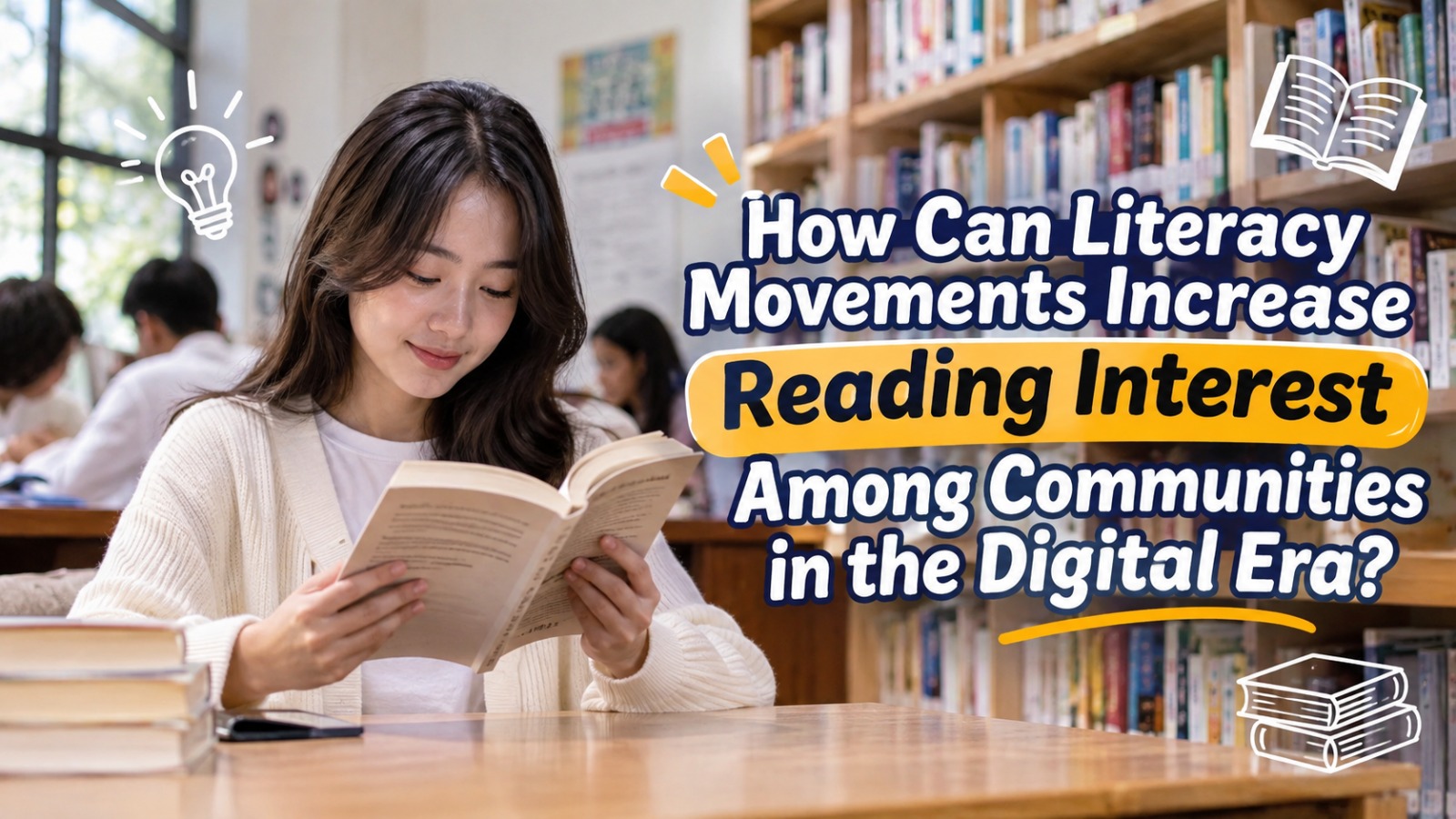
Literacy movements play an important role in developing a knowledgeable, informed, and educated society. In the digital era, people can access information through smartphones, computers, and the internet. However, easy access to information does not always encourage people to develop strong reading habits. Many individuals spend more time consuming short social media content than reading books or educational materials. Therefore, literacy movements are essential for increasing reading interest, improving knowledge, and encouraging communities to use digital technology positively.
THE IMPORTANCE OF LITERACY MOVEMENTS IN THE DIGITAL ERA
Literacy movements are organized efforts to encourage individuals and communities to develop reading, writing, and information-processing skills. These activities help people understand various topics and gain useful knowledge for their daily lives. In the digital era, literacy is not limited to reading printed books but also includes understanding information from digital platforms. Through literacy movements, people can become more familiar with educational resources and develop a positive attitude toward learning.
Furthermore, literacy movements help communities recognize the importance of reading as a lifelong habit. People who regularly read tend to have broader knowledge, better communication skills, and stronger abilities to understand different perspectives. These benefits are important because modern society requires individuals to adapt to continuous changes in technology and information. By promoting literacy activities, communities can create a generation that is more knowledgeable, creative, and prepared to face future challenges.
USING DIGITAL TECHNOLOGY TO PROMOTE READING INTEREST
Digital technology provides many opportunities to make reading activities more accessible and enjoyable. People can use smartphones, tablets, and computers to read electronic books, online articles, educational blogs, and digital magazines. These resources allow readers to access information without always visiting a physical library or purchasing printed materials. As a result, digital platforms can help remove geographical and financial barriers that often limit reading opportunities.
Schools, libraries, and community organizations can also use social media to promote reading campaigns. For example, they can share book recommendations, reading challenges, educational videos, and short reviews to attract public attention. Digital libraries and free reading applications can provide additional learning materials for people with different interests. However, users must also learn to manage their screen time and choose reliable reading sources to ensure that technology supports meaningful learning rather than unnecessary digital consumption.
BUILDING READING HABITS THROUGH COMMUNITY ACTIVITIES
Community participation is one of the most important factors in the success of literacy movements. Reading activities become more interesting when people can participate together and exchange ideas. Communities can organize book discussions, reading clubs, storytelling sessions, and public reading events to create a welcoming learning environment. These activities allow participants to discover new information while developing social relationships with other readers.
Community leaders, teachers, students, and volunteers can work together to organize regular literacy programs. For example, neighborhood reading corners can provide accessible books for children, teenagers, and adults. Volunteers can also introduce creative activities such as reading competitions, book-sharing programs, and literacy workshops. When these activities are conducted consistently, reading can gradually become a positive habit rather than an occasional activity.
THE ROLE OF FAMILIES AND SCHOOLS IN DEVELOPING LITERACY
Families and schools have important responsibilities in introducing reading habits from an early age. Children who regularly see their parents reading books or other educational materials may become more interested in developing similar habits. Parents can support their children's literacy development by providing age-appropriate books, reading stories together, and discussing interesting information. These simple activities help children improve their vocabulary, imagination, and understanding of different subjects.
Schools can strengthen these efforts by creating attractive literacy programs that encourage active student participation. Teachers can introduce reading sessions, classroom libraries, storytelling activities, and assignments based on educational books. Instead of treating reading only as an academic requirement, schools should make it an enjoyable learning experience. Cooperation between families and educational institutions can create consistent support that helps children develop confidence, curiosity, and strong reading skills.
OVERCOMING CHALLENGES IN IMPLEMENTING LITERACY MOVEMENTS
Despite their benefits, literacy movements still face several challenges in modern society. One common problem is the low interest in reading among individuals who are more accustomed to watching videos or consuming short digital content. Limited access to books, inadequate library facilities, and differences in educational opportunities can also prevent some communities from participating in literacy activities. In rural areas, internet access and educational resources may be more limited than in urban communities.
To overcome these challenges, literacy programs must be designed according to the needs and conditions of each community. Governments, educational institutions, businesses, and local organizations can work together to provide affordable books, establish reading facilities, and improve access to digital learning resources. Literacy campaigns should also use creative approaches that match the interests of different age groups. Regular evaluation is necessary to measure participation, identify difficulties, and improve program effectiveness over time.
CONCLUSION
Literacy movements are essential for increasing reading interest and developing knowledgeable communities in the digital era. By combining traditional reading activities with digital technology, people can access a wider range of educational resources and enjoy more flexible learning opportunities. The involvement of families, schools, governments, and community organizations is also necessary to create a supportive reading environment.
Developing a strong reading culture requires consistent effort and active participation from everyone. Through accessible resources, engaging activities, and effective cooperation, literacy movements can encourage people to become lifelong learners. Ultimately, increasing reading interest is not only about encouraging people to read more books but also about building a society that thinks critically, understands information, and uses knowledge to improve everyday life.
Recent Posts

Bagaimana Sistem SKS pada Program Kuliah... 22.11.2026/28 View

How Does Technology Make Daily Evaluation... 21.11.2026/65 View

Apa Strategi Menghadapi Kesenjangan antara Kompetensi... 21.11.2026/65 View

Mengapa Inventaris Aset Penting bagi Kelancaran... 21.11.2026/62 View

When Should Musicians Join a Record... 21.11.2026/63 View
