

How Can Mind Mapping Support Learning in the Digital Era?
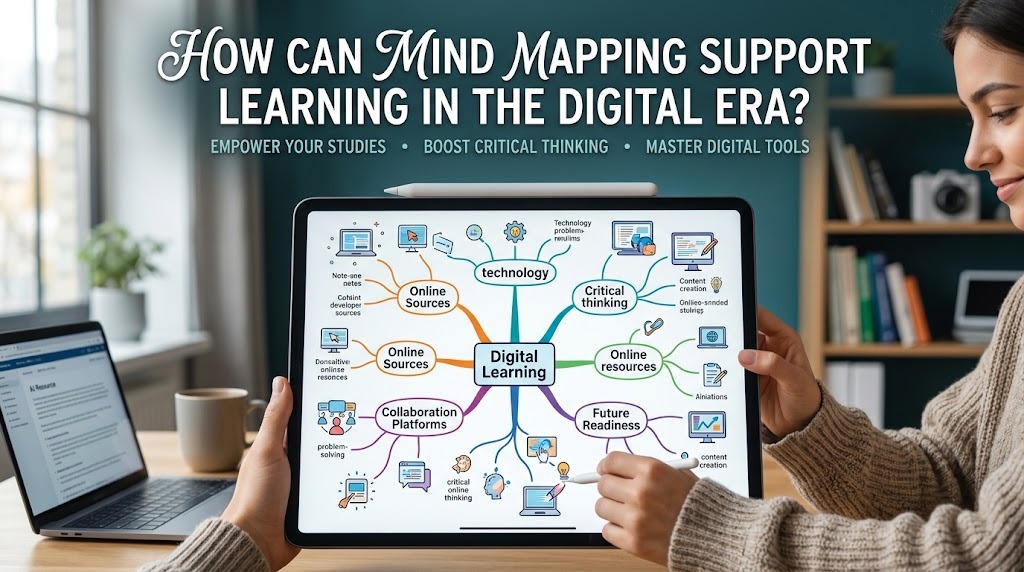
The digital era has changed the way students access, organize, and study information. Students can now learn through online classes, digital textbooks, educational videos, websites, and various learning applications. However, having access to large amounts of information can also make it difficult to organize important ideas. Mind mapping provides a visual learning method that can help students arrange digital information into a clearer structure. By combining mind mapping with digital learning tools, students can create a more organized and flexible learning process.
WHY IS MIND MAPPING USEFUL IN DIGITAL LEARNING?
Digital learning gives students access to a large amount of information from different sources. They may read articles, watch videos, attend online classes, and use digital documents during the same study session. Without proper organization, this information can become difficult to connect and review. Mind mapping can help students place the most important information into a single visual structure.
Students can create a central topic and develop branches based on the information they find. Each branch can contain important keywords, explanations, examples, or links to related resources. This allows students to organize information without having to depend entirely on long notes. As a result, mind mapping can support clearer information management in a digital learning environment.
HOW DO DIGITAL MIND MAPPING TOOLS SUPPORT STUDENTS?
Digital mind-mapping tools allow students to create and edit maps using computers, tablets, or other compatible devices. Students can add, remove, move, and reorganize branches more easily than with a traditional paper map. Some tools may also provide features for adding images, links, files, or other visual elements. These features can make a mind map more flexible for different types of learning materials.
Another benefit is that digital maps can be updated as students learn new information. For example, students can add new concepts after attending an online lecture or reading another resource. They can also reorganize branches when they discover a better way to understand the topic. This flexibility makes digital mind maps useful for subjects that require continuous learning and revision.
HOW CAN MIND MAPPING HELP ORGANIZE ONLINE INFORMATION?
Students often encounter information from many online sources, and not every piece of information has the same importance. Mind mapping can help them group related information into categories. For example, when researching a topic, students can create branches for definitions, causes, examples, benefits, challenges, and solutions. This structure makes it easier to understand how different sources contribute to the same topic.
Students should still evaluate online information carefully before adding it to a mind map. Reliable sources should be prioritized, and information should be checked before being treated as accurate. A mind map can organize information, but it does not automatically guarantee that the information is correct. Therefore, critical thinking and source evaluation remain important parts of digital learning.
HOW DOES MIND MAPPING SUPPORT ONLINE COLLABORATION?
Digital mind maps can also support collaborative learning when students work together on assignments or projects. Several students can contribute ideas to a shared structure when the platform they use provides collaboration features. One student may organize the main concepts while others add examples, research findings, or supporting information. This can make group discussions more structured.
Collaboration can also help students see different perspectives. Each member may understand the same topic differently and contribute information that others have not considered. By combining these ideas into one mind map, the group can identify similarities, differences, and connections. This can support better communication and teamwork during digital learning activities.
HOW CAN STUDENTS COMBINE MIND MAPPING WITH DIGITAL STUDY METHODS?
Students can combine mind mapping with other digital learning strategies to make their study process more effective. For example, they can create a mind map after watching an educational video or completing an online lesson. They can also use the map to organize notes from digital textbooks and online discussions. Afterward, students can review the map and test their understanding using practice questions.
Mind maps can also be used for exam preparation and assignment planning. Students can organize important concepts before creating a presentation, writing an essay, or preparing for a test. Digital maps can be updated whenever new information is discovered. This makes them useful as long-term study resources rather than one-time notes.
CONCLUSION
Mind mapping can support learning in the digital era by helping students organize large amounts of information into a clear and connected structure. Digital mind-mapping tools provide flexibility because students can edit, rearrange, and expand their maps as their knowledge develops. The method can also support online research, collaboration, exam preparation, and assignment planning. However, students should continue to evaluate digital information carefully and use reliable learning resources. When combined with digital learning strategies and critical thinking, mind mapping can become a practical tool for organized and meaningful learning.
Recent Posts

Bagaimana Sistem SKS pada Program Kuliah... 22.11.2026/28 View

How Does Technology Make Daily Evaluation... 21.11.2026/65 View

Apa Strategi Menghadapi Kesenjangan antara Kompetensi... 21.11.2026/65 View

Mengapa Inventaris Aset Penting bagi Kelancaran... 21.11.2026/62 View

When Should Musicians Join a Record... 21.11.2026/63 View
