

How Can Modern Traffic Light Systems Improve Traffic Flow in Cities?
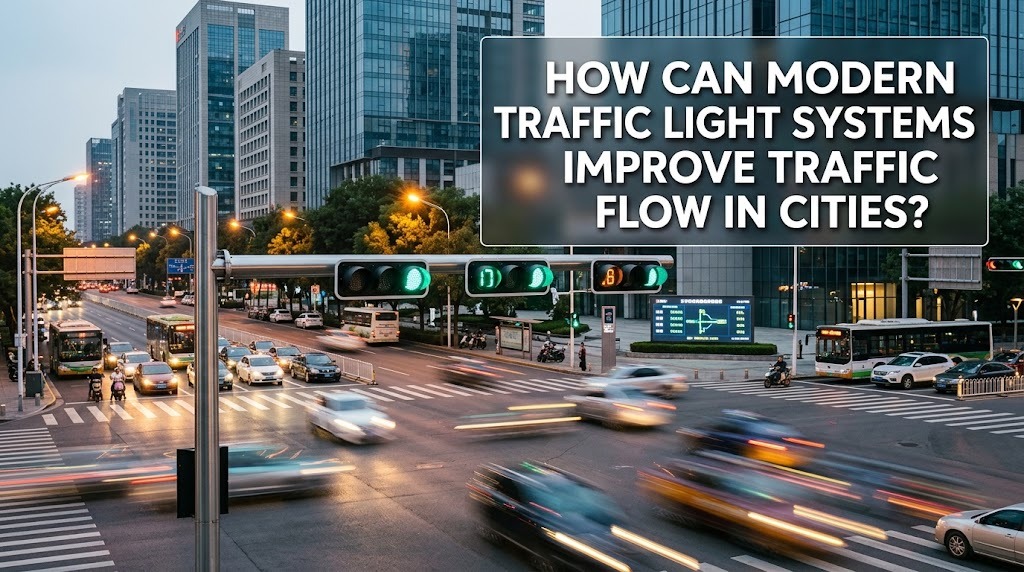
Traffic congestion is a common problem in modern cities, especially during morning and evening rush hours. Increasing numbers of cars and motorcycles often create long queues at intersections, causing delays, fuel waste, and air pollution. Traditional traffic lights usually operate according to fixed schedules, which may not reflect changing traffic conditions throughout the day. Modern traffic light systems use sensors, cameras, digital communication, and intelligent software to manage vehicle movement more efficiently. By adjusting signal timing according to actual road conditions, these systems can help reduce unnecessary delays and improve urban transportation.
UNDERSTANDING MODERN TRAFFIC LIGHT SYSTEMS
Modern traffic light systems are designed to manage traffic more efficiently than conventional fixed-time signals. Traditional systems change lights according to predetermined schedules, even when traffic volumes vary considerably. In contrast, adaptive traffic signals can respond to changing conditions by using information collected from road sensors, cameras, and other monitoring technologies. This allows traffic signals to provide green-light time according to current demand, where appropriate.
Some systems also coordinate multiple intersections to improve traffic movement along major routes. For example, signals can be adjusted to reduce repeated stopping when vehicles travel between nearby intersections. These systems may also support pedestrian crossings, public transportation priority, and emergency vehicle movements. However, their effectiveness depends on road design, equipment quality, accurate data, and proper maintenance. Modern traffic lights cannot eliminate every traffic problem, but they can help cities use existing road capacity more effectively.
REDUCING WAITING TIMES AT BUSY INTERSECTIONS
One major advantage of modern traffic light systems is their ability to reduce unnecessary waiting at intersections. Traffic congestion often develops when vehicles arrive in large numbers but receive insufficient green-light time to move through an intersection. Sensors can detect vehicle queues and help the signal controller adjust the duration of each phase. This can reduce excessive waiting for some traffic movements and improve the overall use of available intersection capacity.
For example, an intersection with heavy traffic in one direction and lighter traffic in another may benefit from adaptive signal timing. The system can allocate more green time to the busier approach while maintaining appropriate time for other vehicles and pedestrians. This reduces the chance that an unnecessarily long red light will create a growing queue. However, signal adjustments must account for safety, turning movements, pedestrian crossing times, and traffic on nearby roads. Careful coordination helps prevent improvements at one intersection from causing congestion elsewhere.
USING SENSORS AND REAL-TIME TRAFFIC DATA
Real-time traffic monitoring is an important feature of modern traffic light systems. Sensors installed in or near roads can estimate vehicle presence, traffic volume, and queue length. Cameras and other monitoring technologies can provide additional information about road conditions and unusual events. Traffic controllers use these data to adjust signal timing based on actual demand rather than relying entirely on fixed schedules.
Real-time information can also help transportation authorities respond to accidents, road closures, and sudden increases in traffic. For instance, when an incident creates a queue near an intersection, operators may modify nearby signal timing to help manage traffic safely. Data collected over time can reveal recurring congestion patterns and support future improvements. Nevertheless, sensors and cameras require regular maintenance, and inaccurate data can lead to poor signal decisions. Cities should combine automated monitoring with professional oversight to maintain reliable traffic operations.
IMPROVING COORDINATION BETWEEN TRAFFIC LIGHTS
Traffic flow often depends on how several intersections work together rather than on the performance of a single signal. Coordinated traffic lights use connected timing plans to help vehicles move more smoothly along selected routes. When signals are appropriately synchronized, drivers may encounter fewer red lights as they travel between intersections. This can reduce unnecessary stops, improve travel-time consistency, and help prevent queues from spreading across nearby roads.
Coordination is particularly useful on busy urban corridors with several closely spaced intersections. Traffic engineers can use traffic data to determine suitable signal timing and adjust it for different periods of the day. However, synchronized signals must balance the needs of side streets, pedestrians, cyclists, and public transportation. Giving too much priority to one route can increase waiting times elsewhere. Effective coordination therefore requires a network-wide approach that considers the movement of all road users rather than focusing only on vehicle speed.
PRIORITIZING PUBLIC TRANSPORTATION AND ROAD SAFETY
Modern traffic light systems can help improve the reliability of public transportation. Transit signal priority allows traffic signals to provide limited advantages to eligible buses or other authorized transit vehicles when conditions permit. This may involve extending a green light or shortening a red-light phase within established safety limits. By reducing delays at intersections, cities can make bus journeys more predictable and encourage more people to use public transportation.
Road safety must remain a central consideration when signals are modernized. Systems should provide sufficient time for pedestrians to cross safely and should account for cyclists, turning vehicles, and people with limited mobility. Emergency vehicle priority can also help authorized emergency services move through intersections more efficiently. However, priority systems must be carefully designed to avoid creating unsafe conflicts or excessive delays for other road users. When transportation efficiency and safety are considered together, modern signals can support a more balanced and accessible road network.
OVERCOMING CHALLENGES AND IMPROVING FUTURE TRAFFIC MANAGEMENT
Although modern traffic light systems offer important benefits, implementing them can be expensive and technically demanding. Cities may need to install sensors, upgrade signal controllers, improve communication networks, and train traffic management personnel. Older infrastructure may also be incompatible with newer systems, requiring phased upgrades and ongoing maintenance. Cost-effective implementation therefore requires authorities to identify the intersections where improved signal control is most likely to provide meaningful benefits.
Future systems may use artificial intelligence and advanced traffic prediction to anticipate congestion before queues become severe. These tools can analyze historical patterns alongside current traffic information to recommend signal adjustments. However, predictions depend on data quality, and unusual events can reduce accuracy. Cities should test new systems carefully, protect collected data, and measure outcomes using indicators such as average delay, queue length, travel-time reliability, and road safety. By combining modern technology with good road design and effective transportation planning, cities can improve traffic flow more sustainably.
CONCLUSION
Modern traffic light systems can improve traffic flow by adjusting signal timing, monitoring real-time conditions, coordinating intersections, and supporting public transportation. These technologies can reduce unnecessary waiting and help cities manage existing road capacity more efficiently. However, their success depends on reliable equipment, accurate data, appropriate maintenance, and careful attention to pedestrian safety. Traffic signals should also be combined with better public transportation, effective urban planning, and responsible traffic management policies. With a well-designed approach, cities can reduce delays, improve road safety, and create more efficient urban transportation networks.
Recent Posts

Bagaimana Sistem SKS pada Program Kuliah... 22.11.2026/54 View

How Does Technology Make Daily Evaluation... 21.11.2026/83 View

Apa Strategi Menghadapi Kesenjangan antara Kompetensi... 21.11.2026/82 View

Mengapa Inventaris Aset Penting bagi Kelancaran... 21.11.2026/78 View

When Should Musicians Join a Record... 21.11.2026/84 View
