

How Can Online Courses Help Fresh Graduates Find Jobs?
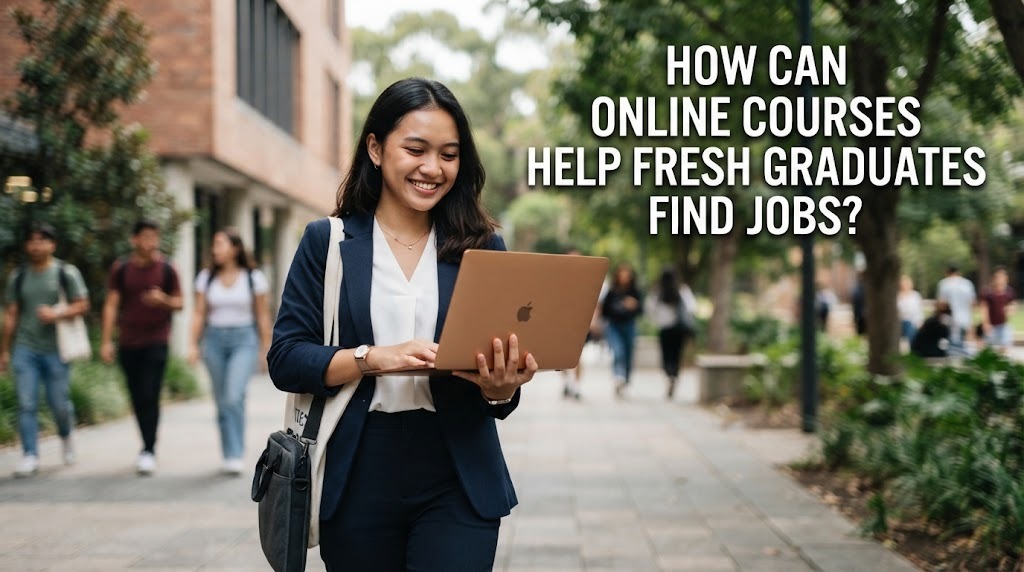
Finding a job can be challenging for fresh graduates, especially when they have limited professional experience. A degree provides an important academic foundation, but employers may also look for practical skills, adaptability, communication abilities, and knowledge related to a specific position. Online courses can help fresh graduates develop these additional skills and become more prepared for the recruitment process.
Online courses offer opportunities to learn beyond what students receive in formal education. Fresh graduates can choose courses related to their desired careers, improve existing abilities, and build evidence of their skills through practical projects. When used strategically, online learning can strengthen a graduate's profile and increase confidence when applying for jobs.
DEVELOPING JOB RELEVANT SKILLS
One of the main ways online courses help fresh graduates is by developing skills that are relevant to specific jobs. Graduates can take courses in areas such as digital marketing, data analysis, programming, graphic design, project management, communication, or business. Learning these skills can help candidates meet some of the requirements listed in job vacancies. It also shows that graduates are willing to continue learning after completing their formal education.
Fresh graduates should choose courses based on their career goals rather than collecting certificates without a clear purpose. For example, someone interested in digital marketing can focus on search engine optimization, content strategy, analytics, and social media marketing. A graduate interested in data-related positions may benefit from learning spreadsheets, databases, statistics, and data visualization. Targeted learning can make the additional skills more meaningful during the job search.
BUILDING A STRONGER RESUME
Online courses can add relevant learning experiences to a fresh graduate's resume. A course certificate can show that the graduate has completed structured learning in a particular subject. However, the value of the course becomes stronger when it is supported by practical work or projects. Employers can gain a better understanding of what the candidate is actually able to do.
Graduates should describe relevant courses clearly instead of simply listing a large number of certificates. They can mention the skills learned, tools used, and projects completed during the course. This information can make the resume more specific and easier for recruiters to evaluate. Most importantly, every course included should have a clear connection to the position being applied for.
CREATING A PROFESSIONAL PORTFOLIO
Some online courses include assignments and practical projects that can become part of a professional portfolio. A portfolio provides examples of what a candidate can produce rather than relying only on statements about their abilities. For example, a graduate interested in graphic design can display selected design projects, while a data analyst candidate can present appropriate data projects and visualizations. These examples can help demonstrate practical competence.
A portfolio should be organized and relevant to the target job. Graduates do not need to include every project they have ever completed. Instead, they should select work that demonstrates their strongest and most relevant skills. Providing a short explanation of the objective, process, and result of each project can make the portfolio more useful to potential employers.
IMPROVING CONFIDENCE DURING JOB SEARCH
Job searching can be stressful for fresh graduates because they may feel that their lack of work experience puts them at a disadvantage. Completing relevant online courses can help reduce this uncertainty by giving graduates additional opportunities to practice useful skills. As their knowledge improves, they may become more confident when discussing their abilities. Confidence can be particularly helpful during interviews and professional conversations.
However, online courses cannot replace real work experience completely. Graduates should combine online learning with internships, freelance projects, volunteering, campus activities, or other practical experiences whenever possible. This combination allows them to demonstrate both knowledge and application. Employers can then see evidence that the candidate can use what they have learned in practical situations.
PREPARING FOR JOB INTERVIEWS
Online courses can also help graduates prepare for technical and professional interview questions. Learning about a particular field gives candidates a stronger foundation when recruiters ask about relevant skills or industry practices. Practical assignments can also provide examples that graduates can discuss during interviews. This can make answers more specific and convincing.
Graduates should be prepared to explain what they learned and how they applied it. Instead of simply saying that they completed a course, they can describe a project, problem, or task they worked on. They can also explain what tools they used and what they learned from the process. This approach demonstrates both knowledge and the ability to reflect on experience.
SHOWING A COMMITMENT TO CONTINUOUS LEARNING
Employers operate in industries that can change because of technology, consumer behavior, economic conditions, and new business practices. Fresh graduates who continue learning can demonstrate adaptability and initiative. Online courses make it easier to update knowledge without waiting for another formal degree or long-term educational program. This can be especially useful in fast-changing fields.
Continuous learning also helps graduates identify areas where they need improvement. Instead of viewing a lack of knowledge as a permanent limitation, they can create a learning plan and gradually develop the necessary skills. This mindset can support long-term career growth. It also shows that professional development can continue throughout a person's working life.
EXPANDING PROFESSIONAL KNOWLEDGE AND NETWORKS
Some online courses provide opportunities for students to interact with instructors and other learners. Discussions, group projects, and online communities can introduce fresh graduates to people who have similar interests or professional goals. These connections may provide useful perspectives about industries and career opportunities. In some cases, professional relationships developed through learning communities can also lead to information about job openings.
Graduates should approach networking naturally and professionally. They can participate in discussions, share useful insights, ask thoughtful questions, and maintain connections after completing a course. Networking should not only focus on asking for employment. Building genuine professional relationships can create opportunities for learning, collaboration, and career development over time.
CONCLUSION
Online courses can help fresh graduates find jobs by developing relevant skills, strengthening resumes, creating portfolio projects, improving interview preparation, and demonstrating a commitment to continuous learning. They can also help graduates explore career fields and become more confident when presenting their abilities to employers.
However, completing online courses alone does not guarantee employment. Fresh graduates should combine online learning with practical projects, internships, networking, and effective job application strategies. By choosing relevant courses and applying what they learn, graduates can build a stronger professional profile and become better prepared to enter the competitive job market.
Recent Posts

Bagaimana Sistem SKS pada Program Kuliah... 22.11.2026/35 View

How Does Technology Make Daily Evaluation... 21.11.2026/69 View

Apa Strategi Menghadapi Kesenjangan antara Kompetensi... 21.11.2026/70 View

Mengapa Inventaris Aset Penting bagi Kelancaran... 21.11.2026/67 View

When Should Musicians Join a Record... 21.11.2026/69 View
