

How Can Online Courses Improve Workplace Skills?
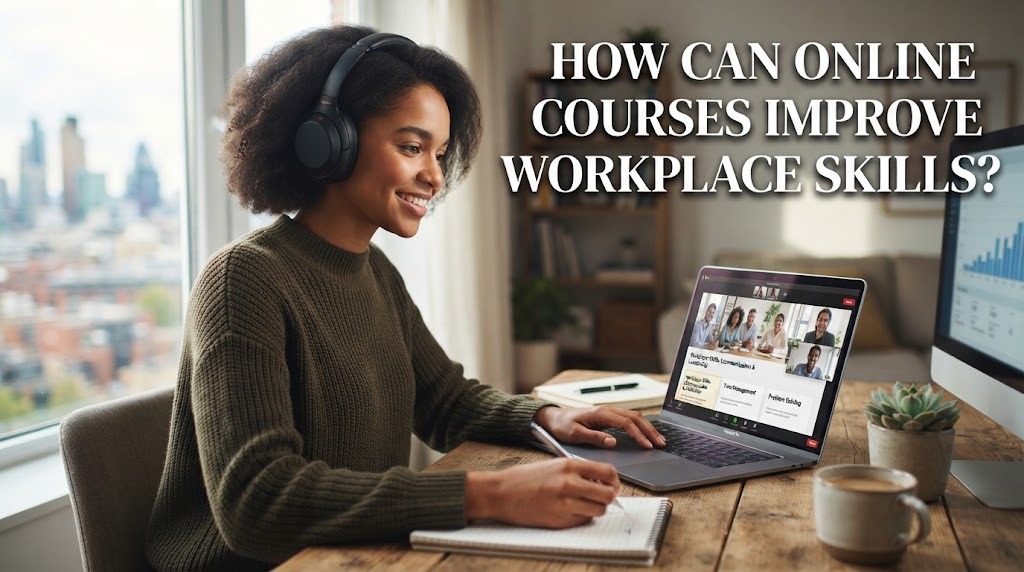
Online courses have become a useful way for employees, students, and job seekers to develop skills needed in the workplace. They provide access to learning materials without requiring learners to attend a physical classroom. This flexibility allows people to improve their abilities while managing work, study, or other responsibilities.
Workplace skills include both technical abilities and soft skills. Employees may need digital skills, communication, teamwork, problem solving, time management, and other abilities depending on their roles. Through relevant online courses and regular practice, learners can strengthen these skills and become better prepared to handle professional responsibilities.
DEVELOPING TECHNICAL WORKPLACE SKILLS
Online courses can help learners develop technical skills that are directly related to specific jobs. For example, employees can learn data analysis, graphic design, programming, digital marketing, project management, or business software. These skills can help them complete tasks more efficiently and confidently. Choosing a course that matches actual workplace responsibilities can make the learning experience more useful.
Practical exercises are particularly important when learning technical skills. A good course may include assignments, simulations, projects, or case studies that allow learners to apply what they have studied. This helps connect theoretical knowledge with real workplace situations. With regular practice, learners can gradually improve their accuracy and ability to solve work related problems.
IMPROVING DIGITAL SKILLS
Digital technology is now part of many professional environments. Employees may need to use communication platforms, spreadsheets, presentation software, project management systems, or specialized digital tools. Online courses can introduce learners to these technologies and explain how they can be used effectively. This can help employees become more comfortable when working in digital environments.
Digital skills also require continuous improvement because workplace technology continues to develop. Learning through online courses allows employees to update their knowledge without necessarily leaving their jobs. They can choose courses based on the tools and technologies relevant to their professions. Continuous digital learning can therefore help workers remain adaptable as workplace requirements change.
STRENGTHENING COMMUNICATION SKILLS
Effective communication is important in almost every workplace. Employees need to communicate ideas, write professional messages, explain information, listen to colleagues, and interact with customers or clients. Online courses can provide lessons and activities focused on written and verbal communication. These learning experiences can help learners become more organized and confident when expressing their ideas.
Some courses also provide opportunities for discussion, presentations, group assignments, or collaborative projects. Such activities allow learners to practice communicating with people who may have different perspectives. Regular practice can improve clarity and reduce misunderstandings. Strong communication skills can ultimately support better teamwork and professional relationships.
IMPROVING PROBLEM SOLVING AND CRITICAL THINKING
Workplace situations often require employees to make decisions and solve unexpected problems. Online courses can help develop these abilities through case studies, projects, quizzes, and practical scenarios. Learners may be asked to analyze information, identify problems, compare possible solutions, and choose an appropriate approach. This process encourages them to think carefully rather than depend only on memorized information.
Critical thinking is especially useful when employees face complex tasks. They need to determine which information is reliable, understand the causes of a problem, and consider the possible consequences of a decision. Online learning can provide opportunities to practice these processes in a structured environment. When combined with real workplace experience, these skills can contribute to better decision making.
SUPPORTING TIME MANAGEMENT AND SELF DISCIPLINE
Online learning requires learners to manage their own schedules. Unlike traditional classes with fixed meeting times, many online courses allow learners to decide when they will study. This can encourage them to develop better time management habits. Employees who balance work and online learning must determine priorities and create realistic study schedules.
Self discipline is also important because online learners often need to complete lessons without constant supervision. Finishing assignments, meeting course deadlines, and maintaining a regular study routine require personal responsibility. These habits can also be useful in the workplace. Employees who can organize their time and complete responsibilities consistently may be better prepared to handle professional demands.
SUPPORTING CAREER GROWTH
Online courses can support career development by helping workers prepare for new responsibilities or future positions. Employees may take courses to strengthen skills required for promotion or to explore a different professional field. Job seekers can also use online learning to develop abilities that are relevant to positions they want to pursue. This makes online courses useful for both current employment and future career planning.
However, completing a course does not automatically guarantee career advancement. The knowledge gained should be combined with practical experience and demonstrated through actual work. Learners can strengthen the value of their training by applying new skills to projects, creating a portfolio, or improving their performance at work. This approach makes online learning more meaningful and career focused.
ENCOURAGING CONTINUOUS PROFESSIONAL DEVELOPMENT
Workplace requirements can change as industries, technologies, and business practices develop. Employees therefore need to continue learning instead of relying only on knowledge gained in the past. Online courses make professional development more accessible because learners can choose subjects that match their current needs. This can encourage a habit of continuous learning throughout their careers.
The most effective approach is to choose courses with clear learning objectives and relevant practical content. Learners should also apply new knowledge instead of simply completing lessons or collecting certificates. Reviewing materials, completing projects, and practicing new skills can improve long term results. In this way, online courses can become part of a sustainable professional development strategy.
CONCLUSION
Online courses can improve workplace skills by helping learners develop technical abilities, digital skills, communication, problem solving, critical thinking, time management, and self discipline. These skills can support employees in completing tasks more effectively and adapting to changing professional requirements.
The benefits of online learning depend largely on how actively learners apply what they study. Choosing relevant courses, practicing consistently, and using new knowledge in real situations can make the learning process more valuable. With continuous effort, online courses can become an effective tool for improving workplace performance and supporting long term career growth.
Recent Posts

Bagaimana Sistem SKS pada Program Kuliah... 22.11.2026/35 View

How Does Technology Make Daily Evaluation... 21.11.2026/69 View

Apa Strategi Menghadapi Kesenjangan antara Kompetensi... 21.11.2026/70 View

Mengapa Inventaris Aset Penting bagi Kelancaran... 21.11.2026/67 View

When Should Musicians Join a Record... 21.11.2026/69 View
