

How Can OTP Scams Put Users' Personal Information at Risk?
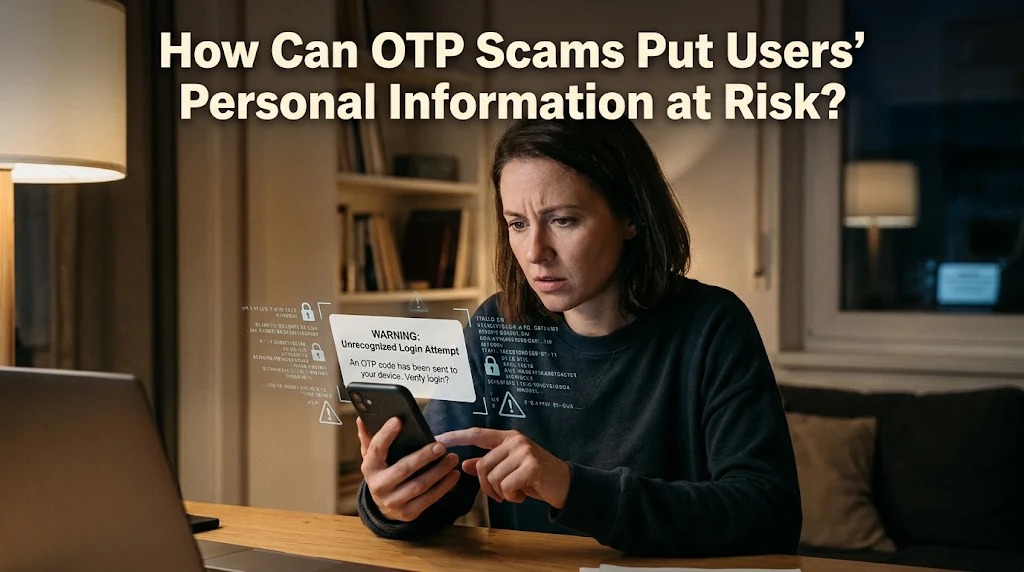
Digital technology has made communication, financial transactions, and access to online services easier than ever. However, the growing use of digital accounts has also created opportunities for cybercriminals to steal personal information through various fraudulent activities. One increasingly common threat involves OTP (One-Time Password) scams, in which criminals manipulate users into revealing temporary verification codes.
OTP codes are designed to protect digital accounts by confirming a user's identity during login attempts, password changes, and online transactions. Unfortunately, scammers can exploit this security feature through phishing messages, fraudulent phone calls, and social engineering techniques. Once they obtain an OTP code, they may gain unauthorized access to accounts containing sensitive personal information.
The consequences of OTP scams can extend beyond losing access to an account. Victims may experience identity theft, financial losses, privacy violations, and misuse of personal data. Understanding how these scams operate is essential for recognizing potential threats and protecting confidential information in the digital environment.
UNDERSTANDING HOW OTP SCAMS TARGET PERSONAL INFORMATION
OTP scams are fraudulent activities in which cybercriminals attempt to obtain verification codes from users to access digital accounts or authorize sensitive activities. These criminals often pretend to represent banks, digital wallets, online marketplaces, or other trusted service providers. Their main objective is to convince victims that sharing an OTP code is necessary to solve a problem or complete a verification process.
One common technique involves sending fake messages claiming that an account has experienced suspicious activity. Victims may be told that their account will be blocked unless they immediately verify their identity. Scammers may also make fraudulent phone calls and claim that they need the OTP code to cancel an unauthorized transaction.
In reality, the verification code may be used by criminals to complete a login attempt, reset an account password, or authorize a transaction. This means that sharing an OTP code can give attackers access to important digital services. The biggest danger is that victims may unknowingly authorize activities initiated by criminals themselves.
UNAUTHORIZED ACCESS TO PERSONAL DIGITAL ACCOUNTS
One of the most immediate risks of OTP scams is unauthorized access to personal digital accounts. When criminals obtain both login credentials and the required verification code, they may be able to enter accounts that should only be accessible to their legitimate owners.
Email accounts are particularly valuable targets because they often contain personal conversations, documents, account notifications, and password recovery information. If criminals gain control of an email account, they may use its recovery features to access other connected services, including social media platforms and financial applications.
Social media accounts can also become targets of unauthorized access. Criminals may use compromised accounts to impersonate victims, contact their friends, distribute fraudulent links, or request money from other people. These activities can damage personal relationships and create additional security risks for individuals within the victim's network.
IDENTITY THEFT AND MISUSE OF PERSONAL DATA
OTP scams can expose more than account passwords and verification codes. Once criminals gain access to digital accounts, they may collect personal information such as full names, phone numbers, email addresses, identification details, and other private records. This information can potentially be used for fraudulent activities involving the victim's identity.
For example, stolen personal data may be used to create fake accounts, impersonate individuals, or conduct fraudulent registration activities. Criminals may also combine information obtained from different platforms to build more convincing identities when targeting other victims.
Identity theft can create long-term problems because victims may not immediately realize that their personal information has been misused. They might discover the issue only after receiving suspicious notifications, finding unfamiliar account registrations, or experiencing difficulties accessing their own digital services. Therefore, protecting OTP codes also means protecting the personal information connected to digital accounts.
FINANCIAL LOSSES FROM COMPROMISED BANKING AND DIGITAL WALLETS
Financial accounts are among the most attractive targets for OTP scammers because unauthorized access may allow criminals to perform transactions. If attackers obtain the necessary authentication information, they may attempt to transfer funds, make online purchases, or access financial services using the victim's identity.
For example, a scammer may pretend to be a bank employee and claim that a customer's account requires immediate security verification. After obtaining the OTP code, the criminal may attempt to approve a transaction or complete another activity that requires additional authentication.
The financial consequences can be serious, especially when victims lose access to their banking applications or digital wallets. Recovering stolen funds may also involve complicated reporting procedures and investigations. To reduce these risks, users should never share banking OTP codes and should immediately contact their financial institution if they suspect unauthorized activity.
PRIVACY VIOLATIONS AND EXPOSURE OF CONFIDENTIAL INFORMATION
Another significant consequence of OTP scams is the potential exposure of private information. Digital accounts frequently store personal photographs, private messages, contact lists, financial records, and important documents. When criminals gain unauthorized access, they may view, copy, or misuse information that should remain confidential.
In some situations, attackers may use stolen information to threaten victims or conduct further fraudulent activities. For example, private conversations or personal documents could be used for blackmail, impersonation, or targeted phishing attacks. The information may also help criminals create more convincing messages because they already understand certain details about the victim.
Privacy violations can cause emotional distress and damage a person's reputation. Even after an account has been recovered, victims may remain concerned about information that could have been copied during the unauthorized access period. This demonstrates why account security is also an important part of personal privacy protection.
SOCIAL ENGINEERING AND THE SPREAD OF DIGITAL FRAUD
OTP scams frequently rely on social engineering, a technique that manipulates people into revealing confidential information or performing unsafe actions. Instead of attacking a system directly, scammers exploit human emotions such as fear, urgency, curiosity, and trust.
For instance, criminals may create fake customer service accounts or impersonate trusted organizations through messaging applications. They may also claim that a family member needs urgent assistance or that an important financial transaction must be canceled immediately. These situations encourage victims to respond quickly without checking whether the information is genuine.
Compromised accounts can then become tools for spreading additional scams. Criminals may send fraudulent messages to the victim's contacts, pretending to be the account owner. As a result, one successful OTP scam can potentially affect multiple individuals. Recognizing suspicious behavior and verifying unexpected requests through official communication channels can help interrupt this cycle.
HOW USERS CAN PROTECT THEIR PERSONAL INFORMATION FROM OTP SCAMS
Preventing OTP scams requires a combination of security awareness and responsible digital behavior. Users should understand that verification codes are confidential and should only be entered into the official application or website when they personally initiate a legitimate authentication process.
The following practices can help reduce the risk of OTP-related fraud:
- Never Share OTP Codes: Do not disclose verification codes to anyone, including individuals claiming to represent banks or customer support teams.
- Avoid Suspicious Links: Do not open unfamiliar links or enter personal information on websites received through unexpected messages.
- Use Strong Passwords: Create unique passwords for important accounts and avoid reusing the same credentials across different platforms.
- Enable Additional Authentication: Use Multi-Factor Authentication and authenticator applications when supported by the service provider.
- Monitor Account Activity: Regularly check login notifications, transaction records, and connected devices for unfamiliar activity.
- Contact Official Support: Report suspicious requests or unauthorized transactions through verified communication channels.
If an OTP code has already been shared with a suspicious person, immediately secure the affected account. Change the password, terminate unfamiliar sessions if possible, and contact the relevant service provider. For financial accounts, notify the bank or digital wallet provider immediately to request assistance.
CONCLUSION
OTP scams can put users' personal information at serious risk by allowing cybercriminals to access digital accounts, steal identities, conduct unauthorized financial transactions, and expose confidential information. These attacks often rely on phishing and social engineering techniques that manipulate victims into revealing verification codes.
Although OTP technology provides an additional layer of account protection, it cannot guarantee complete security when users are tricked into sharing their codes. Therefore, individuals must remain cautious, protect their login credentials, avoid suspicious links, and regularly monitor account activity. By developing responsible digital security habits, users can reduce the risk of identity theft, financial fraud, and privacy violations.
Recent Posts

Bagaimana Sistem SKS pada Program Kuliah... 22.11.2026/34 View

How Does Technology Make Daily Evaluation... 21.11.2026/68 View

Apa Strategi Menghadapi Kesenjangan antara Kompetensi... 21.11.2026/68 View

Mengapa Inventaris Aset Penting bagi Kelancaran... 21.11.2026/66 View

When Should Musicians Join a Record... 21.11.2026/67 View
