

How Can Parents Submit Their Concerns to a School Committee?
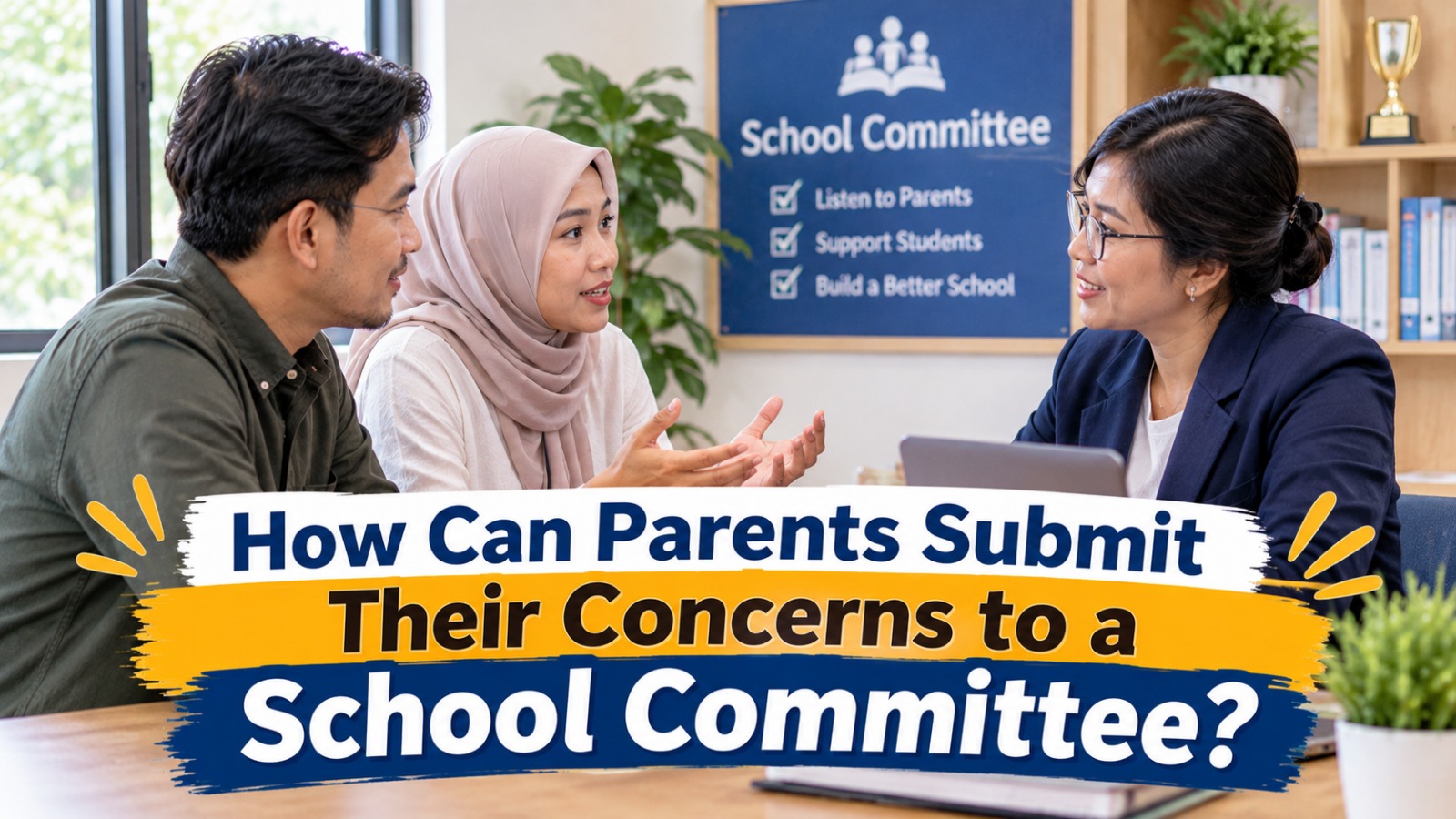
Parents play an important role in supporting their children's education and maintaining a positive relationship with schools. However, concerns about learning activities, school facilities, student safety, or educational policies may sometimes arise. In these situations, parents can communicate their concerns to the school committee, which serves as a bridge between families, school management, and the wider community. Submitting concerns through the appropriate channels helps schools understand existing problems and find suitable solutions. By communicating clearly, respectfully, and constructively, parents can contribute to creating a safer and better learning environment for all students.
1. UNDERSTAND THE ROLE OF THE SCHOOL COMMITTEE
Before submitting a concern, parents should understand the responsibilities of the school committee. Generally, a school committee represents the interests of parents and the community while supporting school development. Its responsibilities may include providing recommendations, encouraging community participation, and helping monitor educational programs and school services. The committee can also facilitate communication between parents and school management when problems affect the school community.
However, the school committee does not automatically have the authority to make every school decision or handle all complaints directly. Certain matters, such as teacher discipline, academic assessments, or administrative decisions, may need to be addressed by the principal or another authorized school official. Understanding these responsibilities helps parents choose the right person or institution to contact.
2. IDENTIFY AND CLARIFY THE MAIN CONCERN
The first practical step is to identify the problem that needs attention. Parents should determine whether their concern involves teaching quality, student behavior, bullying, school facilities, communication, financial transparency, or student safety. Clearly identifying the issue makes it easier for the school committee to understand the situation. Parents should also distinguish between personal misunderstandings and problems that may affect several students.
After identifying the concern, parents should collect relevant information, such as the date, location, people involved, and a description of what happened. If available, supporting evidence such as photographs, messages, or written records can help explain the situation. Accurate information is important because it reduces misunderstandings and allows the committee to respond more effectively.
3. CONTACT THE SCHOOL COMMITTEE THROUGH OFFICIAL CHANNELS
Parents should use official communication channels when submitting concerns to a school committee. These channels may include direct meetings, official email addresses, school communication groups, written letters, or designated complaint procedures. Parents can ask the school administration for the committee's contact information if they do not know how to reach its representatives. Using appropriate channels helps ensure that concerns reach the responsible people.
When contacting the committee, parents should introduce themselves, explain their relationship with the school, and briefly describe the issue. They should also mention whether they are requesting information, clarification, mediation, or a specific improvement. Official communication creates a clearer record of the complaint and makes follow-up easier.
4. WRITE A CLEAR AND POLITE COMPLAINT LETTER
A written complaint is useful when parents need to explain a concern in detail. The letter should include the parent's contact information, the date, the main issue, relevant facts, and the action being requested. It should be written in simple, respectful, and professional language. Parents should avoid emotional accusations, offensive expressions, or statements that cannot be supported by evidence.
For example, instead of accusing a teacher of being unfair, parents can explain a specific situation and request clarification about the assessment process. A polite complaint helps the committee focus on the problem rather than the way it is presented. Parents should also keep a copy of the letter for future reference and follow-up.
5. ATTEND SCHOOL COMMITTEE MEETINGS
Attending school committee meetings gives parents an opportunity to communicate their concerns directly. These meetings may provide a space to discuss educational programs, school facilities, student welfare, and other issues affecting the school community. Parents can ask about meeting schedules and procedures through the school administration or committee representatives. Before attending, they should prepare the main points they want to discuss.
During the meeting, parents should explain their concerns calmly and provide relevant information. They should also listen to other participants and allow committee members to respond or ask questions. If possible, parents can request that important discussions and agreed actions be recorded in the meeting minutes. Active participation helps strengthen communication and encourages cooperation between families and schools.
6. PROVIDE SUPPORTING EVIDENCE AND RELEVANT DOCUMENTS
Supporting evidence can make a parent's concern easier to understand and investigate. Depending on the issue, relevant documents may include school announcements, payment receipts, screenshots of official messages, photographs of damaged facilities, or written descriptions of incidents. Parents should provide only information that is relevant to the complaint. All evidence must be genuine and presented in its proper context.
It is also important to protect students' privacy when sharing sensitive information. Parents should avoid distributing personal details, private conversations, or photographs of children without appropriate permission. Responsible evidence sharing allows the committee to examine the issue fairly while protecting the people involved.
7. REQUEST A MEETING WITH THE SCHOOL COMMITTEE OR PRINCIPAL
Some concerns require direct discussion rather than written communication alone. Parents can request a meeting with the school committee or principal when an issue is complicated, sensitive, or difficult to explain through messages. A face-to-face discussion allows both parties to exchange information, clarify misunderstandings, and explore possible solutions. Parents should explain the purpose of the meeting when requesting an appointment.
During the discussion, parents should remain respectful and focus on finding solutions instead of blaming individuals. They can prepare questions and suggest practical actions that may help resolve the problem. If the issue involves an individual student's personal circumstances, the meeting should be handled privately. This approach encourages constructive dialogue and helps maintain a positive relationship between parents and school representatives.
8. FOLLOW UP ON THE SUBMITTED CONCERN
Submitting a complaint is not always the final step because some issues require further investigation or action. Parents should ask about the expected response time and the appropriate person to contact for updates. If they do not receive a response within a reasonable period, they can send a polite follow-up message or request information about the complaint's progress. Keeping records of previous communication can make this process easier.
Parents should also evaluate whether the response addresses the original concern. If the proposed solution is unclear or incomplete, they can respectfully request further explanation. Consistent follow-up helps ensure that concerns are not overlooked and that agreed actions receive proper attention.
9. ESCALATE UNRESOLVED COMPLAINTS THROUGH THE APPROPRIATE CHANNELS
If a concern cannot be resolved through the school committee, parents may need to contact the principal or another authorized education authority. The appropriate institution depends on the type of problem, the school's governance structure, and local regulations. In Indonesia, for example, parents may seek guidance from the relevant education office or other official complaint channels when necessary. Serious matters involving violence, abuse, or immediate threats to student safety should be reported promptly to the appropriate authorities rather than waiting for an ordinary committee meeting.
Before escalating a complaint, parents should prepare a summary of the issue, previous communication, supporting evidence, and any responses already received. They should explain why the previous steps have not resolved the problem. This makes it easier for the receiving institution to understand the situation and determine the next appropriate action. Proper complaint escalation helps protect students' rights and encourages accountability.
10. MAINTAIN POSITIVE COMMUNICATION WITH THE SCHOOL
Maintaining a good relationship with the school is important even when parents have serious concerns. Communication should be based on mutual respect, honesty, and a shared commitment to student well-being. Parents should avoid spreading unverified information or discussing sensitive complaints publicly on social media. Such actions may create unnecessary conflict and make problem-solving more difficult.
Instead, parents should use constructive discussions and focus on realistic improvements. They can also appreciate the school's efforts when positive changes have been made. By maintaining positive communication, parents and school representatives can build trust and work together to improve educational quality.
CONCLUSION
Parents can submit their concerns to a school committee by understanding its responsibilities, identifying the main issue, using official communication channels, and providing clear supporting evidence. They can also participate in committee meetings, request private discussions, and follow up on complaints to ensure that their concerns receive appropriate attention. If an issue remains unresolved, parents can contact the principal or relevant education authorities through established procedures.
The most important factors are clear communication, accurate information, respectful behavior, and consistent follow-up. Parents should approach complaints as opportunities to improve school services rather than simply criticize school management. Through active cooperation between parents, school committees, and educators, schools can create a safer, more transparent, and more supportive learning environment for every student.
Recent Posts

Bagaimana Sistem SKS pada Program Kuliah... 22.11.2026/25 View

How Does Technology Make Daily Evaluation... 21.11.2026/64 View

Apa Strategi Menghadapi Kesenjangan antara Kompetensi... 21.11.2026/65 View

Mengapa Inventaris Aset Penting bagi Kelancaran... 21.11.2026/62 View

When Should Musicians Join a Record... 21.11.2026/61 View
