

How Can Parents Support Character Education At Home?
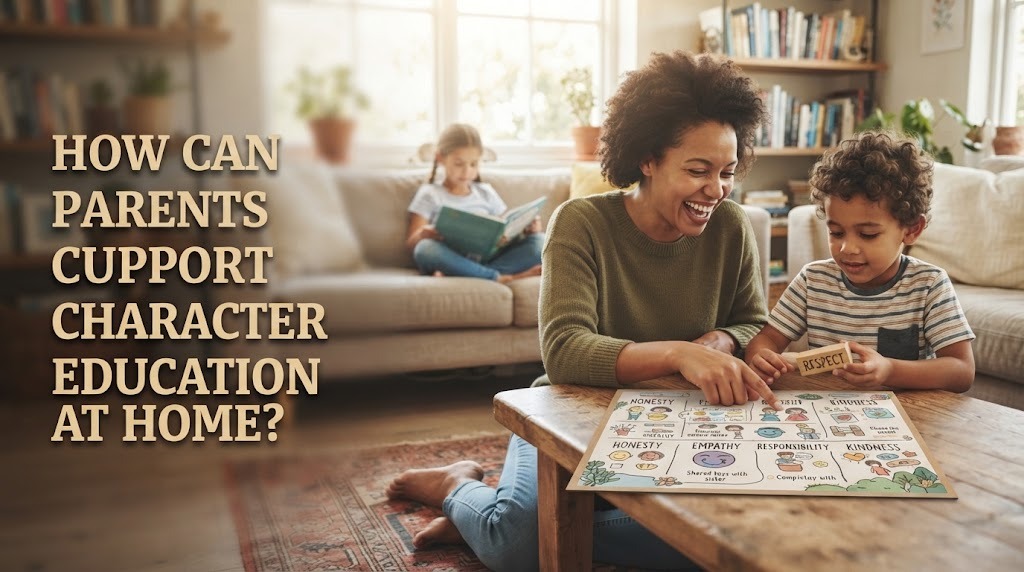
Character education at home is an important part of children's development. School can teach academic knowledge and social values, but the family provides many of the child's earliest and most consistent examples. Parents can help children develop honesty, responsibility, discipline, respect, empathy, and kindness through everyday activities. Children often learn by observing how adults behave and respond to different situations. Therefore, parents have an important role in creating a home environment that supports positive character development.
BE A GOOD ROLE MODEL
One of the most effective ways parents can support character education is by becoming a positive role model. Children often observe their parents' words, actions, and reactions to understand how they should behave. When parents demonstrate honesty, patience, respect, and responsibility, children can see these values in real situations. For example, parents can admit their mistakes instead of blaming other people. This teaches children that taking responsibility is a normal part of life.
Parents should also try to practice the values they teach consistently. Telling children to speak politely while adults frequently use disrespectful language can create confusion. Children learn more from what parents do than from what parents say. Parents can demonstrate good character through simple actions such as keeping promises, listening carefully, and treating others fairly. These examples can gradually influence children's behavior.
TEACH RESPONSIBILITY THROUGH DAILY TASKS
Parents can teach responsibility by giving children age appropriate tasks at home. Simple activities may include putting away toys, organizing school supplies, cleaning their room, or helping prepare meals. These tasks teach children that everyone has responsibilities in a family. Parents should explain what needs to be done and allow children to complete tasks independently when possible. This can help children develop confidence and accountability.
Parents do not need to expect perfection from children. Mistakes are natural and can become opportunities for learning. If a child forgets to put something away, parents can calmly remind them and explain why the task matters. Instead of immediately doing everything for the child, parents can encourage them to correct the problem themselves. This approach can gradually strengthen responsibility and independence.
BUILD HONESTY AND INTEGRITY
Parents can support character education by creating a home where honesty is valued. Children should understand that telling the truth is important, even when they have made a mistake. Parents can respond calmly when children admit something wrong while still explaining the consequences of their actions. This can make children more comfortable being honest instead of hiding problems. Over time, honesty can become an important part of their character.
Integrity also means doing the right thing when nobody is watching. Parents can teach this through simple situations, such as returning an item that does not belong to the family or following agreed rules without constant supervision. Children can learn that good behavior should not depend only on rewards or punishment. Parents who consistently demonstrate honesty provide a strong example for their children. These lessons can influence children's choices as they grow older.
DEVELOP DISCIPLINE AND GOOD ROUTINES
A consistent home routine can help children develop discipline and time management. Parents can establish reasonable schedules for studying, sleeping, playing, and completing household responsibilities. Clear routines help children understand what is expected and reduce confusion about daily activities. Children can gradually learn to manage their time instead of depending completely on parents. These habits can also support their academic activities.
Discipline should not mean controlling every part of a child's life. Parents can explain why routines and rules are important instead of relying only on punishment. For example, a regular bedtime can help children get enough rest for school the next day. Parents can also give children limited choices within clear boundaries, allowing them to practice decision making. This can help children develop self discipline and independence.
TEACH RESPECT AND EMPATHY
Parents can teach respect and empathy through everyday conversations and interactions. Children can learn to listen when someone is speaking, use polite language, respect personal boundaries, and consider other people's feelings. Parents can ask children how they think another person might feel in a particular situation. This encourages children to look beyond their own perspective. Such conversations can gradually improve their social and emotional understanding.
Parents can also encourage children to help others when appropriate. Simple actions such as comforting a family member, sharing with siblings, or helping someone who needs assistance can demonstrate kindness and compassion. Parents should explain that being kind does not mean allowing others to treat them badly. Children can learn to be caring while still maintaining healthy boundaries. These lessons can help them build respectful relationships.
SET CLEAR AND FAIR RULES
Children need clear and consistent rules to understand acceptable behavior. Parents can establish simple rules related to respect, screen use, homework, household tasks, and communication. The rules should be appropriate for the child's age and explained in language they can understand. Parents should also apply rules consistently rather than changing them depending on their mood. Consistency helps children understand expectations and consequences.
Rules can become more meaningful when children understand their purpose. Parents can explain how a rule protects their safety, well-being, or relationships with other people. For example, a rule about limiting screen time can be connected to sleep, study, and family activities. Parents can also listen to children's opinions while maintaining necessary boundaries. This approach can help children learn that rules are connected to responsibility rather than simply control.
ENCOURAGE CHILDREN TO MAKE DECISIONS
Character education at home should give children opportunities to make age appropriate decisions. Parents can allow children to choose between suitable options, such as selecting which homework task to complete first or deciding how to organize their study materials. These choices help children practice thinking about consequences. Parents can provide guidance without making every decision for them. Gradually, children can become more confident in making responsible choices.
When children make poor decisions, parents can use the experience as a learning opportunity. Instead of immediately solving the problem, parents can ask what happened and what the child could do differently next time. This encourages reflection and accountability. Children can learn that freedom is connected to responsibility. These skills can become increasingly important as they become teenagers and eventually adults.
PRACTICE COMMUNICATION AND EMOTIONAL CONTROL
Good communication is an important part of character education at home. Parents can encourage children to express their feelings respectfully rather than shouting, insulting, or hurting others. They can listen to children's concerns and help them find appropriate ways to respond to difficult emotions. Children should learn that feeling angry or disappointed is normal, but harmful behavior is not an appropriate response. This distinction can help them develop emotional control.
Parents can also model calm communication during disagreements. Children learn how conflicts can be handled by watching adults. Parents can demonstrate how to listen, explain their perspective, apologize, and find solutions without unnecessary aggression. Regular conversations can create a home environment where children feel comfortable discussing problems. This can strengthen both emotional maturity and family relationships.
WORK TOGETHER WITH THE SCHOOL
Character education becomes more effective when parents and teachers work together. Children receive clearer guidance when the values taught at home are also supported at school. Parents can communicate with teachers about children's progress, challenges, and positive changes. Teachers can provide information about behaviors that may need additional support at home. Cooperation can create greater consistency in children's character development.
Parents can also encourage children to apply positive values outside the home. For example, children can practice responsibility through school assignments and respect through interactions with classmates. Character should be practiced in different environments, not only during family activities. When parents recognize positive behavior at school, children may become more motivated to continue it. This partnership can strengthen the connection between home and school education.
CONCLUSION
Parents can support character education at home by becoming good role models, teaching responsibility, encouraging honesty, building discipline, and developing respect and empathy. They can also establish clear rules, encourage responsible decision making, and help children manage emotions through healthy communication. The most effective approach is usually consistent guidance combined with positive examples and opportunities to practice good behavior. Parents do not need complicated activities because everyday family situations can provide valuable lessons. With strong support at home and cooperation with schools, children can gradually develop responsible, respectful, honest, disciplined, and caring character.
Recent Posts

Bagaimana Sistem SKS pada Program Kuliah... 22.11.2026/35 View

How Does Technology Make Daily Evaluation... 21.11.2026/69 View

Apa Strategi Menghadapi Kesenjangan antara Kompetensi... 21.11.2026/69 View

Mengapa Inventaris Aset Penting bagi Kelancaran... 21.11.2026/67 View

When Should Musicians Join a Record... 21.11.2026/68 View
