

How Can Parents Teach Moral Values From an Early Age?
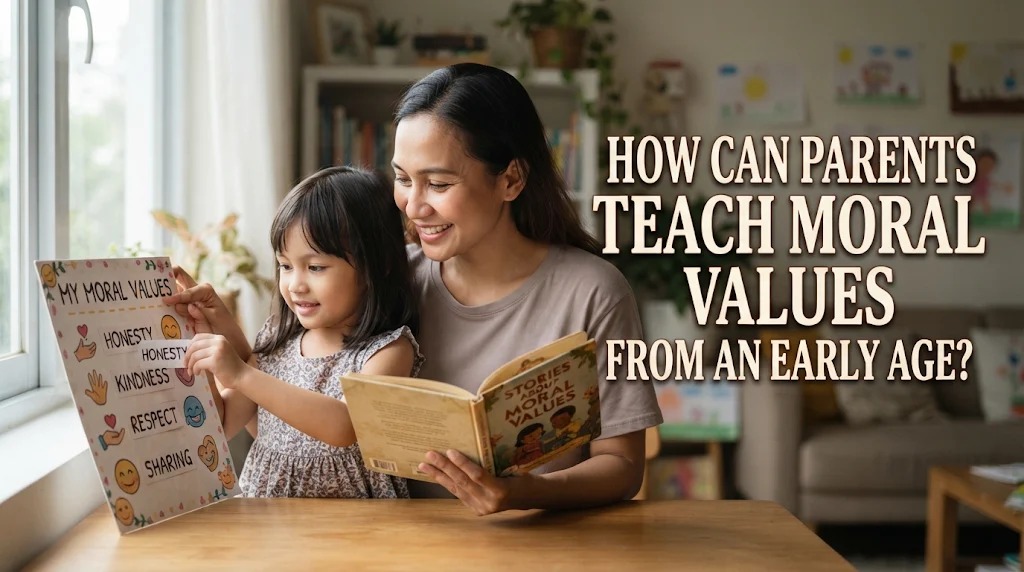
Teaching moral values from an early age is essential for helping children develop positive character and healthy relationships. Parents play an important role in introducing values such as honesty, kindness, respect, responsibility, and empathy. Children often learn by observing the behavior of adults around them, especially their parents. Therefore, providing good examples and consistent guidance can help children understand the importance of making responsible decisions. By introducing moral values through everyday activities, parents can build a strong foundation for their children's future development.
SETTING A GOOD EXAMPLE
Children often imitate what they see in their daily environment. Parents can teach positive moral values by demonstrating honesty, patience, respect, and kindness in their own behavior.
For example, parents should keep their promises, speak politely, and admit their mistakes. When children regularly observe these actions, they are more likely to develop similar habits.
TEACHING HONESTY IN DAILY LIFE
Honesty is an important value that children should learn from an early age. Parents can encourage children to tell the truth, even when they make mistakes or face difficult situations.
Instead of immediately punishing children for admitting their mistakes, parents should appreciate their honesty and explain how to correct their behavior. This approach helps children understand that telling the truth is more important than hiding problems.
ENCOURAGING RESPECT FOR OTHERS
Parents should teach children to respect family members, teachers, friends, and other people. Simple habits such as saying please, thank you, and sorry can help children understand the importance of polite communication.
Parents can also encourage children to listen when others are speaking and appreciate different opinions. These habits help them develop positive relationships and become more considerate individuals.
DEVELOPING A SENSE OF RESPONSIBILITY
Children can learn responsibility through simple household activities and daily routines. Parents may ask them to organize their toys, put away their belongings, or help with age-appropriate household tasks.
Giving children small responsibilities teaches them to complete activities independently and understand the consequences of their actions. These experiences can gradually build discipline and accountability.
TEACHING EMPATHY AND KINDNESS
Empathy helps children understand and care about other people's feelings. Parents can develop this value by encouraging children to share, help friends, and show concern when someone is experiencing difficulties.
For example, parents can ask children how they would feel if someone treated them unfairly. Such conversations help children recognize different perspectives and become more thoughtful toward others.
PROVIDING AGE-APPROPRIATE GUIDANCE
Children need moral lessons that match their age and level of understanding. Parents should use simple explanations, everyday situations, and practical examples rather than complicated instructions.
Storybooks, educational videos, and family discussions can also introduce important values in an enjoyable way. With appropriate guidance, children can gradually understand why certain behaviors are good or harmful.
APPLYING CONSISTENT RULES AND CONSEQUENCES
Consistent rules help children understand which behaviors are acceptable and which should be avoided. Parents should establish clear expectations and explain the reasons behind household rules.
When children make mistakes, parents can provide reasonable consequences while explaining how their actions affect others. Consistency helps children develop self-control and understand the importance of following positive values.
APPRECIATING POSITIVE BEHAVIOR
Recognizing good behavior can motivate children to continue practicing positive values. Parents should appreciate actions such as sharing toys, telling the truth, helping others, and completing responsibilities.
Praise should be specific so children understand which behavior deserves appreciation. This positive approach can strengthen their confidence and encourage them to develop good habits consistently.
CONCLUSION
Parents can teach moral values from an early age by setting good examples, encouraging honesty, developing responsibility, and teaching empathy. Consistent rules, positive guidance, and appreciation also help children understand the importance of good behavior. By practicing these values through everyday activities, parents can build a strong foundation for their children's character and prepare them to become responsible members of society.
Recent Posts

How Does Technology Make Daily Evaluation... 21.11.2026/57 View

Apa Strategi Menghadapi Kesenjangan antara Kompetensi... 21.11.2026/59 View

Mengapa Inventaris Aset Penting bagi Kelancaran... 21.11.2026/55 View

When Should Musicians Join a Record... 21.11.2026/54 View

Daily Evaluation or Daily Planning Which... 21.11.2026/61 View
