

How Can People Check Their Eligibility for Government Subsidies?
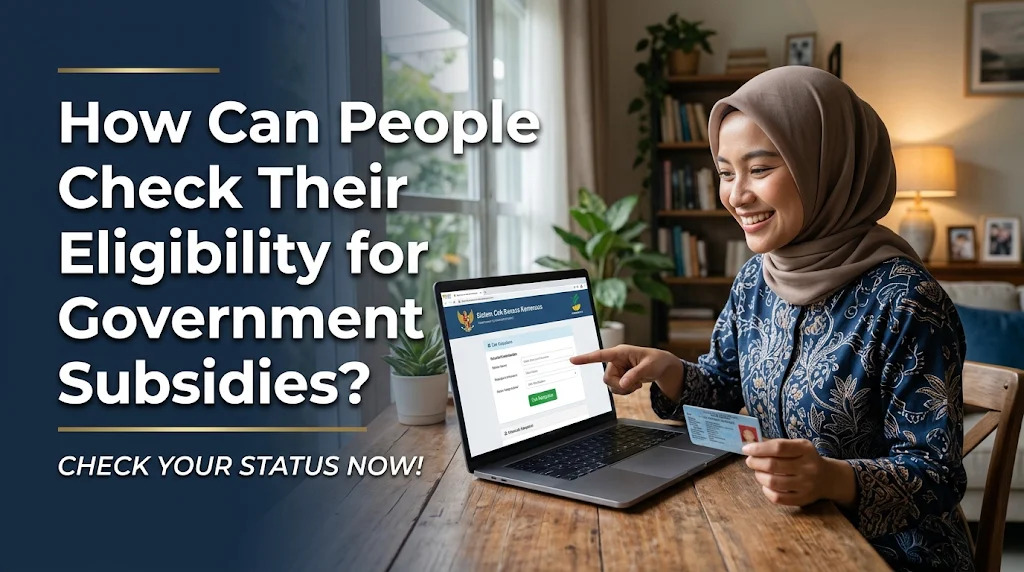
Government subsidies provide financial support to help individuals, households, and businesses access essential goods and services at more affordable costs. However, not everyone automatically qualifies for these programs because each subsidy has specific eligibility requirements. In Indonesia, people may need to meet certain income conditions, provide identification documents, register in government databases, or fulfill other administrative criteria. Checking eligibility is therefore an important step before applying for government assistance. By understanding the available verification methods, people can determine whether they qualify and avoid unnecessary difficulties during the registration process.
CHECKING ELIGIBILITY THROUGH OFFICIAL GOVERNMENT WEBSITES
One of the easiest ways to check government subsidy eligibility is through official government websites. Many public institutions provide online information about their assistance programs, including beneficiary requirements, registration procedures, and verification services. These platforms allow people to obtain information without visiting government offices immediately. However, users should ensure that they access legitimate government websites to avoid misinformation and fraudulent services.
In Indonesia, people can use official government platforms to check information about different assistance programs. For example, the Ministry of Social Affairs provides digital services for checking social assistance beneficiaries through its official website. People can also visit relevant ministry websites to understand the requirements for agricultural, housing, education, and business support programs. Using official government platforms helps people obtain more reliable information about their eligibility and the procedures they need to follow.
VERIFYING PERSONAL INFORMATION AND GOVERNMENT REGISTRATION DATA
Personal information plays an important role in determining eligibility for government subsidies. Some programs use government databases to identify individuals and households that meet specific economic or administrative requirements. Therefore, people should ensure that their identification details, household information, and other required records are accurate. Incorrect or outdated information may create difficulties during the verification process.
In Indonesia, the National Identification Number (NIK) is commonly used in various government services and assistance programs. Eligible individuals may need to ensure that their population registration information matches the records used by the relevant authorities. For social assistance, beneficiary information may also be checked through the government's social welfare data system. Accurate personal and household records can help prevent administrative problems and make the eligibility verification process more efficient.
VISITING LOCAL GOVERNMENT OFFICES FOR ASSISTANCE
People who have difficulty checking their eligibility online can visit local government offices for further assistance. Village or subdistrict offices may help residents obtain information about available programs and understand the administrative requirements. Local officials can also explain the procedures for reporting incorrect information or submitting documents for further verification. This option is particularly useful for people who have limited internet access or are unfamiliar with digital services.
Residents should prepare relevant identification documents, such as their identity cards and family registration documents, when requesting assistance. Depending on the program, additional documents may be required to support the verification process. Local authorities can provide guidance, but the final eligibility decision generally depends on the rules and verification procedures established by the responsible institution. Direct consultation with authorized officials can help people understand the correct steps and avoid relying on unofficial information.
CHECKING ELIGIBILITY BASED ON THE TYPE OF SUBSIDY
Different government subsidies have different eligibility requirements, so people should identify the specific program they want to access. For example, electricity subsidies depend on eligible customer categories and applicable electricity regulations. Subsidized LPG and fuel also have their own consumer requirements and distribution procedures. Understanding these differences is important because qualifying for one type of subsidy does not automatically mean someone is eligible for another.
Agricultural subsidies, such as subsidized fertilizer, generally require farmers to meet specific registration and agricultural activity conditions. Meanwhile, business financing programs such as Kredit Usaha Rakyat (KUR) require applicants to satisfy business, documentation, and financing criteria. Housing assistance also has requirements related to income and homeownership status. Checking the specific eligibility criteria helps applicants determine which documents they need and whether their circumstances meet the program's conditions.
CONTACTING OFFICIAL AUTHORITIES AND AVOIDING FRAUDULENT INFORMATION
Another way to verify government subsidy eligibility is by contacting the institution responsible for the program. Government agencies, authorized service centers, and official customer service channels can provide information about application procedures, beneficiary requirements, and verification results. People should use contact details published through official government platforms rather than relying on unknown telephone numbers or social media accounts. This approach helps reduce the risk of receiving inaccurate information.
It is also important to be careful when encountering messages that promise guaranteed subsidy approval in exchange for money or personal information. Legitimate government assistance programs follow established administrative procedures and do not require people to share sensitive information through suspicious links. Applicants should never provide passwords, banking security codes, or other confidential information to unknown parties. Verifying information through authorized channels helps protect personal data and prevents people from becoming victims of subsidy-related scams.
CONCLUSION
People can check their eligibility for government subsidies by using official government websites, verifying personal information, visiting local government offices, and contacting authorized institutions. They should also understand that every subsidy program has different requirements depending on its purpose and intended beneficiaries. Keeping personal records accurate and preparing the necessary documents can make the verification process easier. By relying on trustworthy information and following official procedures, people can determine whether they qualify for government assistance and access the support available to them.
Recent Posts

Bagaimana Sistem SKS pada Program Kuliah... 22.11.2026/27 View

How Does Technology Make Daily Evaluation... 21.11.2026/65 View

Apa Strategi Menghadapi Kesenjangan antara Kompetensi... 21.11.2026/65 View

Mengapa Inventaris Aset Penting bagi Kelancaran... 21.11.2026/62 View

When Should Musicians Join a Record... 21.11.2026/63 View
