

How Can People Develop New Skills Through Social Volunteering?
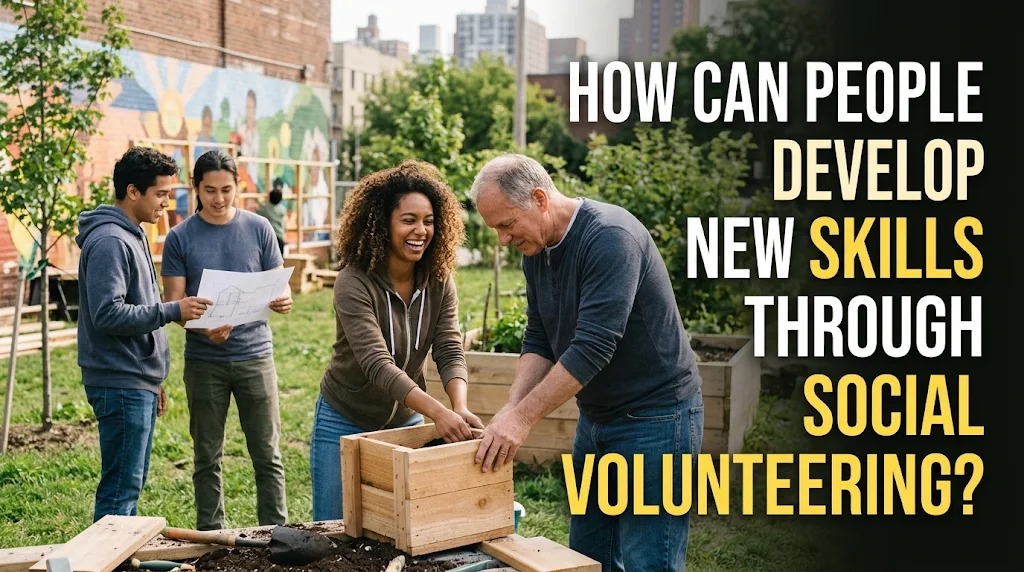
Social volunteering is not only an opportunity to help people in need but also a valuable way to develop new skills and gain practical experience. Through volunteer activities, individuals can learn how to communicate, work in teams, solve problems, organize events, and handle different responsibilities. These experiences allow volunteers to improve their abilities while contributing to the well-being of society.
Many skills are difficult to develop through theory alone because they require direct practice and interaction with others. Social volunteering provides an environment where people can learn from real situations, receive guidance from experienced volunteers, and face various challenges. Whether someone participates in educational programs, environmental campaigns, humanitarian activities, or community development, every experience can provide opportunities for personal and professional growth.
IMPROVE COMMUNICATION SKILLS THROUGH COMMUNITY INTERACTION
Communication is one of the most important skills people can develop through social volunteering. Volunteers regularly interact with community members, fellow volunteers, coordinators, and individuals from different backgrounds. These interactions teach them how to express ideas clearly, listen carefully, and deliver information in a respectful manner. For example, volunteers who assist educational programs must explain learning materials in simple language so participants can understand them easily.
Social volunteering also helps individuals become more confident when speaking in public. Volunteers may need to introduce activities, explain instructions, lead discussions, or present information during community events. These responsibilities provide opportunities to practice speaking in front of different audiences. Over time, volunteers can become better at organizing their thoughts, responding to questions, and communicating professionally.
DEVELOP TEAMWORK AND LEADERSHIP ABILITIES
Many social activities require cooperation between volunteers to achieve common goals. Through teamwork, individuals learn how to share responsibilities, respect different opinions, and support other members. For example, organizing a charity event may involve several teams responsible for registration, fundraising, logistics, and distributing assistance. Each member must understand their role and cooperate with others to ensure that the activity runs successfully.
Volunteering can also develop leadership abilities because some activities require individuals to coordinate teams and make decisions. Experienced volunteers may receive opportunities to become group leaders, activity coordinators, or project managers. These responsibilities teach them how to organize tasks, motivate team members, manage time, and handle unexpected situations. Leadership experience gained through volunteering can become useful in academic activities and future professional careers.
STRENGTHEN PROBLEM-SOLVING AND CRITICAL THINKING SKILLS
Social volunteering often involves situations that require practical solutions. Volunteers may encounter limited resources, changing schedules, communication difficulties, or unexpected challenges during community activities. These situations encourage them to identify problems, examine available options, and determine appropriate solutions. For instance, when an educational activity has limited learning materials, volunteers may need to create alternative teaching methods using available resources.
Through these experiences, volunteers can improve their critical thinking abilities. They learn to consider different perspectives before making decisions and evaluate whether their actions produce the expected results. Working with communities also helps volunteers understand that social problems can have complex causes and require careful approaches. As a result, they become more thoughtful, flexible, and confident when facing challenges in other areas of life.
GAIN ORGANIZATIONAL AND TIME MANAGEMENT SKILLS
Social volunteering provides practical opportunities to learn how to organize activities and manage responsibilities. Volunteers who participate in community programs may help prepare schedules, coordinate participants, arrange equipment, manage donations, and monitor activity progress. These tasks require attention to detail and the ability to organize different responsibilities efficiently. Through repeated involvement, volunteers can understand how to plan activities from preparation to evaluation.
Time management is another important skill developed through volunteering. Many volunteers must balance social activities with education, employment, and personal responsibilities. They need to determine priorities, follow schedules, and complete assigned tasks within specific deadlines. These habits can improve personal discipline and help individuals become more responsible. Organizational and time management skills are also valuable in professional environments where employees must handle multiple tasks and meet work targets.
DEVELOP EMPATHY AND ADAPTABILITY THROUGH SOCIAL EXPERIENCES
Social volunteering allows individuals to interact with people who have different economic conditions, cultural backgrounds, experiences, and personal challenges. These interactions help volunteers understand other people's situations and develop empathy. For example, helping children with limited educational resources or supporting communities affected by natural disasters can provide a deeper understanding of social inequalities. Such experiences encourage individuals to become more caring, respectful, and aware of the needs of others.
Adaptability can also improve because volunteers frequently work in different environments and face changing circumstances. They may need to adjust their communication styles, responsibilities, or activity plans depending on community needs. Learning to accept feedback and respond positively to unexpected situations helps volunteers become more flexible. These qualities are valuable not only in social activities but also when entering workplaces that involve diverse teams and changing professional demands.
CONCLUSION
People can develop many valuable skills through social volunteering, including communication, teamwork, leadership, problem-solving, time management, empathy, and adaptability. These abilities grow through direct experiences, practical responsibilities, and interactions with different communities. Volunteers can strengthen their skills by participating actively, accepting new challenges, and learning from feedback provided by experienced members. Social volunteering therefore offers benefits beyond helping others because it also supports personal development and professional preparation. By participating consistently, individuals can become more capable, confident, and socially responsible.
Recent Posts

Bagaimana Sistem SKS pada Program Kuliah... 22.11.2026/25 View

How Does Technology Make Daily Evaluation... 21.11.2026/64 View

Apa Strategi Menghadapi Kesenjangan antara Kompetensi... 21.11.2026/65 View

Mengapa Inventaris Aset Penting bagi Kelancaran... 21.11.2026/62 View

When Should Musicians Join a Record... 21.11.2026/61 View
