

How Can People with Color Blindness Distinguish Different Colors?
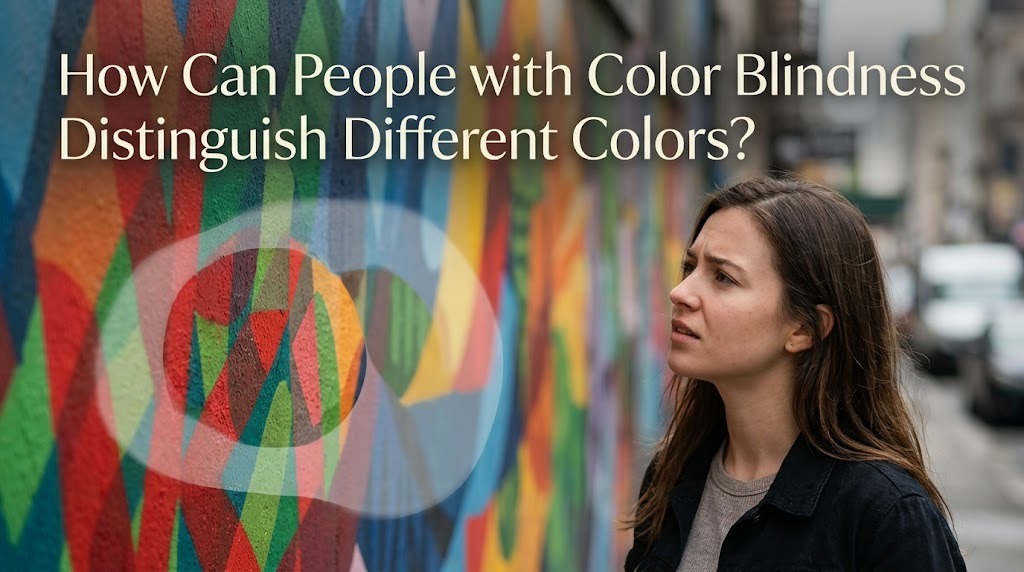
Color blindness is a vision condition that makes it difficult for someone to distinguish certain colors. People with this condition may confuse colors such as red and green, blue and purple, or yellow and light green. The level of difficulty varies depending on the type and severity of the color vision deficiency.
Although color blindness affects how people recognize colors, it does not mean they cannot identify colors in everyday situations. Many individuals develop alternative ways to recognize colors by paying attention to brightness, contrast, position, patterns, and surrounding objects. With the help of technology and practical strategies, people with color blindness can perform many daily activities more comfortably and independently.
UNDERSTANDING HOW COLOR BLINDNESS AFFECTS COLOR PERCEPTION
To understand how people with color blindness distinguish different colors, it is important to know how normal color vision works. The human retina contains specialized cells called cones that help detect different wavelengths of light. These cells are generally divided into three types, which are sensitive to short, medium, and long wavelengths associated with blue, green, and red light.
In people with color vision deficiencies, one or more types of cone cells may be missing or function differently. As a result, certain colors may appear similar or become more difficult to recognize. For example, someone with red-green color blindness may have difficulty distinguishing red, green, brown, and orange under certain lighting conditions.
However, people with color blindness can often recognize differences between objects through other visual characteristics. They may use brightness, color intensity, and contrast to identify objects that appear similar in color. This ability allows many individuals to adapt to their visual condition and manage everyday activities.
USING BRIGHTNESS AND COLOR CONTRAST
One of the most common ways people with color blindness distinguish different colors is by observing brightness and contrast. Even when two colors look similar, they may have different levels of brightness that make them easier to identify. For example, a dark red object may appear different from a light green object because of their contrast rather than their actual colors.
Brightness refers to how light or dark a color appears, while contrast describes the visual difference between two objects or surfaces. These characteristics can help individuals recognize information without depending entirely on color perception. This approach is particularly useful when reading documents, identifying signs, or looking at digital screens.
People with color blindness can also benefit from using clear visual differences when choosing clothing, organizing personal belongings, or preparing presentations. Selecting objects with noticeably different shades and brightness levels can reduce confusion. Good lighting can further improve visibility and make it easier to distinguish objects.
RECOGNIZING OBJECTS THROUGH POSITION AND PATTERNS
Another effective strategy is identifying colors based on the position and arrangement of objects. People with color blindness often learn to associate certain colors with specific locations, shapes, or patterns. This method is particularly useful when dealing with traffic signals, warning indicators, and other color-coded systems.
For example, traffic lights usually follow a consistent arrangement, with red at the top, yellow in the middle, and green at the bottom in vertically positioned signals. By remembering these positions, individuals can identify the meaning of each light without relying entirely on color differences. Horizontal traffic lights also generally follow a standardized order, although their arrangement can vary by location.
Patterns and symbols provide additional visual information that helps people recognize important details. Charts, maps, and educational materials become easier to understand when colors are combined with labels, shapes, or different patterns. These visual alternatives make information more accessible and reduce dependence on color alone.
USING COLOR IDENTIFICATION TECHNOLOGY
Modern technology provides several tools that can help people with color blindness identify colors more easily. Smartphone applications with color recognition features can use a camera to detect the color of an object and display its name on the screen. Some applications can also identify color codes, which may be useful for choosing clothing, selecting paint, or working with digital designs.
Another option is accessibility software that adjusts the appearance of colors on digital screens. Computers and smartphones often include color filters and accessibility settings designed to make certain color combinations easier to distinguish. These features can improve the visibility of text, icons, charts, and other digital information.
Color identification applications are helpful, but their accuracy can depend on lighting, camera quality, and the object's surface. Therefore, users should not rely on them as the only method for identifying important information. Combining technology with visual cues can provide a more reliable experience.
CHOOSING CLOTHING AND DAILY ITEMS MORE CAREFULLY
People with color blindness can use simple strategies to identify clothing and personal belongings. One practical method is organizing clothes according to labels, patterns, and categories rather than relying only on their colors. For example, clothing can be separated using tags that identify whether an item is black, blue, green, or another color.
Asking family members or trusted friends to help identify unfamiliar colors can also make certain decisions easier. Once clothing combinations are established, individuals can remember which items match and reuse those combinations. This reduces the need to identify every color independently.
Similar strategies can be applied to household items, food packaging, and personal accessories. Using labels, different shapes, and consistent storage arrangements can help prevent confusion. These habits are particularly useful for individuals who frequently encounter similar-looking colors.
USING SPECIAL GLASSES AND VISUAL AIDS
Special glasses designed for color vision deficiency may help some individuals distinguish certain colors more clearly. These glasses generally use specialized lenses that modify the wavelengths of light reaching the eyes. By changing how certain colors are separated, they may improve color contrast for some users.
However, color blindness glasses do not restore normal color vision or work equally well for everyone. Their effectiveness depends on the type and severity of the condition. They are also generally less effective for people with complete color blindness because the underlying problem involves a much more significant loss of normal color perception.
Other visual aids, such as high-contrast displays, labeled materials, and accessible digital interfaces, can provide additional support. Individuals should understand their visual needs before choosing a particular product. Consulting an eye specialist can help determine whether specialized glasses or other visual aids are appropriate.
CONCLUSION
People with color blindness can distinguish different colors by using alternative visual cues, including brightness, contrast, position, patterns, and object recognition. Technology such as color identification applications and digital accessibility features can also make everyday activities easier. In addition, organizing personal belongings and using consistent labeling systems can reduce confusion.
Although color blindness affects how certain colors are perceived, many individuals can adapt through practical strategies and appropriate visual support. Understanding individual color vision limitations is an important step toward choosing effective solutions and maintaining independence in daily life.
Recent Posts

Bagaimana Sistem SKS pada Program Kuliah... 22.11.2026/40 View

How Does Technology Make Daily Evaluation... 21.11.2026/71 View

Apa Strategi Menghadapi Kesenjangan antara Kompetensi... 21.11.2026/73 View

Mengapa Inventaris Aset Penting bagi Kelancaran... 21.11.2026/69 View

When Should Musicians Join a Record... 21.11.2026/73 View
