

How Can Political Literacy Be Improved in the Digital Era?
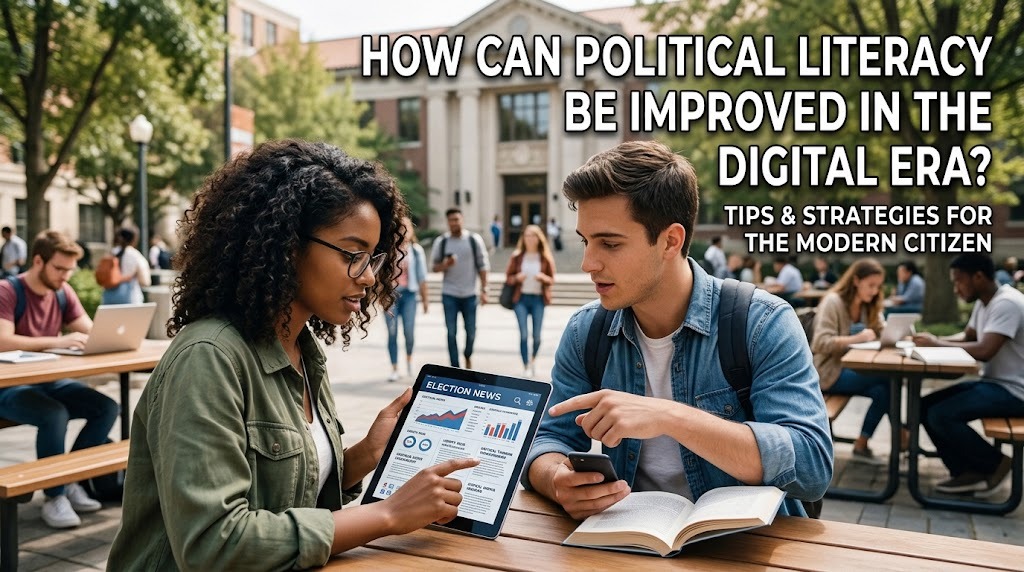
The digital era has changed how people access and share political information. News, government announcements, political discussions, and public issues can now reach people through websites, social media, video platforms, and messaging applications.
This accessibility creates opportunities to improve political literacy, but it also creates challenges. People need to develop the ability to evaluate information, recognize unreliable claims, understand different perspectives, and use digital platforms responsibly. Improving political literacy in the digital era therefore requires both knowledge and practical information skills.
DEVELOPING DIGITAL INFORMATION LITERACY
One important way to improve political literacy in the digital era is by developing digital information literacy. People need to understand how to search for information, identify sources, compare content, and determine whether a claim is supported by evidence.
When encountering political content online, users can examine the author, publisher, publication date, references, and original source. These simple checks can help provide more context before a claim is accepted or shared.
UNESCO's media and information literacy framework emphasizes the ability to access, evaluate, and use information effectively. These skills are increasingly relevant as people encounter large amounts of political content online.
CHECKING AND COMPARING POLITICAL SOURCES
The internet provides information from many different sources, but not all sources have the same level of reliability. Improving political information literacy requires people to compare information instead of relying automatically on a single post or account.
Official government websites can be useful for checking laws, regulations, policies, and official announcements. Reliable news organizations, academic institutions, and recognized organizations can also provide additional information depending on the topic.
Comparing several credible sources can help people identify differences in reporting and find additional context. If a claim cannot be verified through reliable sources, users can treat it cautiously rather than presenting it as established fact.
LEARNING TO RECOGNIZE MISINFORMATION
A major challenge in the digital environment is the spread of misinformation and disinformation. Political content can be shared rapidly, and some posts may contain inaccurate information, misleading context, manipulated content, or unsupported claims.
People can develop critical thinking skills by asking what evidence supports a claim, where the information originated, and whether credible sources confirm it. They can also check dates, images, quotations, and other details that may have been removed from their original context.
UNESCO's resources on media and information literacy address misinformation and disinformation as important challenges in today's information environment. Learning how to recognize these challenges can help users become more careful when consuming and sharing political content.
ENCOURAGING RESPECTFUL DIGITAL DISCUSSION
The digital era provides many opportunities for political discussion. People can exchange opinions, discuss public policies, and learn about different perspectives through online communities.
However, online discussions can become difficult when people rely on personal attacks, unsupported claims, or highly emotional content. Political literacy can help users focus on evidence and arguments while recognizing that people may have different opinions.
Respectful communication is an important part of democratic culture. The Council of Europe identifies dialogue, respect for diversity, human rights, and peaceful conflict resolution as important elements of democratic culture. These principles can also guide communication in digital spaces.
BUILDING RESPONSIBLE DIGITAL HABITS
Improving political literacy also requires developing responsible habits when using digital platforms. People can pause before sharing political content, check the original source, read beyond headlines, and seek additional context when necessary.
Educational institutions can support these skills through media literacy lessons, discussions, research activities, and digital citizenship education. Families and communities can also encourage young people and adults to ask questions about information rather than accepting online claims automatically.
The goal of political literacy in the digital era is not to make everyone agree on political issues. Instead, it is to provide people with knowledge and skills that help them evaluate information independently and participate responsibly in civic life.
CONCLUSION
Political literacy can be improved in the digital era by developing information literacy, checking reliable sources, recognizing misinformation, encouraging respectful discussion, and building responsible digital habits.
Digital platforms can provide valuable opportunities for learning about public issues, but users need appropriate skills to evaluate the information they encounter. By combining political knowledge, critical thinking, and digital literacy, individuals can better understand political information and make their own informed judgments.
Recent Posts

Bagaimana Sistem SKS pada Program Kuliah... 22.11.2026/33 View

How Does Technology Make Daily Evaluation... 21.11.2026/67 View

Apa Strategi Menghadapi Kesenjangan antara Kompetensi... 21.11.2026/67 View

Mengapa Inventaris Aset Penting bagi Kelancaran... 21.11.2026/65 View

When Should Musicians Join a Record... 21.11.2026/66 View
