

How Can Political Parties Register as Election Participants Through the Commission?
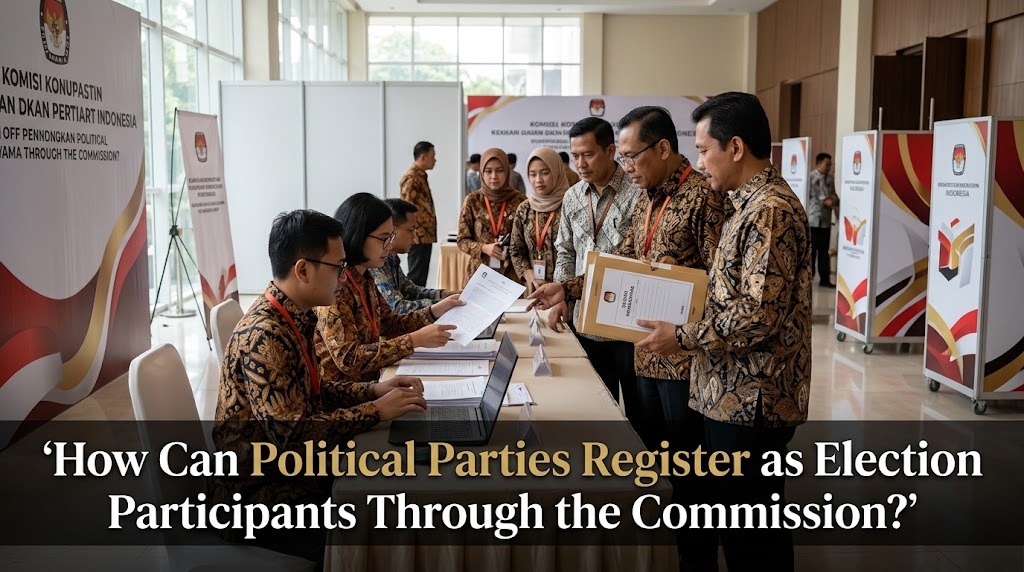
Political parties play an important role in Indonesia's democratic system because they provide opportunities for citizens to participate in political activities and nominate candidates for public office. To take part in general elections, political parties must complete an official registration process through the General Elections Commission (KPU). This process ensures that every participating party meets the legal requirements established by Indonesian election regulations.
The registration process involves several stages, including submitting applications, providing administrative documents, verifying organizational information, and completing factual checks when required. The KPU examines each application to determine whether a political party fulfills the conditions for becoming an official election participant. These procedures are important for maintaining fairness, transparency, and accountability throughout the electoral process.
UNDERSTANDING POLITICAL PARTY REGISTRATION IN INDONESIA
Political party registration is an official process that allows a political organization to apply for participation in general elections. In Indonesia, the KPU is responsible for managing the verification and determination of political parties as election participants according to applicable laws and regulations. The process is intended to ensure that participating parties have legitimate organizational structures and meet established requirements.
The legal framework for this process is primarily regulated under Law Number 7 of 2017 concerning General Elections, along with relevant amendments and KPU regulations. Political parties must meet administrative and organizational requirements before they can be declared eligible to participate. These requirements help establish a fair political competition system and prevent organizations that do not meet legal standards from entering the electoral process.
FULFILLING THE LEGAL REQUIREMENTS FOR REGISTRATION
Before submitting an application, political parties must ensure that their organizations meet the requirements established by election regulations. These requirements generally cover legal recognition, organizational structure, membership, leadership, and the existence of party offices in different regions. Political parties must also demonstrate that they have fulfilled the necessary administrative obligations.
Some important requirements include having an official party management structure at the national, provincial, and regency or city levels. Parties must also meet membership requirements in the relevant administrative areas and maintain permanent offices according to applicable regulations. In addition, they must fulfill representation requirements for women in central party management as stipulated by election legislation. Meeting these conditions is essential before the KPU can proceed with the verification process.
SUBMITTING REGISTRATION APPLICATIONS TO THE KPU
After preparing the required documents, political parties can submit their registration applications to the KPU within the officially announced registration period. The application is generally submitted by the party's authorized central leadership or representatives. Political parties must provide information and supporting documents that demonstrate compliance with the applicable requirements.
The KPU receives the application and examines whether the submitted documents are complete and properly prepared. The registration process also uses the Political Party Information System (SIPOL) to support the administration and management of political party information. Through this system, parties can submit and manage relevant organizational and membership data according to the established procedures. Accurate information is important because incomplete or inconsistent records may create difficulties during verification.
UNDERGOING ADMINISTRATIVE AND FACTUAL VERIFICATION
After receiving registration documents, the KPU conducts administrative verification to examine whether political parties have fulfilled the required documentary conditions. This stage includes checking party leadership information, membership records, organizational structures, and other supporting documents. The purpose is to ensure that the information submitted by each political party meets the requirements established by election regulations.
When necessary, the KPU continues with factual verification to confirm whether the information provided reflects actual conditions. Election officers may check the existence of party offices, confirm organizational management, and verify membership information through the procedures permitted by law. If discrepancies or incomplete information are discovered, political parties may be given opportunities to make corrections according to the applicable rules and deadlines. This process helps ensure that election participants are selected through objective and accountable procedures.
DETERMINING OFFICIAL POLITICAL PARTY ELECTION PARTICIPANTS
Once the verification stages have been completed, the KPU evaluates the results to determine which political parties fulfill the legal requirements. Parties that successfully meet the established conditions can be declared eligible to participate in the election. The determination is announced through official KPU decisions and public information channels.
The KPU also assigns election participant numbers according to the applicable procedures. These numbers are important for identifying political parties on election ballots and other election-related materials. Parties that do not meet the requirements may not be declared eligible, although legal mechanisms for resolving disputes are available under the relevant regulations. By applying consistent standards, the KPU aims to ensure that political party selection is conducted fairly and transparently.
THE IMPORTANCE OF TRANSPARENT REGISTRATION PROCEDURES
Transparent political party registration helps maintain public confidence in Indonesia's electoral system. When requirements, verification procedures, and official decisions are clearly communicated, political parties can understand their responsibilities and prepare their applications properly. Transparency also allows the public to monitor whether the KPU performs its duties according to established regulations.
The use of digital information systems can improve administrative efficiency and make party data easier to manage. However, technology must be supported by accurate information, effective supervision, and appropriate data protection measures. The KPU must also maintain its independence and avoid favoritism toward particular political organizations. Through professional registration procedures, the commission can support fair political competition and strengthen democratic institutions.
CONCLUSION
Political parties in Indonesia must complete an official registration process through the General Elections Commission before participating in general elections. The process includes fulfilling legal requirements, submitting registration documents, undergoing administrative and factual verification, and receiving an official determination from the KPU.
These procedures ensure that political parties meet established standards and have legitimate organizational structures. Transparency, accurate information, and consistent verification are essential for maintaining fairness in the electoral system. Through professional management and independent decision-making, the KPU helps create a democratic election process that is accountable and trusted by the public.
Recent Posts

Apa Perbedaan Kurikulum Kuliah Akselerasi dan... 13.11.2026/27 View

Apa Keuntungan Bekerja di Gig Economy... 12.11.2026/57 View

Bagaimana Revolusi Digital Mengubah Peluang Karier... 12.11.2026/52 View

Mengapa Pengalaman Kerja Semakin Penting Dibandingkan... 12.11.2026/50 View

Bagaimana Cara Membangun Karier yang... 12.11.2026/46 View
