

How Can Population Density Problems Be Solved in Indonesia?
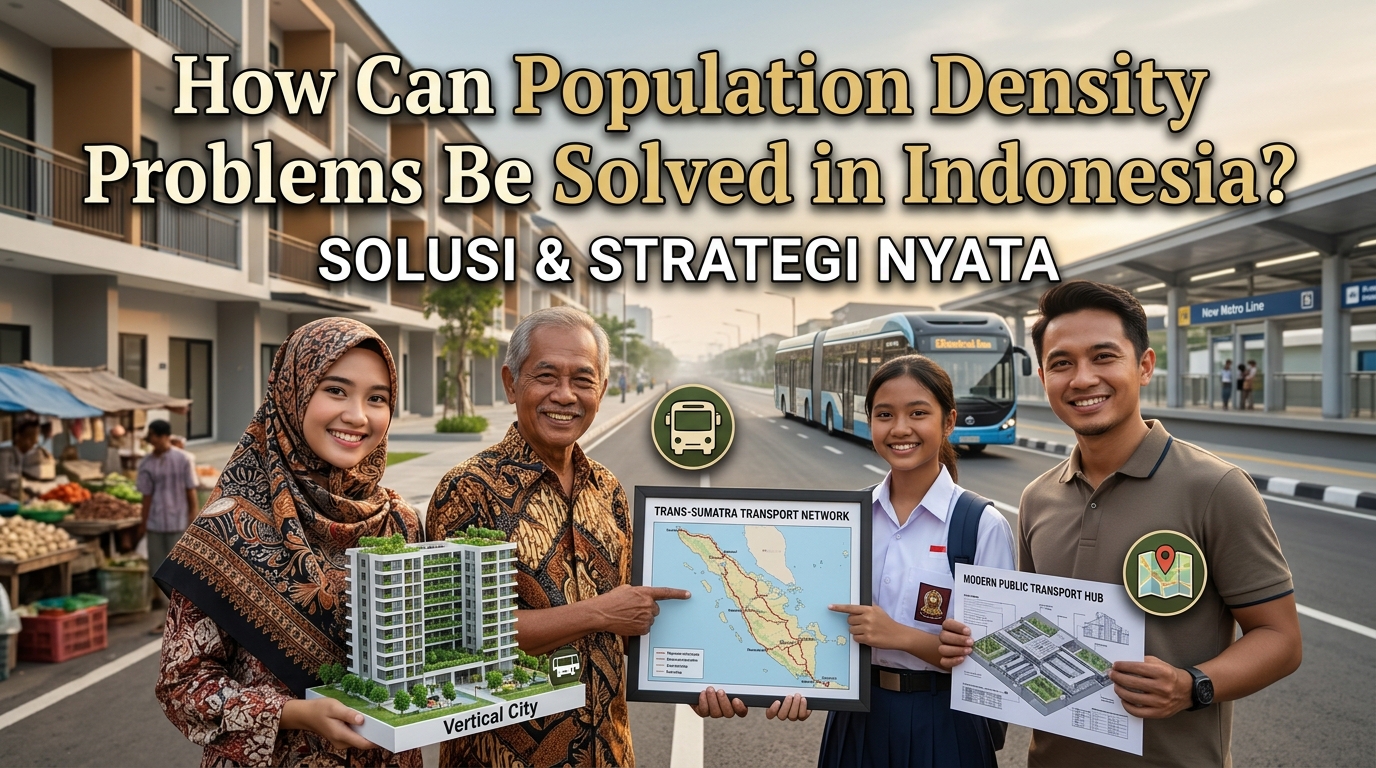
Population density is an important issue in Indonesia because people are not distributed evenly across the country's many islands and regions. Some areas, especially major cities such as Jakarta, experience high population concentrations, while other regions have relatively small populations spread across large territories. This imbalance can create various challenges, including traffic congestion, housing shortages, pollution, unemployment, and unequal access to public services. Rapid urbanization and migration from rural areas to major cities can increase these pressures. Therefore, solving population density problems in Indonesia requires effective planning, balanced regional development, and cooperation between the government and local communities.
UNDERSTANDING POPULATION DENSITY PROBLEMS IN INDONESIA
Population density refers to the average number of people living within a specific unit of land area, usually measured in people per square kilometer. In Indonesia, population distribution varies significantly between provinces, islands, and urban and rural areas. Java has a particularly large concentration of residents, while several other regions have much lower population densities. This uneven distribution is influenced by employment opportunities, infrastructure, education, and access to public facilities.
High population density does not automatically create problems because well-planned cities can support large communities. However, difficulties arise when population growth exceeds the capacity of housing, transportation, healthcare, sanitation, and other essential services. Meanwhile, regions with smaller populations may struggle with limited investment and infrastructure. Addressing these differences requires solutions that consider the specific needs and characteristics of each region.
DEVELOPING INFRASTRUCTURE OUTSIDE MAJOR CITIES
One effective way to address population density problems is to improve infrastructure development outside major urban centers. Many people move to large cities because they offer better roads, transportation, schools, hospitals, and employment opportunities. By improving these facilities in smaller cities and rural regions, the government can make other areas more attractive places to live and work. Better infrastructure can also encourage businesses to invest beyond established economic centers.
Development should include reliable transportation networks, electricity, clean water, internet access, and public facilities. These improvements can help local communities access education, healthcare, and economic opportunities without moving to major cities. Infrastructure investment should be based on regional needs and long-term development plans. As a result, population growth and economic activities can become more evenly distributed across Indonesia.
CREATING MORE JOB OPPORTUNITIES IN REGIONAL AREAS
Employment opportunities are among the strongest reasons people move from rural areas to large cities. Many residents seek better salaries, career development, and more stable jobs. If economic opportunities remain concentrated in a few urban centers, migration may continue to increase population pressure in those locations. Therefore, creating employment opportunities in different regions is an important part of the solution.
The government can encourage regional investment in agriculture, fisheries, tourism, manufacturing, and digital industries. Supporting small and medium-sized enterprises can also help local businesses grow and create new jobs. In addition, vocational training and entrepreneurship programs can improve workers' skills and prepare them for available employment. These efforts can strengthen local economies while reducing the need for people to relocate solely to find work.
IMPROVING URBAN PLANNING AND HOUSING MANAGEMENT
Urban planning plays an important role in managing densely populated cities. Local governments need to organize residential areas, commercial zones, public spaces, transportation routes, and industrial locations carefully. Good planning can reduce overcrowding and make cities more comfortable for residents. It also helps prevent uncontrolled development in areas that are unsuitable for housing.
Affordable housing is another important priority, particularly for low-income families and workers in urban areas. Governments can support the development of safe and affordable residential buildings near workplaces and public transportation. Improving access to clean water, drainage, sanitation, and waste management is equally important. With proper housing policies and effective land-use management, densely populated cities can become healthier and more sustainable places to live.
STRENGTHENING PUBLIC TRANSPORTATION SYSTEMS
Traffic congestion is a common challenge in densely populated Indonesian cities. When many residents depend on private vehicles, roads become crowded, travel times increase, and air pollution becomes more serious. Improving public transportation can help reduce these problems by providing convenient alternatives to private cars and motorcycles. Reliable transportation systems also make it easier for residents to reach workplaces, schools, and public facilities.
Cities can improve bus services, urban rail networks, pedestrian facilities, and cycling infrastructure. Public transportation should be affordable, safe, accessible, and connected between different routes. Integrating residential areas with transportation hubs can also reduce the need for long daily journeys. These improvements can support more efficient urban mobility and improve the quality of life in crowded cities.
PROMOTING FAMILY PLANNING AND POPULATION EDUCATION
Family planning can contribute to long-term population management by helping individuals and couples make informed decisions about family size and birth spacing. Access to reproductive health information and voluntary family planning services is important for responsible population development. These programs should provide accurate education and respect individual rights and personal choices. They can also help families plan their financial resources and support children's health and education.
Population education should be provided through schools, healthcare facilities, and community programs. People need to understand how population growth affects housing, employment, education, healthcare, and natural resources. However, population density problems cannot be solved through birth control programs alone. Economic development, infrastructure improvements, and better regional planning must also be addressed.
DEVELOPING SMALL CITIES AND ECONOMIC CENTERS
Developing smaller cities is another strategy for reducing excessive population concentration in major urban areas. Cities outside the largest metropolitan centers can become new locations for education, business, industry, and public services. When these areas offer sufficient facilities and employment opportunities, people may choose to settle closer to their hometowns rather than migrate to large cities. This approach can support more balanced regional development.
The government can encourage investment in regional economic centers by improving transportation connections, providing business support, and developing industrial and commercial areas. Universities and vocational institutions can also contribute by preparing skilled workers who meet local industry needs. Development should consider each region's economic potential and environmental conditions. This strategy can strengthen local economies and create more balanced settlement patterns across Indonesia.
USING TECHNOLOGY AND DIGITAL SERVICES
Technology can help reduce some challenges associated with high population density. Digital services allow people to access education, healthcare information, government administration, and business opportunities without always traveling to crowded urban centers. Online learning, telemedicine, digital banking, and remote working can make essential services more accessible. These solutions are particularly useful for communities located far from major cities.
The government and private sector should expand reliable internet access and improve digital literacy across Indonesia. Small businesses can also use digital platforms to reach customers in different regions without opening physical stores in major cities. However, technology cannot replace all public facilities because many services still require direct access and physical infrastructure. Digital development should therefore complement broader regional development programs.
STRENGTHENING REGIONAL GOVERNMENT COOPERATION
Solving population density problems requires cooperation between national, provincial, and local governments. Each region has different population characteristics, economic strengths, environmental conditions, and development challenges. Local governments need accurate population data to identify areas that require additional housing, schools, hospitals, and transportation facilities. Meanwhile, national policies should support coordination and reduce development inequalities between regions.
Government cooperation is also necessary for managing transportation networks, environmental protection, housing development, and regional investment. Public participation is equally important because residents understand many of the challenges affecting their communities. By involving local communities, development programs can become more appropriate and effective. Consistent evaluation is needed to ensure that policies produce long-term benefits.
CONCLUSION
Population density problems in Indonesia can be addressed through balanced regional development, better infrastructure, expanded employment opportunities, effective urban planning, and improved public transportation. Family planning, digital services, and the development of smaller cities can also contribute to more balanced population distribution. These solutions should be implemented according to the needs and characteristics of each region.
The government, private sector, and local communities all have important roles in managing population challenges. With proper planning, sustainable investment, and stronger cooperation, Indonesia can reduce excessive pressure on major cities while improving development opportunities in other regions. The main goal is not simply to reduce population density but to create more balanced, inclusive, and sustainable living conditions for all Indonesians.
Recent Posts

Bagaimana Sistem SKS pada Program Kuliah... 22.11.2026/33 View

How Does Technology Make Daily Evaluation... 21.11.2026/67 View

Apa Strategi Menghadapi Kesenjangan antara Kompetensi... 21.11.2026/67 View

Mengapa Inventaris Aset Penting bagi Kelancaran... 21.11.2026/65 View

When Should Musicians Join a Record... 21.11.2026/66 View
