

How Can Public Transportation Help Reduce Traffic Congestion in Cities?
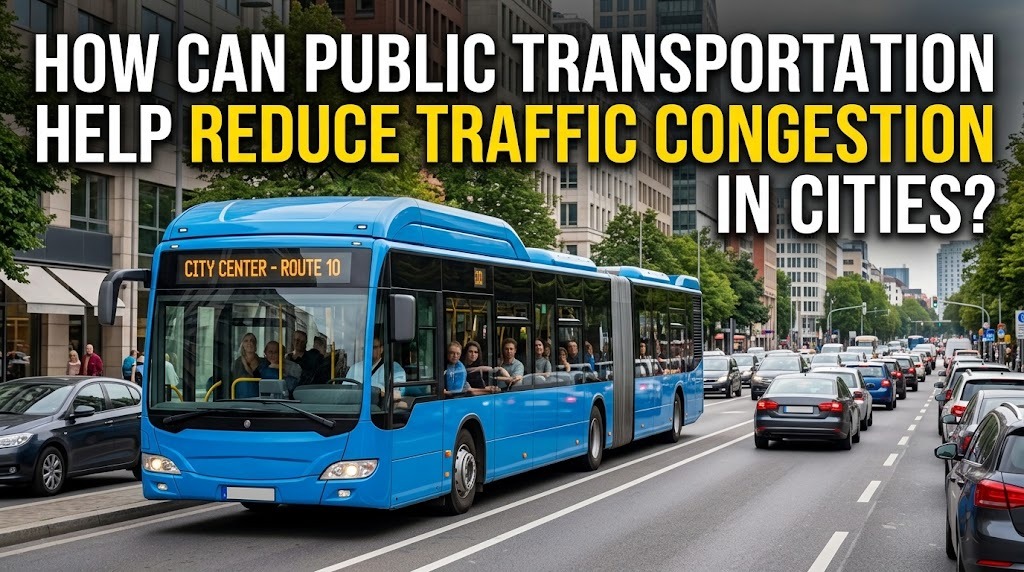
Traffic congestion is a major problem in many cities around the world. The increasing number of private cars and motorcycles often causes crowded roads, longer travel times, and higher air pollution. One effective way to address this problem is to improve public transportation, including buses, trains, and other shared transit services. Public transportation can carry many people at once, reducing the number of individual vehicles needed on the road. With reliable services, convenient routes, and supportive government policies, cities can improve traffic flow and create a more sustainable transportation system.
REDUCING THE NUMBER OF PRIVATE VEHICLES
One of the main benefits of public transportation is its ability to reduce the number of private vehicles on urban roads. When people use buses or trains instead of driving individual cars, fewer vehicles compete for limited road space. This is particularly important during rush hours, when many workers and students travel at the same time. A single bus or train can transport many passengers in one journey, making better use of existing transportation infrastructure.
Reducing private vehicle use can also decrease the demand for parking spaces in busy areas. Large parking areas occupy valuable urban land that could otherwise support housing, public facilities, or green spaces. When public transportation provides a practical alternative, people may be less dependent on private cars for daily activities. However, the impact depends on service quality, passenger capacity, and whether travelers genuinely switch from private vehicles rather than walking or cycling. Therefore, cities should develop public transportation systems that meet people's daily travel needs.
IMPROVING TRAFFIC FLOW DURING RUSH HOURS
Traffic congestion frequently occurs during morning and evening rush hours because large numbers of people travel along the same routes within a limited period. Public transportation can help reduce this pressure by moving many passengers efficiently through crowded urban areas. Buses, commuter trains, and metro systems can serve major residential and business districts, reducing the number of cars entering busy streets. When these services operate frequently and reliably, commuters have a stronger reason to leave their private vehicles at home.
Cities can further improve traffic flow by introducing dedicated bus lanes and giving public transportation priority at selected intersections. These measures help buses avoid some traffic delays and maintain more predictable journey times. Coordinated schedules can also reduce waiting times and make transfers between services easier. In areas with high travel demand, expanding the capacity or frequency of existing transit services may be more effective than encouraging everyone to use private vehicles. As a result, public transportation can help make daily travel more organized and efficient.
REDUCING AIR POLLUTION AND FUEL CONSUMPTION
Public transportation can contribute to better urban air quality by reducing the number of vehicles on the road. When passengers share a bus or train, the energy and emissions associated with their journeys can be distributed among more people. This can lower emissions per passenger compared with individual car travel, particularly when public transportation has high occupancy. Fewer private vehicle trips can also reduce fuel consumption and the pollution associated with stop-and-go traffic.
The environmental benefits depend on the type of vehicle, its energy source, passenger occupancy, and the efficiency of the transportation system. Modern electric buses and trains powered by relatively clean electricity can further reduce direct emissions in urban areas. Nevertheless, public transportation still requires energy, infrastructure, and regular maintenance. Cities should therefore combine reliable transit services with cleaner vehicles, efficient routes, and responsible energy policies. These measures can support healthier communities while helping cities address climate and air-quality challenges.
MAKING PUBLIC TRANSPORTATION MORE CONVENIENT AND ACCESSIBLE
People are more likely to use public transportation when it is reliable, affordable, safe, and easy to access. Cities should provide sufficient service frequency, comfortable vehicles, clear route information, and convenient payment systems. Stations and stops should connect residential neighborhoods with workplaces, schools, hospitals, and shopping centers. If passengers face long waiting times or inconvenient transfers, they may prefer private vehicles even when public transportation is available.
Accessibility and affordability are also essential for encouraging wider use. Public transportation should accommodate older adults, people with disabilities, children, and passengers with different income levels. Safe walking routes, suitable sidewalks, accessible stations, and connections between buses and trains can make the entire journey more convenient. Governments can also use passenger feedback and travel data to identify underserved neighborhoods and improve routes. By making public transportation practical for different groups, cities can reduce dependence on private vehicles and improve access to essential services.
SUPPORTING ECONOMIC GROWTH AND URBAN DEVELOPMENT
An efficient public transportation system can support economic activity by helping people reach workplaces, educational institutions, and commercial areas more reliably. When commuting becomes more predictable, employees can spend less time traveling and more time on work, family activities, and rest. Businesses may also benefit when customers and workers can reach their locations without relying entirely on private vehicles. In addition, public transportation can reduce some household expenses associated with fuel, parking, vehicle maintenance, and ownership.
Public transportation can also influence sustainable urban development. Well-planned transit routes can encourage housing and businesses to develop around stations, creating neighborhoods where daily needs are easier to reach. This approach may reduce long-distance commuting and support walking and cycling. However, transit-oriented development must be planned carefully to maintain affordable housing and prevent existing communities from being displaced by rising property costs. By connecting transportation planning with land use and economic policy, cities can create more accessible and efficient urban environments.
GOVERNMENT POLICIES AND LONG-TERM TRANSPORTATION SOLUTIONS
Governments play an important role in making public transportation an effective solution to traffic congestion. They can invest in reliable bus and rail services, maintain existing infrastructure, coordinate routes, and establish integrated ticketing systems. Public transportation agencies should also monitor passenger demand and adjust service frequency where crowded routes require additional capacity. Clear information and consistent service standards can build public trust and encourage more people to use shared transportation.
Long-term success requires cooperation among governments, businesses, transportation operators, and residents. Employers can support transit use by providing commuter benefits, while schools and universities can coordinate travel schedules with public transportation services. Cities should evaluate results by measuring passenger numbers, travel times, traffic volumes, accessibility, and environmental performance. It is also important to maintain safe walking and cycling connections to transit stops so that passengers can complete their journeys conveniently. With consistent investment and careful planning, public transportation can become a central part of a more efficient and sustainable urban mobility system.
CONCLUSION
Public transportation can help reduce traffic congestion by carrying more people with fewer vehicles, improving rush-hour travel, and reducing dependence on private cars. Reliable buses, trains, and integrated transit networks can also support cleaner air, lower household transportation expenses, and better access to jobs and public services. To achieve these benefits, cities must provide services that are affordable, safe, accessible, and convenient. Government investment, smart urban planning, and cooperation with the public are essential for long-term success. By making public transportation an attractive daily choice, cities can reduce traffic pressure and build healthier, more sustainable communities.
Recent Posts

Bagaimana Sistem SKS pada Program Kuliah... 22.11.2026/54 View

How Does Technology Make Daily Evaluation... 21.11.2026/83 View

Apa Strategi Menghadapi Kesenjangan antara Kompetensi... 21.11.2026/81 View

Mengapa Inventaris Aset Penting bagi Kelancaran... 21.11.2026/78 View

When Should Musicians Join a Record... 21.11.2026/82 View
