

How Can Radio Announcers Create Interesting and Engaging Broadcasts?
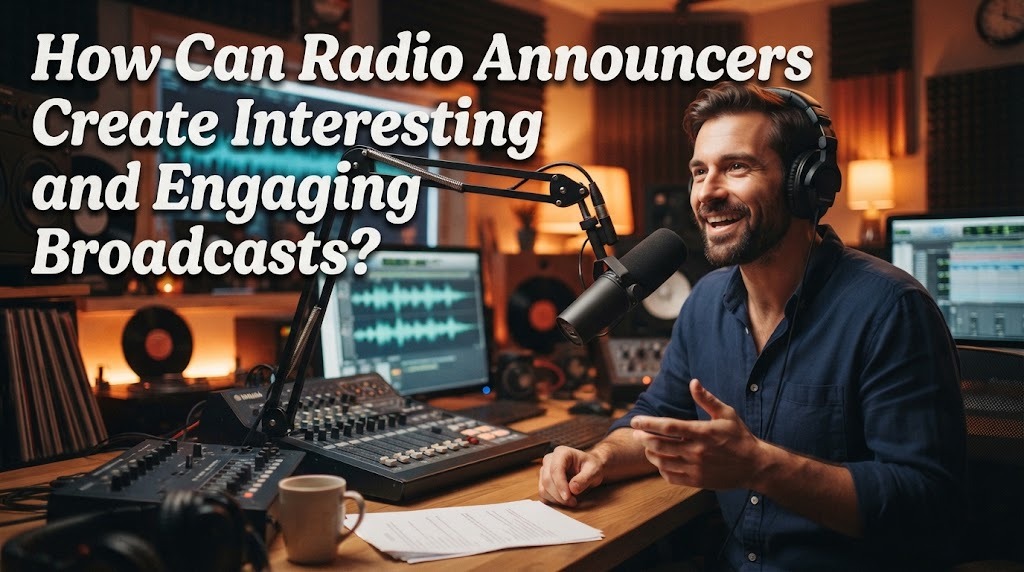
Creating an interesting radio broadcast requires more than simply speaking clearly into a microphone. Radio announcers need to capture attention, maintain a natural conversation, and provide content that listeners find useful or entertaining. Because listeners cannot see the announcer, the voice, storytelling, and choice of topics become especially important. A successful broadcast should make listeners feel informed, entertained, and connected to the program.
KNOW THE TARGET AUDIENCE
Understanding the target audience is the first step in creating an engaging radio broadcast. Announcers should know the interests, age range, habits, and general expectations of their listeners. This knowledge helps them choose topics and language that feel relevant to the audience. A program aimed at young listeners, for example, may use a more casual communication style than a formal news program.
Audience understanding should also influence the type of entertainment and information provided. Announcers can observe listener feedback, messages, requests, and reactions to identify popular topics. They can then adjust their content without losing the identity of the program. When listeners feel that a broadcast understands their interests, they are more likely to keep listening.
CHOOSE RELEVANT AND INTERESTING TOPICS
Good topics give announcers a strong foundation for an engaging broadcast. Topics should be relevant to the audience and connected to current interests, everyday experiences, culture, entertainment, education, or other subjects that fit the program. Announcers should avoid discussing a topic simply because it is popular if it does not match their listeners. Relevance is what makes information feel valuable rather than random.
Before going on air, announcers should research important facts and understand the subject they plan to discuss. Reliable information helps prevent misunderstandings and inaccurate statements. Research also gives announcers more ideas for questions, examples, and stories. Good preparation allows them to speak naturally while still maintaining accuracy.
USE A CONVERSATIONAL COMMUNICATION STYLE
A conversational style can make a radio broadcast feel personal and comfortable. Instead of sounding as though they are reading a formal document, announcers can imagine that they are speaking directly to one listener. Simple sentences, natural expressions, and appropriate humor can make communication easier to follow. This style can also create a stronger emotional connection with the audience.
Being conversational does not mean speaking without preparation. Professional announcers still need to understand the structure and purpose of their program. They can prepare key ideas while leaving enough flexibility to respond naturally during the broadcast. This balance between preparation and spontaneity can make a program sound more authentic.
DEVELOP STRONG STORYTELLING SKILLS
Storytelling can turn ordinary information into content that listeners remember. Announcers can use real experiences, examples, short anecdotes, or simple scenarios to explain a topic. A good story usually has a clear beginning, development, and conclusion. The delivery should also create curiosity so listeners want to hear what comes next.
Stories should remain appropriate for the program and audience. Announcers need to avoid unnecessary details that make the broadcast difficult to follow. They should focus on the parts that support the main message. Strong storytelling allows information to become more relatable and emotionally engaging.
VARY VOICE, TONE, AND ENERGY
The voice is one of the most important tools available to a radio announcer. A monotonous voice can make even useful content feel less interesting. Announcers can vary their pitch, pace, volume, and tone to emphasize important moments. These changes should remain natural and appropriate for the subject.
Energy should also match the atmosphere of the program. Entertainment segments may benefit from a lively delivery, while serious discussions may require a calmer approach. Announcers should avoid shouting simply to sound energetic. Effective voice variation makes the broadcast dynamic while keeping it comfortable for listeners.
INTERACT WITH LISTENERS
Listener interaction can make a broadcast feel more active and personal. Announcers can invite listeners to send messages, answer questions, request songs, share opinions, or participate in discussions. These interactions give the audience a reason to become involved instead of simply listening passively. They can also provide useful ideas for future content.
Responses should be handled respectfully and efficiently, especially during live programs. Announcers should understand the purpose of each interaction and avoid allowing conversations to become confusing or unnecessarily long. They should also protect listener privacy when personal information is shared. Professional interaction builds trust between the audience and the radio program.
USE MUSIC AND AUDIO ELEMENTS EFFECTIVELY
Music and other audio elements can strengthen the atmosphere of a radio broadcast. Appropriate background sounds, jingles, transitions, and music can help separate different segments of a program. However, these elements should support the content rather than distract listeners from the announcer. Good timing is essential when using audio effects.
Announcers should understand how audio transitions work with their speaking segments. They need to coordinate with producers or technical staff when necessary. Sudden or poorly timed changes can interrupt the flow of a program. Well-planned audio elements, on the other hand, can make a broadcast sound polished and professional.
KEEP THE PROGRAM STRUCTURED
An engaging broadcast still needs a clear structure. Listeners should be able to follow the movement from one segment to another without feeling lost. Announcers can prepare a simple rundown containing topics, music, advertisements, interviews, and other scheduled content. A clear structure also helps them manage the available broadcasting time.
At the same time, the structure should not make the program sound overly rigid. Live radio often involves unexpected situations, such as breaking information, technical problems, or spontaneous listener interactions. Announcers should be prepared to adjust while maintaining the main direction of the program. Flexibility is an important part of professional broadcasting.
ADD VALUE TO EVERY SEGMENT
Listeners are more likely to stay when each segment offers a clear reason to continue listening. Announcers can provide useful information, entertainment, practical advice, interesting facts, or thoughtful discussions. Even short segments should have a clear purpose. This helps prevent unnecessary repetition and keeps the broadcast focused.
Adding value does not always require complicated content. A simple explanation of a common problem can be useful when delivered clearly. A short personal story can also make a program more relatable. The key is to understand what the audience can gain from each part of the broadcast.
PRACTICE AND EVALUATE EACH BROADCAST
Consistent practice helps announcers improve their performance over time. They can record practice sessions and review their speaking speed, pronunciation, tone, pauses, and interaction style. After a broadcast, they can identify which segments worked well and which parts need improvement. This process encourages continuous professional development.
Feedback from producers, colleagues, and listeners can also be valuable. Announcers should remain open to constructive criticism instead of assuming that every part of their performance is already perfect. Small improvements in delivery, content, or timing can make a significant difference over time. Regular evaluation helps create a more polished and engaging broadcasting style.
CONCLUSION
Radio announcers can create interesting and engaging broadcasts by understanding their audience, choosing relevant topics, and using a natural communication style. Strong storytelling, voice variation, listener interaction, and effective audio elements can make programs more dynamic. At the same time, a clear structure ensures that the broadcast remains organized and easy to follow. Announcers should continuously practice, evaluate their performance, and respond to audience feedback. With preparation, creativity, and consistent improvement, a radio announcer can create broadcasts that listeners enjoy and want to return to.
Recent Posts

Bagaimana Sistem SKS pada Program Kuliah... 22.11.2026/35 View

How Does Technology Make Daily Evaluation... 21.11.2026/69 View

Apa Strategi Menghadapi Kesenjangan antara Kompetensi... 21.11.2026/69 View

Mengapa Inventaris Aset Penting bagi Kelancaran... 21.11.2026/67 View

When Should Musicians Join a Record... 21.11.2026/68 View
