

How Can Reducing Plastic Waste Help Fight Global Warming?
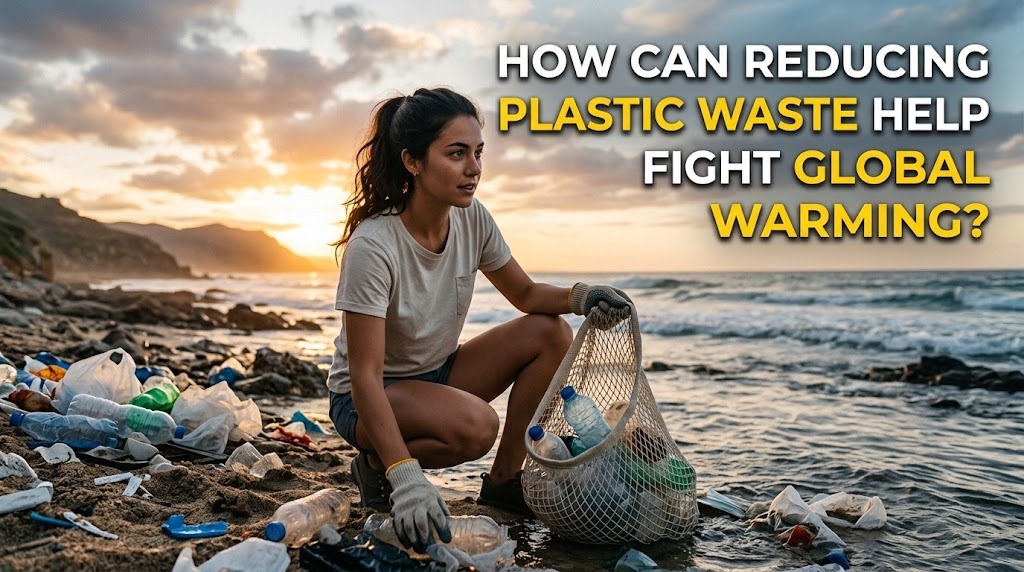
Plastic waste is a growing environmental problem that affects land, oceans, wildlife, and human communities. Most conventional plastics are made from fossil fuel-based materials, such as petroleum and natural gas, and their production requires energy. Throughout their life cycle, plastics can generate greenhouse gas emissions that contribute to global warming.
Reducing plastic waste can help limit these emissions by lowering demand for new plastic production, reducing waste sent to landfills or incinerators, and encouraging more responsible resource use. However, the climate benefits depend on the type of plastic, how it is produced, and how waste is managed. Understanding the connection between plastic waste and global warming can help individuals, businesses, and communities make more sustainable choices.
PLASTIC PRODUCTION RELEASES GREENHOUSE GASES
One important way plastic contributes to global warming is through its production process. Many conventional plastics are manufactured using chemicals derived from fossil fuels. Extracting raw materials, processing them, and converting them into plastic products requires energy, which can generate carbon dioxide and other greenhouse gas emissions.
Plastic manufacturing can also involve energy-intensive industrial processes and the use of additional chemicals. When production relies heavily on fossil fuel energy, its overall carbon footprint can increase. Reducing unnecessary plastic consumption can lower demand for newly manufactured products and help reduce some of these emissions. Choosing durable products and avoiding items that are quickly discarded can therefore support both waste reduction and climate action.
PLASTIC WASTE CAN GENERATE EMISSIONS DURING DISPOSAL
The way plastic waste is handled also influences its environmental impact. Plastic that is sent to incinerators releases carbon dioxide when burned, particularly when the material is made from fossil fuel-based sources. Waste collection, transportation, and processing can generate additional emissions through fuel and electricity use.
Plastic in landfills generally breaks down slowly and is not a major direct source of methane compared with organic waste. However, landfills require space and long-term management, while poorly managed plastic waste can spread into rivers, coastal areas, and natural habitats. Reducing the amount of plastic discarded can limit the need for some waste-management activities and help prevent pollution. Effective collection and disposal systems remain important for handling plastic that cannot be avoided or reused.
REUSING AND RECYCLING PLASTIC CAN SAVE RESOURCES
Plastic recycling can help reduce the demand for virgin plastic by turning suitable waste materials into new products. Producing plastic from recycled material can use less energy than manufacturing certain plastics from raw fossil fuel-based feedstocks. The actual savings depend on the type of plastic, recycling process, energy source, and quality of the recovered material.
Reuse can also reduce emissions when a product is used repeatedly instead of being replaced after a single use. For example, a durable container may reduce demand for disposable alternatives if it is used enough times and managed properly. However, recycling is not equally effective for every plastic product, and some materials are difficult to process because of mixed compositions, contamination, or limited local facilities. For this reason, reducing plastic consumption and reusing suitable items should be considered alongside recycling.
REDUCING SINGLE-USE PLASTICS SUPPORTS SUSTAINABLE HABITS
Single-use plastic products, such as disposable bags, cups, straws, and food packaging, are often used briefly before being discarded. Their short period of use can create a large amount of waste when they are consumed in high volumes. Reducing unnecessary single-use plastics can lower demand for new materials and help limit emissions associated with manufacturing and disposal.
People can adopt practical alternatives, such as carrying reusable shopping bags, using refillable water bottles, and choosing products with less packaging when appropriate. Businesses can support these efforts by improving packaging design, offering refill systems, and avoiding unnecessary plastic components. Reusable alternatives should be selected carefully because their production can also require energy and materials. Their environmental benefits generally depend on durability, repeated use, cleaning requirements, and the products they replace.
COMMUNITY ACTION AND BETTER WASTE SYSTEMS STRENGTHEN CLIMATE EFFORTS
Individual choices can help, but reducing plastic waste to fight global warming also requires cooperation among communities, businesses, and governments. Schools and local organizations can organize waste-sorting programs, encourage reusable products, and provide education about responsible consumption. These activities can help establish habits that reduce waste over time.
Governments can improve waste collection, support effective recycling systems, and establish policies that encourage producers to reduce unnecessary packaging. Businesses can redesign products to use fewer materials and make reuse or recycling more practical. It is also important to prevent plastic waste from entering rivers and oceans, where it can harm wildlife and damage ecosystems. Combining waste prevention with lower-emission manufacturing, cleaner energy, and effective waste management can deliver broader environmental benefits.
CONCLUSION
Reducing plastic waste can help fight global warming by lowering demand for new plastic production, limiting emissions from some disposal methods, and encouraging more efficient use of materials. Reusing suitable products and recycling eligible plastics can also reduce the need for virgin resources. However, the climate benefits vary according to the materials involved, the production process, and the waste-management system.
The most effective approach combines waste prevention, responsible reuse, appropriate recycling, and better public infrastructure. Individuals can reduce unnecessary plastic consumption, while businesses and governments can improve product design and waste-management practices. When these efforts are combined with broader reductions in greenhouse gas emissions, they can contribute to climate change mitigation and a cleaner environment.
Recent Posts

Bagaimana Sistem SKS pada Program Kuliah... 22.11.2026/49 View

How Does Technology Make Daily Evaluation... 21.11.2026/76 View

Apa Strategi Menghadapi Kesenjangan antara Kompetensi... 21.11.2026/78 View

Mengapa Inventaris Aset Penting bagi Kelancaran... 21.11.2026/74 View

When Should Musicians Join a Record... 21.11.2026/78 View
