

How Can School BOS Fund Usage Be Monitored?
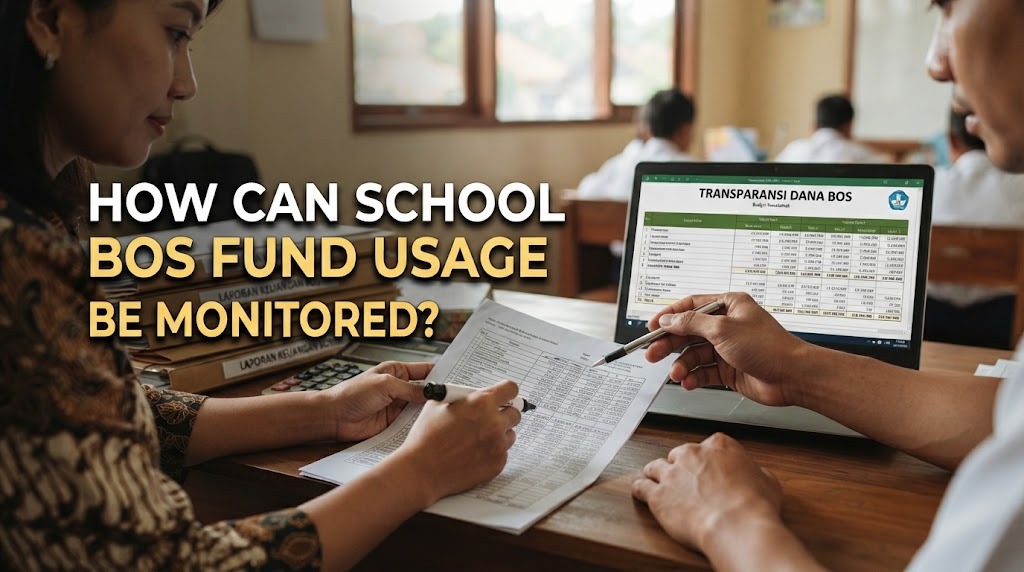
Monitoring BOS fund usage is important to ensure that school funding is spent properly and according to planned educational needs. Schools need to know how much funding is available, where it is being spent, and whether each expense provides a useful benefit. Good monitoring can help identify mistakes, unnecessary spending, or financial irregularities early. It also supports transparency and accountability in school financial management.
CREATE A CLEAR BUDGET PLAN
The monitoring process should begin with a clear budget plan. The school needs to identify its priorities, expected expenses, and available BOS funds before spending begins. This plan becomes a reference for comparing planned spending with actual transactions. If spending is significantly different from the original plan, school managers can review the reason. A detailed budget makes financial monitoring more organized and measurable.
RECORD EVERY BOS TRANSACTION
Every transaction involving BOS funds should be recorded properly. The records should contain information about the purchase, amount spent, date, and relevant supporting documents. Complete records make it easier to determine where the money has been used. They also help school managers identify errors or unusual transactions. Accurate transaction records are one of the most important foundations of financial monitoring.
KEEP RECEIPTS AND SUPPORTING DOCUMENTS
Receipts, invoices, payment records, and other relevant documents should be stored carefully. These documents provide evidence that a financial transaction actually occurred. When school finances are reviewed, supporting documents can help explain the purpose and amount of each expense. Missing documents can make financial verification more difficult. Therefore, schools should organize their financial documents systematically.
COMPARE PLANNED AND ACTUAL SPENDING
Schools can monitor BOS funds by comparing their budget plan with actual spending. This comparison shows whether the school is spending according to its priorities and estimated amounts. Differences between planned and actual spending should be reviewed rather than ignored. Regular comparisons can help schools control their budget and avoid unnecessary expenses. The results can also be used to improve future financial planning.
INVOLVE THE SCHOOL BOS TEAM
Monitoring should involve the appropriate people rather than depending on only one individual. The principal, treasurer, BOS team, and relevant school staff can have different roles in reviewing financial activities. Multiple people participating in monitoring can provide additional perspectives and reduce the risk of overlooked mistakes. Clear responsibilities also make it easier to determine who handles specific financial tasks. Team-based monitoring can strengthen accountability.
CONDUCT REGULAR FINANCIAL REVIEWS
Schools should review their BOS fund usage regularly instead of waiting until the end of the funding period. Regular reviews allow managers to identify problems while there is still time to correct them. The review can cover income, expenses, remaining balances, supporting documents, and compliance with the spending plan. Frequent monitoring makes financial problems easier to detect and address. It also keeps school managers aware of their current financial situation.
CHECK WHETHER SPENDING SUPPORTS SCHOOL NEEDS
Monitoring should not focus only on the amount of money spent. Schools should also consider whether the spending actually supports educational and operational needs. For example, managers can evaluate whether purchased learning resources are being used by students and teachers. This helps determine whether the funds are providing meaningful benefits. Effective monitoring examines both financial accuracy and the usefulness of spending.
MAINTAIN TRANSPARENT FINANCIAL INFORMATION
Transparency can make BOS fund monitoring more effective. Relevant financial information should be communicated according to applicable requirements so that authorized stakeholders can understand how funds are being used. Clear information can reduce misunderstandings and strengthen trust within the school community. Transparency also encourages school managers to maintain accurate financial records. Open financial management supports stronger accountability.
PREPARE ACCURATE FINANCIAL REPORTS
Financial reports provide an important overview of BOS fund usage. Schools should ensure that reports accurately reflect the transactions recorded during the funding period. Reports should be supported by appropriate documents and prepared according to the applicable procedures. Reviewing reports before submission can help identify calculation errors or missing information. Accurate reporting also makes later monitoring easier.
EVALUATE THE RESULTS OF FUND USAGE
After spending has taken place, schools should evaluate the results of their financial decisions. They can examine whether the funding helped improve learning activities, resources, facilities, or other school needs. If an activity did not produce the expected benefit, the school can consider a different approach in the future. Evaluation turns financial monitoring into a continuous improvement process. The findings can become a useful reference for the next budget plan.
CONCLUSION
School BOS fund usage can be monitored through clear budgeting, complete transaction records, regular financial reviews, transparent reporting, and evaluation of spending results. Involving the appropriate school team can also strengthen financial oversight. Effective monitoring ensures that BOS funds are used responsibly and remain focused on school and student needs. With consistent monitoring, schools can improve financial accountability and make better use of available resources.
Recent Posts

Bagaimana Sistem SKS pada Program Kuliah... 22.11.2026/35 View

How Does Technology Make Daily Evaluation... 21.11.2026/69 View

Apa Strategi Menghadapi Kesenjangan antara Kompetensi... 21.11.2026/69 View

Mengapa Inventaris Aset Penting bagi Kelancaran... 21.11.2026/67 View

When Should Musicians Join a Record... 21.11.2026/68 View
