

How Can Schools Fix Incorrect Information in the Dapodik System?
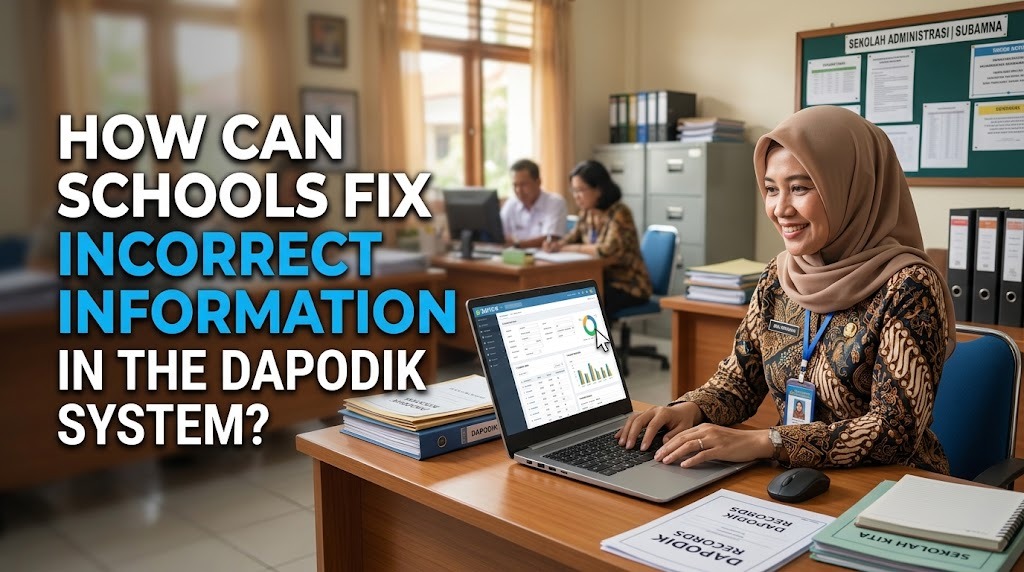
Accurate educational information is essential for effective school administration in Indonesia. The Dapodik system (Data Pokok Pendidikan) records basic information about schools, students, teachers, education staff, and educational resources. This information supports educational planning and various administrative processes, making it important for schools to maintain reliable records.
However, incorrect information can sometimes appear because of typing mistakes, incomplete documents, outdated records, or inconsistencies between different data sources. Understanding how to fix incorrect information in Dapodik helps school operators identify problems, verify the correct details, and follow the appropriate correction procedures. Every correction should be based on reliable information and the latest official technical guidance.
IDENTIFY THE INCORRECT INFORMATION
The first step in correcting Dapodik data errors is to identify which information is inaccurate. Errors may involve student names, dates of birth, identification numbers, enrollment status, teacher information, school profiles, or other recorded details. Some errors are easy to recognize, while others may only become apparent when the data is compared with official documents.
School operators should review the information displayed in the Dapodik application and compare it with the school's administrative records. Validation messages and reports may also help identify incomplete fields or inconsistencies. Once an error has been found, the operator should record the affected information and determine which details need to be checked before making any changes.
VERIFY THE CORRECT INFORMATION USING OFFICIAL DOCUMENTS
Before correcting an error, the school should verify the information using appropriate supporting documents. Depending on the type of record, these documents may include a family card, birth certificate, educational certificate, employment document, or other relevant official records. Verification helps prevent a correction from introducing another mistake.
If the information in different documents does not match, the operator should not simply choose one version without clarification. The school may need to consult the student, parent or guardian, relevant staff member, or authorized administrative institution. The appropriate process depends on the data field and the applicable rules. Careful verification ensures that correcting student data or other educational records is based on reliable evidence.
MAKE CORRECTIONS THROUGH THE APPROPRIATE PROCEDURE
After verifying the information, the school operator should determine whether the correction can be made directly through the available Dapodik application or requires another authorized process. Some fields may be editable by school operators, while certain identity-related information may require verification or correction through a designated system or institution.
Operators should follow the latest official Dapodik instructions for the relevant data field. They should avoid using unofficial methods, creating duplicate records to bypass an error, or changing information without supporting evidence. If the application does not allow a particular correction, the school should consult the relevant education authority or official technical support channel. Following the correct Dapodik data correction procedure helps preserve the integrity of educational records.
VALIDATE AND SYNCHRONIZE THE CORRECTED DATA
Once a correction has been made, the operator should review the revised information carefully. Check whether the corrected field matches the supporting documents and whether other related information remains consistent. The operator should also review any validation messages that appear in the application and resolve outstanding issues according to the applicable instructions.
When the correction is ready for submission, follow the required Dapodik synchronization process. Synchronization procedures can vary according to the application version and current technical requirements, so operators should consult official guidance rather than relying on outdated instructions. After synchronization, verify the available status or confirmation information to determine whether the changes have been processed. If the problem remains unresolved, document the issue and seek assistance through an authorized support channel.
PREVENT REPEATED ERRORS THROUGH REGULAR REVIEW
Preventing recurring mistakes is an important part of Dapodik data management. Schools can establish a routine for reviewing records before submission, checking required fields, and comparing important information with supporting documents. A checklist can help operators ensure that student, teacher, and school information has been examined consistently.
Clear communication among school operators, teachers, school leaders, students, and parents or guardians can also reduce the likelihood of incorrect information. When a change occurs, the relevant person should provide the necessary documentation through the school's established process. Schools should also protect personal information by limiting system access to authorized personnel and handling documents securely. These practices help maintain accurate records and reduce the need for repeated corrections.
CONCLUSION
Schools can fix incorrect information in the Dapodik system by identifying the error, verifying the correct details through official documents, following the appropriate correction procedure, and checking the results through validation and synchronization. The steps required may differ depending on the type of information and whether the field can be edited directly by the school operator.
To maintain reliable educational records, schools should follow current official guidance, document relevant changes, and review information regularly. If a correction cannot be completed through the available application, the school should seek assistance from the authorized education authority or technical support channel. Accurate data management helps schools maintain consistent records and supports more effective educational administration.
Recent Posts

Bagaimana Sistem SKS pada Program Kuliah... 22.11.2026/50 View

How Does Technology Make Daily Evaluation... 21.11.2026/79 View

Apa Strategi Menghadapi Kesenjangan antara Kompetensi... 21.11.2026/79 View

Mengapa Inventaris Aset Penting bagi Kelancaran... 21.11.2026/75 View

When Should Musicians Join a Record... 21.11.2026/80 View
