

How Can Schools Help Preserve Regional Languages?
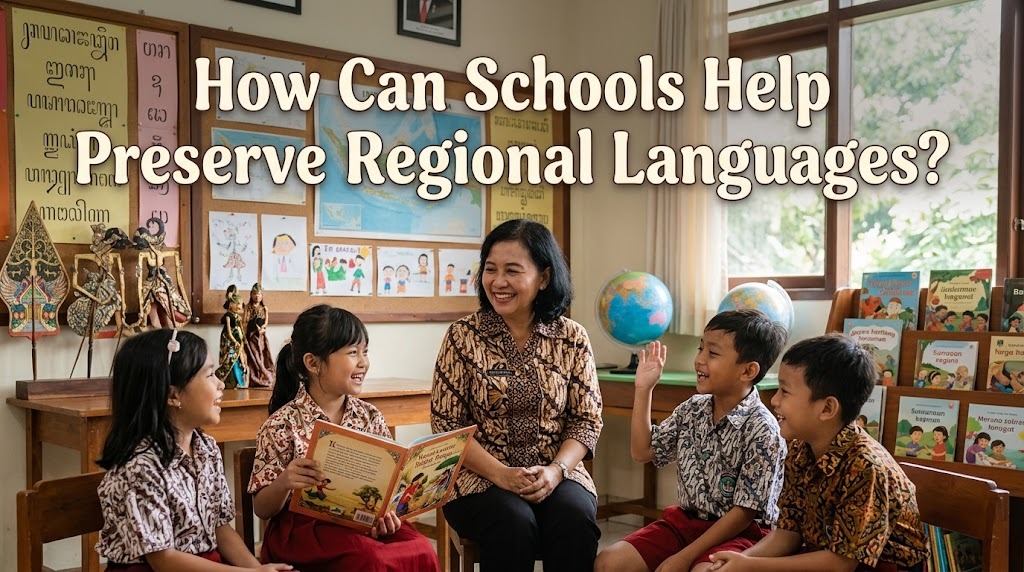
Regional languages are an important part of Indonesia’s cultural heritage. They contain local knowledge, traditional expressions, stories, and values passed down from one generation to another. However, some regional languages are becoming less frequently used, especially among children and teenagers who communicate more often in Indonesian or foreign languages. Schools can play an important role in preserving regional languages by introducing them through lessons, cultural activities, and everyday communication. With the right approach, education can help students appreciate their linguistic heritage while developing a stronger connection to their local communities.
TEACHING REGIONAL LANGUAGES AS SCHOOL SUBJECTS
One of the most effective ways schools can preserve regional languages is by including them in the curriculum. Students can learn vocabulary, pronunciation, sentence structures, traditional expressions, and basic conversations in their local languages. These lessons help students understand how regional languages work and how they differ from Indonesian. Teachers can also introduce local literature, folk tales, poems, and traditional songs to make learning more engaging. Regular lessons give students opportunities to practice regional languages systematically rather than learning only a few words from their families.
Schools should adapt regional language lessons to students’ ages and language abilities. Younger students can begin with simple greetings, family terms, colors, and everyday expressions. Older students can explore grammar, traditional literature, public speaking, and regional writing systems where applicable. Learning materials should reflect the language used by the local community. This approach makes regional language education more relevant and easier for students to apply outside the classroom.
INTRODUCING LOCAL CULTURE THROUGH CLASSROOM ACTIVITIES
Regional language learning becomes more interesting when it is connected to local culture. Schools can organize storytelling sessions, traditional poetry performances, folk song activities, and short plays using regional languages. These activities allow students to experience the language in meaningful situations instead of memorizing vocabulary alone. Teachers can also introduce local proverbs and explain the values they communicate. Connecting language with culture helps students understand why their regional language deserves to be preserved.
Classroom projects can encourage students to explore the cultural heritage of their own communities. For example, students can interview grandparents about traditional expressions or collect local stories from community members. They can then present their findings through posters, presentations, recordings, or school exhibitions. These projects strengthen communication skills while introducing students to the knowledge held by older generations. They also help students recognize that regional languages are living parts of their communities.
ENCOURAGING STUDENTS TO USE REGIONAL LANGUAGES
Learning a regional language is more effective when students have opportunities to use it. Schools can create conversation sessions in which students practice greetings, introduce themselves, or discuss familiar topics in a regional language. Teachers may also encourage appropriate use of local languages during cultural events and extracurricular activities. These opportunities help students become more comfortable speaking without worrying excessively about making mistakes. Practical communication builds confidence and turns language learning into a useful everyday skill.
However, schools should make these activities inclusive and welcoming. Some students may understand a regional language but struggle to speak it, while others may come from families that use different languages. Teachers can provide beginner-friendly exercises and encourage students to learn from one another respectfully. No student should be embarrassed or penalized simply because they are still learning their ancestral language. A supportive environment can motivate more students to participate and continue learning.
USING DIGITAL TECHNOLOGY TO SUPPORT LANGUAGE LEARNING
Digital technology offers schools new ways to teach and preserve regional languages. Teachers can use educational videos, digital dictionaries, recorded conversations, and interactive quizzes to support classroom lessons. Students can also create short videos, podcasts, or digital storybooks featuring regional vocabulary and local stories. These resources can make learning more attractive to students who regularly use smartphones and other digital devices. Digital learning materials can also help preserve language examples for future generations.
Schools can work with students, teachers, and local language experts to produce accurate digital content. For example, students might record older community members explaining traditional expressions or narrating local legends, with their permission. The recordings can be organized into a school archive or used in educational projects. Teachers should check spelling, pronunciation, meanings, and cultural context before sharing materials publicly. Responsible use of technology helps ensure that regional languages are represented accurately rather than simply becoming online trends.
INVOLVING PARENTS AND LOCAL COMMUNITIES
Schools cannot preserve regional languages alone because language development also takes place at home and within the community. Parents, grandparents, cultural figures, and local language experts can help students understand how regional languages are used in real situations. Schools can invite community members to share stories, demonstrate traditional expressions, or teach students about local customs. Family participation can also encourage children to practice what they learn in class. Cooperation between schools and families creates a stronger environment for passing regional languages to younger generations.
Schools can organize language festivals, community storytelling events, and cultural exhibitions involving students and residents. Parents may contribute traditional songs, family stories, or examples of regional expressions that are no longer commonly used. These activities help students see that their regional languages remain valuable beyond school assignments. They also give older speakers opportunities to share their knowledge with younger people. Through consistent cooperation, schools and communities can make language preservation a shared responsibility.
DEVELOPING INTEREST AND PRIDE IN REGIONAL LANGUAGES
Students are more likely to learn regional languages when they understand their importance. Schools can explain that regional languages preserve local history, traditional knowledge, unique expressions, and cultural identity. Teachers should emphasize that speaking a regional language is a valuable ability rather than something outdated or embarrassing. Students can also learn that multilingualism allows people to communicate across different communities while maintaining their local heritage. Building pride in regional languages can encourage students to use and preserve them voluntarily.
Schools can recognize students who participate in language competitions, storytelling projects, translation activities, or cultural performances. Recognition does not always need to involve prizes; displaying student work or sharing achievements at school events can also be motivating. Teachers should present regional languages as compatible with academic achievement, technological progress, and modern careers. Students can be encouraged to use them creatively in literature, music, tourism, and digital media. When regional languages are treated as valuable resources, students have more reasons to learn them and pass them on.
CONCLUSION
Schools can help preserve regional languages by teaching them as subjects, integrating them into cultural activities, encouraging practical communication, and using digital technology to support learning. Cooperation with parents and local communities also helps students connect classroom knowledge with everyday life. Equally important, schools need to build confidence and pride so that students view regional languages as valuable cultural resources. Preserving regional languages requires consistent participation from educators, families, students, and communities. Through meaningful education and regular practice, schools can help ensure that regional languages continue to be understood, spoken, and passed on to future generations.
Recent Posts

Bagaimana Sistem SKS pada Program Kuliah... 22.11.2026/49 View

How Does Technology Make Daily Evaluation... 21.11.2026/76 View

Apa Strategi Menghadapi Kesenjangan antara Kompetensi... 21.11.2026/78 View

Mengapa Inventaris Aset Penting bagi Kelancaran... 21.11.2026/74 View

When Should Musicians Join a Record... 21.11.2026/78 View
