

How Can Schools Increase Students’ Reading Interest?
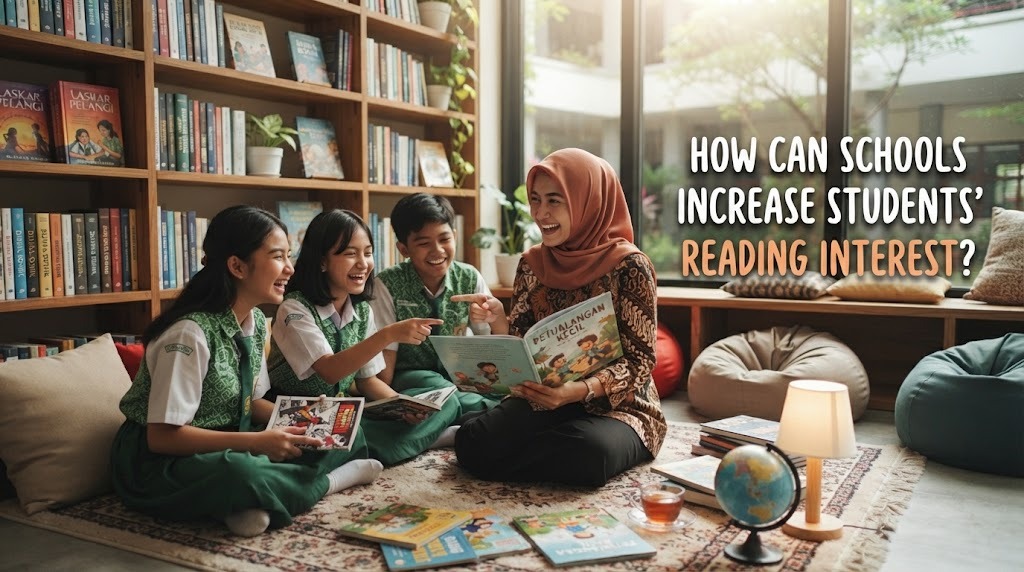
Reading interest is an important part of students' academic and personal development. Students who enjoy reading are more willing to explore information, learn new vocabulary, and understand different ideas. However, some students may consider reading boring when the materials or activities do not match their interests. Schools can help change this perception by creating reading experiences that are enjoyable, relevant, and accessible. With the right strategies, schools can encourage students to develop positive reading habits that continue beyond the classroom.
CREATE AN ATTRACTIVE READING ENVIRONMENT
A school can increase students' reading interest by creating an attractive and comfortable reading environment. Libraries and classroom reading corners should provide books that are suitable for students' ages, abilities, and interests. Comfortable seating, good lighting, organized shelves, and clear book categories can make students feel more welcome. Schools can also display book covers, student recommendations, or reading posters to attract attention. A pleasant environment can make students more willing to spend their free time reading.
The reading environment should not feel like another place where students are pressured to complete assignments. Students can be allowed to sit, browse, and choose materials at their own pace. A welcoming atmosphere can help students associate reading with relaxation and discovery. Schools can also create small reading spaces in areas that students frequently use. These simple changes can make books more visible and easier to access.
PROVIDE DIVERSE READING MATERIALS
Students have different interests, so schools should provide a wide variety of reading materials. Fiction, nonfiction, biographies, comics, magazines, educational articles, and age-appropriate digital resources can give students more choices. Some students may enjoy stories, while others may prefer science, technology, sports, business, or art. Providing different subjects allows students to discover materials that match their personal interests. Greater variety can increase the chance that students find something they genuinely want to read.
Schools should also consider different reading abilities when selecting materials. Books that are too difficult may discourage students, while materials that are too simple may not provide enough challenge. Age-appropriate and level-appropriate resources can help students read with greater confidence. Teachers and librarians can regularly ask students which topics they would like to see in the library. Student feedback can help schools make their reading collections more relevant.
GIVE STUDENTS FREEDOM TO CHOOSE
Allowing students to choose their own reading materials can make reading more enjoyable. Teachers can provide several suitable options instead of requiring every student to read the same book all the time. Choice gives students a sense of independence and allows them to follow their personal interests. Students who enjoy their chosen topics may be more motivated to spend time reading. This can gradually turn reading from an obligation into a voluntary activity.
Students should also be allowed to explore different genres without being judged for their preferences. A student who starts with comics, for example, can later become interested in novels, biographies, or informational texts. Reading choice can be a starting point for broader exploration. Teachers can introduce new materials based on what students already enjoy. This gradual approach can help students develop wider reading interests.
MAKE READING ACTIVITIES INTERACTIVE
Schools can make reading more interesting by using interactive reading activities. Instead of asking students only to read and answer written questions, teachers can organize discussions, storytelling sessions, reading games, quizzes, and book presentations. These activities allow students to share their thoughts and respond to what they have read. Group activities can also help students discover that reading can be a social experience. Different approaches can make reading lessons feel more active and engaging.
Creative activities can also be connected to reading. Students might draw a scene from a story, create a simple poster, act out a character, or write an alternative ending. Creative responses allow students to process information in different ways. These activities can be especially helpful for students who struggle to remain interested during traditional reading tasks. When reading becomes interactive, students may become more curious about the materials they are exploring.
ORGANIZE READING PROGRAMS
Schools can develop regular programs to encourage consistent reading habits. A short daily reading period can give students dedicated time to read without the pressure of completing a major assignment. Schools can also organize monthly reading themes, book discussions, reading challenges, or student book recommendation boards. The activities should focus on encouraging participation rather than creating excessive competition. A positive program can make reading a familiar part of school life.
Reading programs can also involve the wider school community. Teachers, librarians, parents, and students can participate in activities such as storytelling events or book-sharing programs. Community involvement can demonstrate that reading is valuable in many different situations. Schools can also recognize students who show improvement, curiosity, or consistent participation. Celebrating progress rather than only the number of books completed can encourage more students to participate.
USE DIGITAL RESOURCES EFFECTIVELY
Digital technology can provide additional opportunities for schools to increase students' reading interest. E-books, online libraries, educational websites, and digital magazines can give students access to materials beyond the physical school library. Digital resources can be particularly useful when students are interested in current topics or technology-related subjects. Some platforms also provide features that support reading, such as adjustable text sizes and built-in dictionaries. These tools can make reading more flexible and accessible.
However, digital reading should be guided carefully. Students can easily become distracted by games, social media, or unrelated content while using digital devices. Schools should teach students how to identify reliable online sources and use technology responsibly. Digital materials should complement rather than completely replace printed books. A balanced reading program can give students opportunities to benefit from both traditional and digital resources.
CONNECT READING WITH STUDENTS' LIVES
Reading becomes more meaningful when students can connect information with their daily lives. Teachers can select texts related to topics that students encounter in school, at home, or in their communities. For example, articles about technology can be connected to students' use of digital devices, while environmental texts can be related to activities around the school. These connections help students understand why reading is useful beyond academic assignments. Relevance can increase curiosity and encourage students to continue exploring a topic.
Teachers can also ask students to share personal experiences related to what they have read. This approach gives students opportunities to express opinions and make connections between texts and real situations. Meaningful connections can improve engagement because students see a clear purpose behind reading. Reading materials can also introduce students to issues, careers, cultures, and ideas that may influence their future interests. In this way, reading can become a bridge between classroom learning and real life.
INVOLVE TEACHERS AND LIBRARIANS
Teachers and librarians have an important role in building a strong reading culture at school. Teachers can recommend books, introduce interesting texts, and discuss reading materials with students. Librarians can help students find books that match their interests and reading levels. Both can also observe which materials students enjoy most and use that information to improve reading activities. Their guidance can make it easier for students to discover useful and enjoyable resources.
Teachers can also become positive reading role models. When students see teachers reading and discussing books with enthusiasm, they may develop a more positive attitude toward reading. Librarians can organize displays and recommendations that make new materials easier to discover. Regular communication between teachers, librarians, and students can help create a supportive reading culture. This cooperation can make reading a shared part of school life rather than an isolated classroom task.
ENCOURAGE READING WITHOUT EXCESSIVE PRESSURE
Schools should encourage reading while avoiding excessive pressure. Requiring students to finish too many books or constantly testing their reading can make the activity feel stressful. Instead, schools can focus on effort, curiosity, progress, and personal improvement. Students should have opportunities to read at an appropriate pace and select suitable materials. A supportive approach can help protect their natural interest in learning.
Schools can also recognize different forms of reading progress. A student who reads a short article independently may be making meaningful progress even if another student reads a longer book. Individual progress matters because students have different abilities, interests, and learning needs. Teachers can provide encouragement when students discover new topics or develop better reading habits. Over time, positive experiences can help students become more confident and motivated readers.
CONCLUSION
Schools can increase students' reading interest by creating comfortable environments, providing diverse materials, giving students choices, and making reading activities interactive. Regular reading programs, useful digital resources, real-life connections, and support from teachers and librarians can further strengthen students' motivation. Schools should also encourage reading without creating unnecessary pressure or unhealthy competition. The main goal is to help students see reading as an enjoyable way to learn, explore, and discover new ideas. With consistent support, schools can build a strong reading culture that benefits students both academically and personally.
Recent Posts

Bagaimana Sistem SKS pada Program Kuliah... 22.11.2026/35 View

How Does Technology Make Daily Evaluation... 21.11.2026/69 View

Apa Strategi Menghadapi Kesenjangan antara Kompetensi... 21.11.2026/70 View

Mengapa Inventaris Aset Penting bagi Kelancaran... 21.11.2026/67 View

When Should Musicians Join a Record... 21.11.2026/69 View
