

How Can Smart Technology Help Reduce Traffic Congestion in Cities?
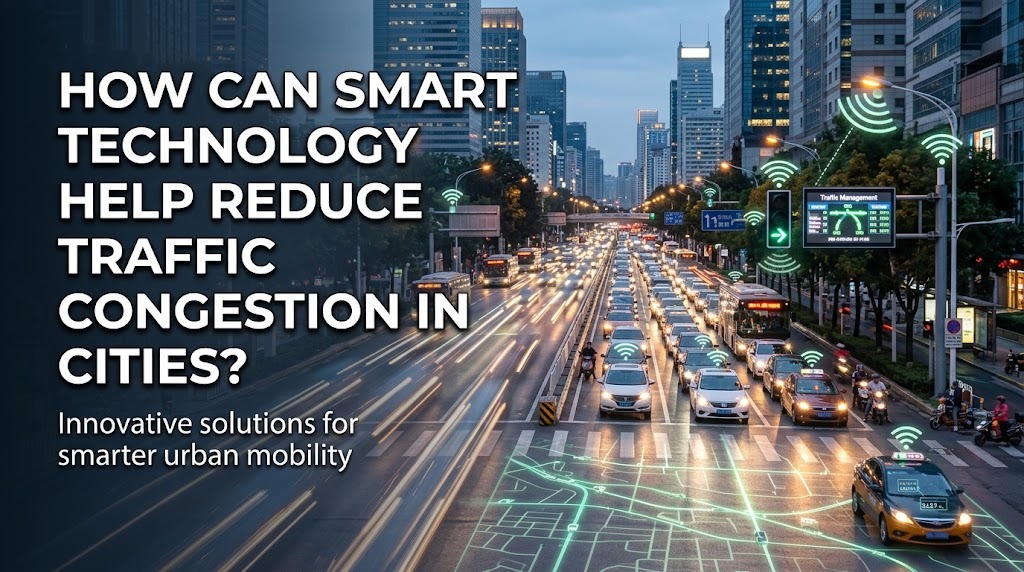
Traffic congestion is a major challenge in modern cities, where growing populations and increasing vehicle ownership put pressure on existing roads. Heavy traffic causes longer travel times, wastes fuel, increases air pollution, and reduces productivity. Traditional traffic management methods are not always sufficient to handle changing traffic conditions throughout the day. Smart technology offers new ways to monitor vehicles, manage traffic signals, provide real-time information, and improve public transportation. By combining digital systems with effective urban planning, cities can reduce congestion and make transportation more efficient.
USING INTELLIGENT TRAFFIC LIGHT SYSTEMS
One way smart technology can reduce traffic congestion is through intelligent traffic light systems. Traditional traffic lights often operate according to fixed schedules, even when traffic volumes change significantly. Smart systems can use sensors, cameras, and traffic data to adjust signal timing according to current road conditions. For example, an intersection with a long line of vehicles may receive more green-light time when conditions allow, helping traffic move more efficiently.
These systems can also coordinate signals across several intersections along major roads. This coordination can reduce unnecessary stopping, improve traffic flow, and help prevent queues from spreading into nearby intersections. However, traffic signals must balance the needs of different road users, including pedestrians, cyclists, buses, and emergency vehicles. Smart traffic lights cannot eliminate congestion when roads are overloaded, but they can help cities manage existing road capacity more effectively. Regular monitoring and maintenance are necessary to ensure that the systems remain reliable.
MONITORING TRAFFIC THROUGH REAL-TIME DATA
Real-time traffic monitoring allows city authorities to understand road conditions as they change. Cameras, road sensors, GPS information, and connected devices can provide data about vehicle speeds, traffic volumes, accidents, and road closures. Traffic management centers can analyze this information to identify congestion hotspots and respond to problems more quickly. For example, when an accident blocks a busy road, authorities can inform drivers and coordinate emergency responses to reduce further disruption.
Traffic data can also help cities identify recurring congestion patterns. By comparing information collected over weeks or months, planners can determine which intersections become crowded during rush hours and where traffic management improvements are needed. These findings can support decisions about signal timing, road maintenance, public transportation services, and parking regulations. Nevertheless, data collection should respect privacy and cybersecurity requirements, especially when systems use location information. Accurate data, clear safeguards, and responsible management are essential for making smart traffic monitoring effective.
PROVIDING SMART NAVIGATION AND TRAVEL INFORMATION
Navigation applications help drivers choose routes based on current traffic conditions. These applications can use GPS data and information from other road users to estimate travel times, identify congestion, and suggest alternative routes. When drivers receive accurate updates, they may avoid heavily congested roads or adjust their departure times. This can improve individual travel decisions and help reduce delays in some circumstances.
However, route recommendations must be managed carefully because sending too many vehicles onto the same alternative street can create new congestion in residential neighborhoods. Cities can work with navigation service providers to share reliable information about road closures, construction, traffic restrictions, and major public events. Real-time travel information should also cover buses, trains, and other public transportation options so travelers can compare different ways to reach their destinations. By combining navigation tools with coordinated traffic management, cities can help people make more informed travel choices.
IMPROVING PUBLIC TRANSPORTATION WITH SMART SYSTEMS
Smart technology can make public transportation more reliable and attractive to commuters. Digital ticketing, mobile payment systems, and travel applications allow passengers to plan journeys and pay fares more conveniently. Real-time arrival information helps passengers know when buses or trains will arrive, reducing uncertainty and making transfers easier. These improvements can encourage more people to use shared transportation instead of driving private vehicles.
Transportation operators can also use technology to monitor vehicle locations, manage schedules, and identify delays. Intelligent fleet management can help operators adjust services when demand changes or unexpected disruptions occur. In suitable locations, buses can receive traffic signal priority to reduce delays at intersections. Cities should also connect different transport services so passengers can move between buses, trains, and other options without unnecessary waiting. Smart technology is most effective when supported by adequate service frequency, affordable fares, accessibility, and dependable infrastructure.
USING ARTIFICIAL INTELLIGENCE TO PREDICT CONGESTION
Artificial intelligence (AI) can help cities analyze large amounts of traffic data and identify patterns that may be difficult to detect through manual observation. Machine learning models can use historical traffic volumes, weather conditions, road incidents, and time-of-day information to estimate where congestion is likely to occur. These predictions allow traffic managers to prepare for busy periods and make adjustments before delays become severe. For example, authorities may modify signal timing or deploy traffic officers near locations expected to experience heavy traffic.
AI can also support transportation planning by helping officials evaluate different traffic management strategies. Simulations can estimate how changes to bus routes, parking rules, or signal timing might affect travel conditions. However, AI predictions are not always accurate, particularly when unusual events occur or the available data is incomplete. Human oversight remains important because traffic decisions affect road safety, public access, and emergency response. Cities should test these systems carefully and evaluate whether they produce measurable improvements before expanding their use.
COMBINING SMART TECHNOLOGY WITH SUSTAINABLE URBAN PLANNING
Smart technology works best when it is part of a broader strategy for sustainable urban mobility. Digital traffic systems can improve the use of existing roads, but they cannot fully solve congestion if too many people depend on private vehicles. Cities should combine technological improvements with reliable public transportation, safe cycling lanes, walkable neighborhoods, and effective parking management. These measures can reduce the demand for vehicle travel while helping residents reach their destinations conveniently.
Governments also need to invest in reliable digital infrastructure, train transportation personnel, and establish clear standards for sharing traffic information. Cooperation among public agencies, technology providers, transportation operators, and local communities can help ensure that new systems address actual urban needs. Cities should evaluate success through measurable indicators such as average travel time, traffic delays, public transportation use, road safety, and air quality. By combining technology with responsible planning and public participation, cities can develop transportation systems that are more efficient, accessible, and resilient.
CONCLUSION
Smart technology can help reduce traffic congestion by improving traffic signals, monitoring road conditions, providing real-time navigation, and making public transportation more reliable. Artificial intelligence can also help predict traffic problems and support better transportation planning. However, technology alone cannot eliminate congestion if vehicle demand continues to exceed available road capacity. Cities should combine digital solutions with sustainable urban planning, effective public transportation, and policies that encourage efficient travel. With reliable data, appropriate investment, and responsible management, smart technology can help create safer and more efficient urban transportation systems.
Recent Posts

Bagaimana Sistem SKS pada Program Kuliah... 22.11.2026/54 View

How Does Technology Make Daily Evaluation... 21.11.2026/83 View

Apa Strategi Menghadapi Kesenjangan antara Kompetensi... 21.11.2026/81 View

Mengapa Inventaris Aset Penting bagi Kelancaran... 21.11.2026/78 View

When Should Musicians Join a Record... 21.11.2026/82 View
