

How Can Smiling Create a Positive Communication Impression?
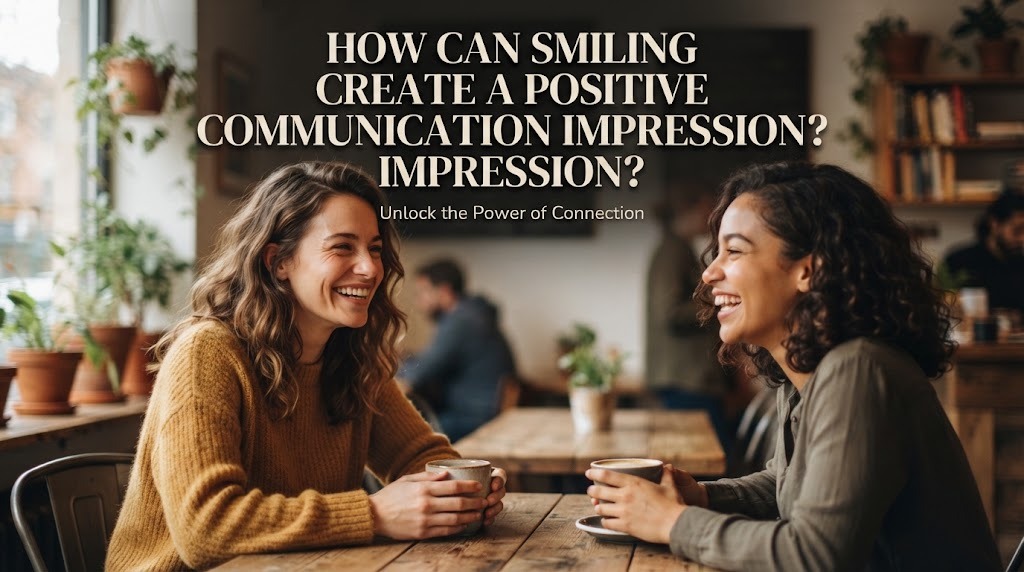
A smile is one of the simplest forms of nonverbal communication. People can use smiling to express friendliness, happiness, warmth, appreciation, and openness without saying anything. During conversations, a natural smile can influence how others perceive a person's attitude and make an interaction feel more comfortable. Because of this, smiling can create a positive communication impression in many social, academic, and professional situations.
Although smiling is often associated with positive emotions, its meaning can depend on the situation. A genuine smile may show that someone feels happy or comfortable, while a polite smile may simply be used to show courtesy. Understanding the role of smiling can help people use this form of nonverbal communication appropriately.
SHOWS FRIENDLINESS AND WARMTH
Smiling can make a person appear more approachable and friendly. When someone smiles while greeting or speaking with another person, it can create a welcoming atmosphere and reduce the feeling of distance. This can be especially useful when meeting someone for the first time. A natural smile may encourage the other person to feel more comfortable starting or continuing a conversation.
A smile can also communicate warmth without requiring additional words. For example, smiling while saying hello can make a simple greeting feel more positive. In social situations, this small gesture can help establish a pleasant first impression. However, the smile should feel natural because an exaggerated or forced expression may create a different impression.
BUILDS POSITIVE SOCIAL CONNECTIONS
Smiling can support positive relationships by showing that a person is engaged in an interaction. When people smile at appropriate moments, they can communicate appreciation, agreement, encouragement, or enjoyment. These signals can make conversations feel more relaxed and enjoyable. Over time, positive nonverbal signals can contribute to stronger social connections.
Smiling can also encourage reciprocal responses. When one person smiles naturally, another person may respond with a smile, creating a more positive interaction. This does not mean that smiling will solve every communication problem, but it can help create a friendlier emotional atmosphere. Combined with respectful words and active listening, smiling can strengthen everyday communication.
SUPPORTS VERBAL COMMUNICATION
A smile can add emotional meaning to spoken words. For example, saying "Thank you" with a warm smile can communicate genuine appreciation more strongly than the words alone. Similarly, smiling while giving positive feedback can make the message sound more encouraging. This shows how nonverbal signals can support and reinforce verbal communication.
Smiling can also help reduce the risk of a neutral statement sounding too serious or distant. In casual conversations, a natural smile can make communication feel more relaxed. However, the expression should match the topic because smiling during a serious or sensitive conversation may be inappropriate. Effective communication requires awareness of both the message and the emotional context.
CREATES A POSITIVE FIRST IMPRESSION
First impressions are often influenced by nonverbal behavior. A natural smile can make someone appear confident, welcoming, and comfortable during an introduction. This can be useful in situations such as school activities, presentations, interviews, customer service, and professional meetings. A positive facial expression may encourage others to view the interaction as friendly and respectful.
However, a smile should not be used as the only way to create a good impression. Other factors, such as eye contact, posture, tone of voice, appearance, and communication skills, also contribute to how a person is perceived. A genuine and appropriate smile works best when it is supported by other positive behaviors.
SMILING IN DIFFERENT COMMUNICATION SITUATIONS
The meaning and appropriateness of smiling can change depending on the situation. Smiling is generally suitable during greetings, casual conversations, introductions, and friendly interactions. In professional environments, a moderate and natural smile can communicate confidence and approachability. During serious discussions, however, people may need to use a more neutral expression to show that they understand the importance of the topic.
Cultural expectations can also influence how smiling is interpreted. Different cultures may have different norms regarding when and how people smile in social interactions. Therefore, people should pay attention to the situation and the reactions of others. Being aware of context helps ensure that smiling communicates the intended message rather than creating confusion.
HOW TO USE SMILING EFFECTIVELY
The most effective smile is usually natural, appropriate, and connected to the situation. People do not need to smile continuously to appear friendly. Instead, they can smile naturally when greeting someone, responding to positive information, showing appreciation, or creating a comfortable atmosphere. A relaxed facial expression can also be useful when a smile is not appropriate.
Smiling should also be combined with other forms of nonverbal communication. Appropriate eye contact, an open posture, a calm tone, and attentive listening can strengthen the positive impression created by a smile. The goal is not simply to look friendly but to communicate genuine respect and engagement.
CONCLUSION
Smiling can create a positive communication impression by showing friendliness, building social connections, supporting spoken messages, and creating a welcoming first impression. It is a simple form of nonverbal communication that can influence how people feel during an interaction. However, its meaning depends on the situation, culture, relationship, and emotional context.
A natural smile works best when it is used appropriately and supported by other positive communication behaviors. By combining a genuine smile with clear words, respectful body language, and active listening, people can create more comfortable and effective interactions.
Recent Posts

Bagaimana Sistem SKS pada Program Kuliah... 22.11.2026/40 View

How Does Technology Make Daily Evaluation... 21.11.2026/71 View

Apa Strategi Menghadapi Kesenjangan antara Kompetensi... 21.11.2026/73 View

Mengapa Inventaris Aset Penting bagi Kelancaran... 21.11.2026/69 View

When Should Musicians Join a Record... 21.11.2026/73 View
