

How Can Society Respond to Changing Values and Habits Across Generations?
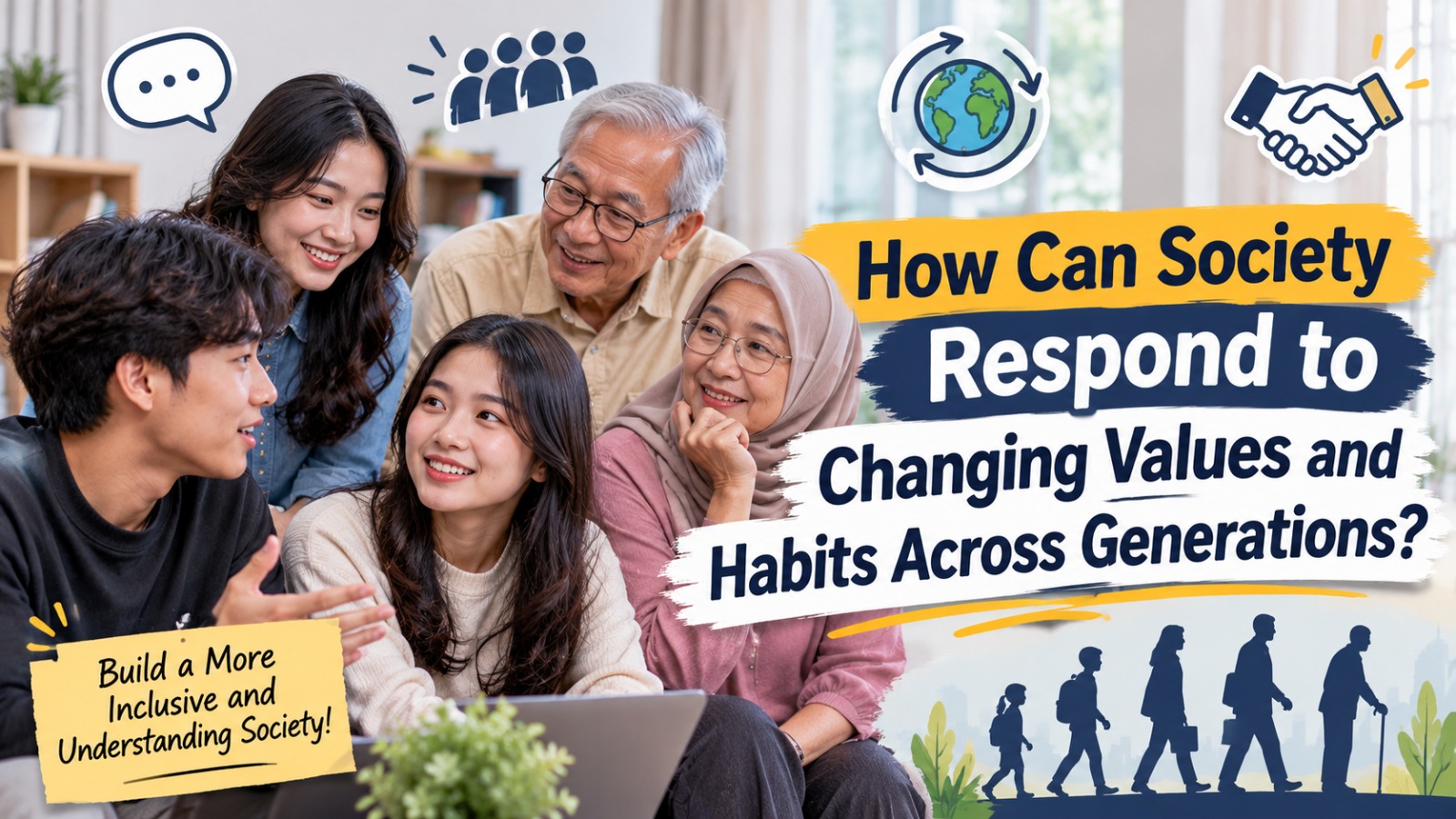
Changing values and habits across generations are natural parts of social development. Each generation grows up in different environments influenced by technology, education, economic conditions, and cultural experiences. These differences can affect how people communicate, work, build relationships, and understand social responsibilities. Generational differences sometimes create misunderstandings between younger and older individuals, especially when their expectations and perspectives are not the same. However, these differences can also provide opportunities to exchange knowledge and develop a more inclusive society. Understanding how society can respond to these changes is important for maintaining social harmony while respecting individual development.
UNDERSTANDING THE DIFFERENCES IN VALUES BETWEEN GENERATIONS
Every generation has different experiences that influence its values, attitudes, and daily habits. Older generations may place greater importance on traditions, discipline, stability, and established social expectations. Meanwhile, younger generations are often more familiar with digital technology, flexible lifestyles, and new ways of expressing opinions. These differences are influenced by the social and economic conditions experienced throughout their lives.
However, differences in values do not necessarily mean that one generation is better than another. Each generation has knowledge and experiences that can contribute positively to society. Older individuals can share practical wisdom, cultural knowledge, and life experiences, while younger people can introduce fresh perspectives and technological understanding. Mutual respect and open-mindedness are important for helping different generations understand one another without making unfair judgments.
PROMOTING COMMUNICATION AND MUTUAL UNDERSTANDING
Communication plays an important role in reducing misunderstandings between generations. Differences in opinions about education, employment, relationships, and lifestyle can create disagreements within families and communities. These conflicts often become more difficult when individuals refuse to listen to perspectives that differ from their own.
Society should encourage respectful conversations where people from different age groups can express their thoughts freely. Families can create opportunities for discussions during shared activities, while schools and communities can organize programs that involve different generations. Listening carefully and asking questions can help individuals understand the reasons behind different attitudes and decisions. Effective communication and empathy allow people to build stronger relationships despite differences in experiences and expectations.
PRESERVING CULTURAL VALUES WHILE ACCEPTING MODERN CHANGES
Modern society needs to balance cultural preservation with the acceptance of positive developments. Traditional values such as honesty, responsibility, respect, cooperation, and family relationships remain important even as lifestyles become more modern. These values provide a foundation for social behavior and help communities maintain their cultural identities.
At the same time, society should not reject every new idea simply because it differs from traditional practices. Technological innovation, educational development, and changing social conditions can introduce improvements that benefit different communities. Cultural traditions can also be introduced to younger generations through family activities, cultural events, education, and community participation. Cultural preservation and responsible modernization can work together to create a society that respects its heritage while remaining open to progress.
THE ROLE OF EDUCATION IN BRIDGING GENERATIONAL GAPS
Education has an important role in helping people understand differences between generations. Schools and universities can introduce learning activities that encourage students to appreciate cultural diversity, respect different opinions, and understand social development. These activities help younger individuals recognize the importance of historical experiences and traditional knowledge.
Education should also encourage older generations to understand modern developments, particularly in technology and communication. Digital literacy programs can help adults and older individuals use online services, recognize misinformation, and communicate through digital platforms. In addition, intergenerational learning programs allow younger and older participants to exchange knowledge and experiences. Through inclusive education and lifelong learning, society can reduce misunderstandings and encourage cooperation between age groups.
ADAPTING TO CHANGING TECHNOLOGY AND SOCIAL HABITS
Technological development has significantly influenced how different generations communicate, access information, and complete daily activities. Younger people may adopt new digital applications more quickly because they have grown up with modern technology. Older individuals may require additional guidance when using unfamiliar devices or online services. These differences can create communication gaps if people do not understand one another's circumstances.
Society can respond by encouraging technology education and providing opportunities for people of all ages to develop digital abilities. Families can help older members understand digital services, while experienced adults can guide younger individuals in using technology responsibly. People should also recognize that digital convenience does not eliminate the importance of direct interaction and personal relationships. Digital inclusion and responsible technology use can help different generations participate equally in modern society without losing meaningful human connections.
BUILDING A HARMONIOUS SOCIETY THROUGH GENERATIONAL COOPERATION
A harmonious society requires cooperation between individuals with different ages, experiences, and perspectives. Instead of treating generational differences as obstacles, communities should recognize them as opportunities to exchange knowledge and develop creative solutions. Cooperation can improve family relationships, workplace environments, educational activities, and community development.
For example, workplaces can combine the experience of senior employees with the technological abilities and fresh ideas of younger workers. Community organizations can involve different age groups in environmental activities, cultural programs, and social projects. Families can also encourage children, parents, and grandparents to learn from one another through shared responsibilities and conversations. Intergenerational cooperation, mutual support, and shared responsibility can strengthen social relationships and create a more inclusive environment for everyone.
CONCLUSION
Society can respond to changing values and habits across generations by promoting communication, mutual understanding, education, and cooperation. Differences between older and younger individuals are influenced by their unique experiences and social environments. Rather than allowing these differences to create conflicts, society should use them as opportunities to exchange knowledge and develop positive relationships.
Preserving important cultural values while accepting beneficial modern changes is also essential for maintaining social harmony. Families, educational institutions, workplaces, and communities all have responsibilities in building connections between generations. Ultimately, respect, empathy, adaptability, and intergenerational cooperation can help create a society that embraces progress while maintaining meaningful traditions and shared values.
Recent Posts

How Does Technology Make Daily Evaluation... 21.11.2026/57 View

Apa Strategi Menghadapi Kesenjangan antara Kompetensi... 21.11.2026/59 View

Mengapa Inventaris Aset Penting bagi Kelancaran... 21.11.2026/55 View

When Should Musicians Join a Record... 21.11.2026/54 View

Daily Evaluation or Daily Planning Which... 21.11.2026/61 View
