

How Can State Budget Evaluation Improve Budget Efficiency?
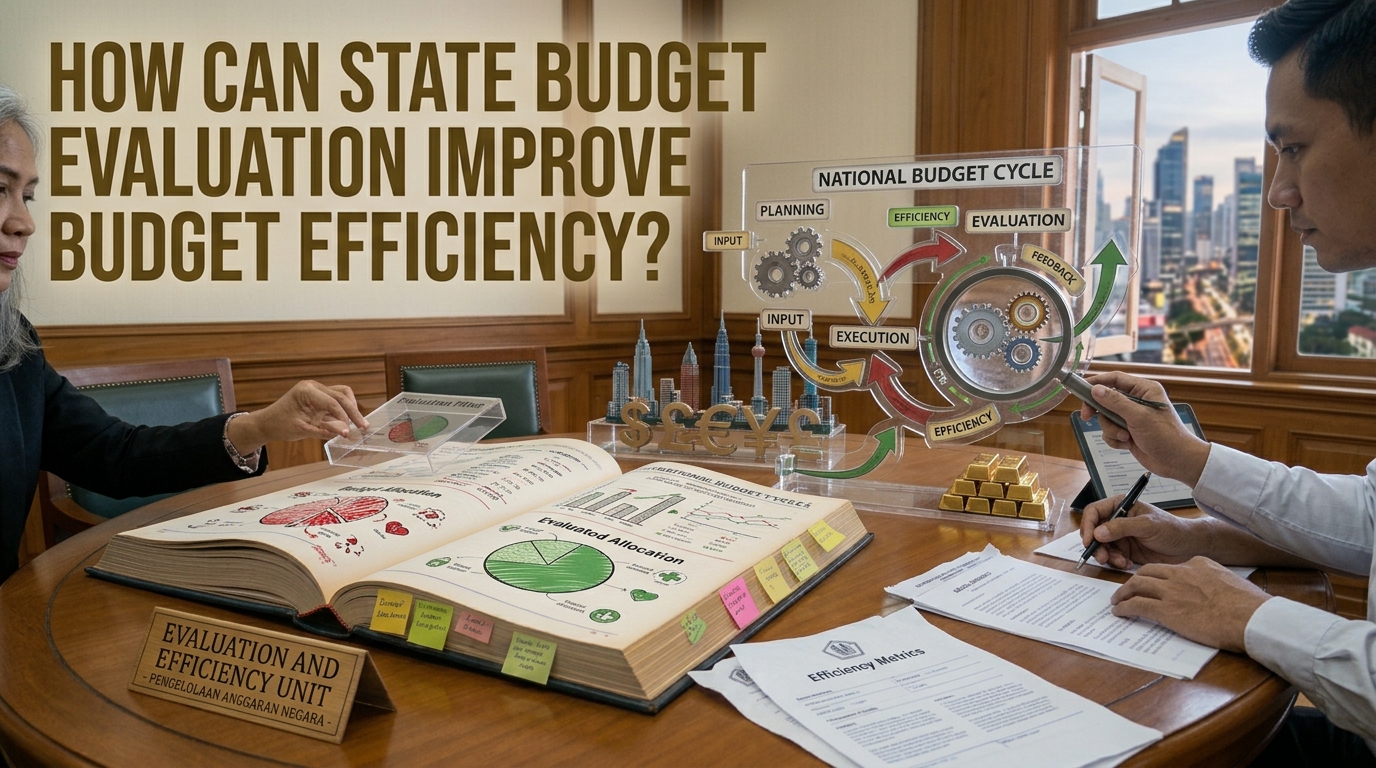
State budget evaluation is an important process that helps governments determine whether public funds are being used effectively and responsibly. Through regular evaluation, the government can compare planned spending with actual results, identify financial problems, and improve future budget decisions. Budget efficiency means achieving the best possible results from available financial resources while minimizing waste and unnecessary costs. In Indonesia, evaluating the State Revenue and Expenditure Budget, known as APBN, can help improve public services and support national development. With accurate data, transparent reporting, and strong oversight, budget evaluation can make government spending more effective and beneficial for society.
1. IDENTIFYING INEFFICIENT SPENDING
State budget evaluation helps the government identify spending that does not deliver the expected benefits. By comparing planned expenditure with actual spending and program outcomes, officials can determine whether public funds have been used appropriately. For example, a development project that exceeds its budget without producing better results may require further investigation. This process helps reveal unnecessary costs, duplicated programs, and activities that provide limited value. Identifying inefficient spending allows the government to correct problems before they become more expensive.
Evaluation also helps government institutions understand why certain expenses are higher than expected. The causes may include inaccurate planning, rising material prices, delays, or weak project management. Once the causes are identified, officials can improve procurement procedures and adjust future cost estimates. Reducing waste allows more public money to be directed toward essential services and development priorities.
2. IMPROVING BUDGET ALLOCATION
Budget evaluation provides useful information for deciding how government funds should be distributed. Programs that deliver strong results may deserve continued support, while ineffective programs may need to be revised or reduced. This approach helps ensure that spending reflects national priorities and public needs. It can also prevent limited resources from being spread too thinly across too many activities. As a result, budget allocation becomes more focused and purposeful.
In Indonesia, evaluation can help the government assess funding for education, healthcare, infrastructure, and social assistance. For example, if a program improves access to education but lacks sufficient funding in underserved areas, the government can consider adjusting its allocation. Decisions should be based on reliable evidence rather than assumptions alone. Evidence-based budgeting helps direct public funds toward programs with measurable benefits.
3. STRENGTHENING TRANSPARENCY AND ACCOUNTABILITY
Transparency is essential for ensuring that public money is managed responsibly. Budget evaluation creates records showing how funds were allocated, how much was spent, and what results were achieved. These records help government officials explain their financial decisions and identify areas that require improvement. Transparent financial reporting also makes it easier for oversight institutions to review government performance. When information is accessible and understandable, public trust can improve.
Accountability means that government institutions must take responsibility for managing their budgets and achieving agreed targets. Regular evaluations can reveal whether programs meet their objectives and follow applicable financial rules. Audit findings and performance reports can then guide corrective action. Strong accountability discourages waste and supports better financial management across public institutions.
4. MEASURING PROGRAM PERFORMANCE
A budget should not be evaluated only by how much money has been spent. The government also needs to assess whether the spending has achieved its intended objectives. Performance indicators can measure results such as the number of people receiving services, the quality of facilities, or the time needed to complete a project. Comparing these results with established targets helps determine whether a program is effective. This makes budget evaluation more meaningful than simply checking financial records.
For example, a public infrastructure program may spend its allocated funds on schedule but still fail to complete important roads or facilities. Financial reports alone may not reveal this problem, while performance evaluation can identify the gap between spending and actual results. Officials can then investigate delays and improve implementation. Measuring outcomes helps the government focus on the benefits received by citizens, not merely the amount of money spent.
5. SUPPORTING BETTER FUTURE BUDGET PLANNING
Evaluation provides lessons that can improve the next budget cycle. By reviewing previous spending patterns, the government can identify inaccurate cost estimates, unrealistic targets, and recurring implementation problems. These findings help officials prepare more reliable financial plans. Better budget forecasting reduces the risk of unexpected funding shortages and unnecessary expenditure. It also allows government institutions to set more realistic priorities.
Economic conditions can change because of inflation, exchange rate movements, commodity prices, and changes in economic growth. Evaluating previous budgets helps the government understand how such changes affected revenue and expenditure. This information can be used to develop alternative spending plans and prepare for potential risks. Data-driven planning makes future budgets more flexible and responsive to economic conditions.
6. PREVENTING BUDGET WASTE AND FINANCIAL RISKS
Regular budget evaluation helps detect financial risks before they cause greater problems. These risks may include cost overruns, delayed projects, weak procurement practices, or spending that does not comply with regulations. By reviewing financial transactions and project progress, officials can take corrective action earlier. Early risk detection can reduce losses and protect public resources. It also supports more careful management of government funds.
However, evaluation must be followed by practical improvements to be effective. If the same problems appear repeatedly without corrective action, the evaluation process will have limited value. Government institutions should establish clear follow-up procedures, assign responsibilities, and monitor whether recommendations are implemented. Consistent monitoring and follow-up help turn evaluation findings into real improvements in budget efficiency.
7. IMPROVING PUBLIC SERVICES AND NATIONAL DEVELOPMENT
More efficient budgeting can improve the quality of public services. When unnecessary expenses are reduced, the government may have more resources available for schools, hospitals, transportation, and other essential services. Better planning can also help projects reach their intended beneficiaries on time. Efficient public spending therefore supports both service quality and the responsible use of taxpayers' money.
Budget evaluation also helps the government understand which development programs produce lasting benefits. Funding can be directed toward initiatives that improve productivity, expand economic opportunities, and address regional inequalities. These decisions can contribute to sustainable national development when they are based on reliable evidence and realistic goals. Although evaluation alone cannot solve every economic challenge, it provides an important foundation for better public financial decisions.
CONCLUSION
State budget evaluation improves budget efficiency by identifying waste, strengthening accountability, measuring program results, and supporting better financial planning. It helps governments determine whether public funds are being used according to priorities and whether spending produces meaningful benefits. In Indonesia, APBN evaluation can support more effective public services and stronger national development when its findings lead to concrete improvements. The process should involve accurate data, transparent reporting, regular monitoring, and clear responsibility for corrective action. Ultimately, effective budget evaluation helps ensure that limited public resources deliver the greatest possible value for society.
Recent Posts

Bagaimana Sistem SKS pada Program Kuliah... 22.11.2026/47 View

How Does Technology Make Daily Evaluation... 21.11.2026/74 View

Apa Strategi Menghadapi Kesenjangan antara Kompetensi... 21.11.2026/76 View

Mengapa Inventaris Aset Penting bagi Kelancaran... 21.11.2026/72 View

When Should Musicians Join a Record... 21.11.2026/76 View
