

How Can Students Become Responsible Flag Ceremony Officers?
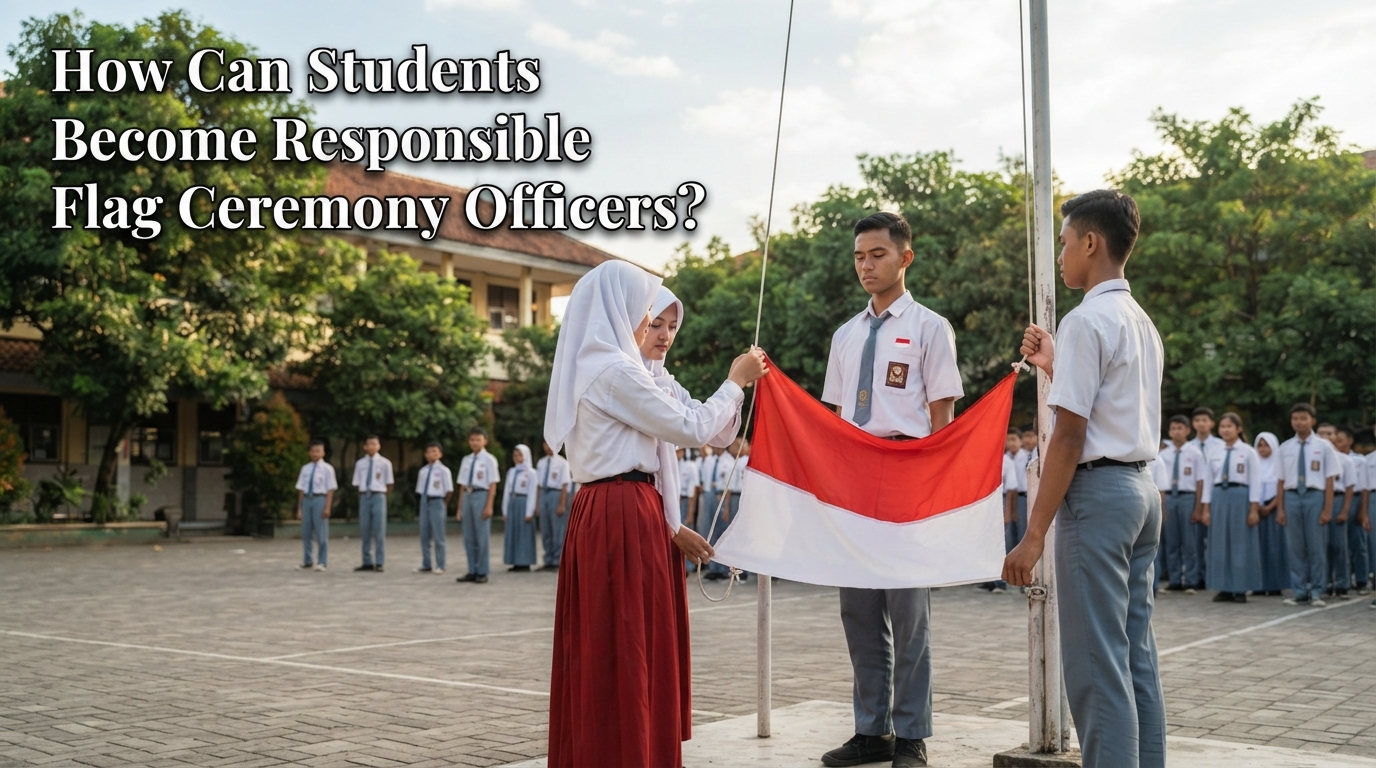
Becoming a flag ceremony officer is an important opportunity for students to develop discipline, leadership, confidence, and responsibility. In schools, flag ceremony officers have specific duties to ensure that the ceremony runs smoothly, orderly, and respectfully. These responsibilities may include leading the ceremony, raising the national flag, reading the official text, conducting prayers, and guiding other participants throughout the event.
However, becoming a responsible flag ceremony officer requires more than simply understanding the assigned tasks. Students must prepare themselves physically and mentally, follow instructions, practice regularly, and cooperate with other team members. By developing these habits, students can perform their duties confidently while learning valuable lessons that will benefit their academic and personal lives.
UNDERSTANDING THE DUTIES AND RESPONSIBILITIES
The first step toward becoming a responsible flag ceremony officer is understanding the duties assigned to each position. Every officer has a different role, such as ceremony leader, flag raiser, national anthem conductor, text reader, or prayer leader. Students need to understand the correct procedures and the order of activities so they can perform their responsibilities without creating confusion.
In addition, officers should recognize that their responsibilities are important to the entire ceremony. A small mistake, such as arriving late or forgetting an assigned task, can affect the performance of other team members. Therefore, students must take their positions seriously, follow the established instructions, and complete every task with commitment and respect.
PRACTICING REGULARLY BEFORE THE CEREMONY
Regular practice is essential for students who want to become professional and responsible flag ceremony officers. Through practice, they can understand the sequence of activities, improve their movements, and become more familiar with their assigned roles. For example, flag raisers need to practice marching, standing positions, and coordinated movements to ensure that the national flag is raised properly.
Students should also use practice sessions to correct mistakes and improve their performance. They can ask teachers or supervisors for guidance whenever they experience difficulties. Consistent preparation helps reduce nervousness and increases confidence when performing in front of the entire school. Most importantly, students should maintain their commitment to attending every scheduled training session.
MAINTAINING DISCIPLINE AND PUNCTUALITY
Discipline and punctuality are essential qualities for responsible flag ceremony officers. Students should arrive at school or the designated practice location earlier than the scheduled time to prepare themselves properly. Being punctual demonstrates respect for teachers, fellow officers, and the responsibilities they have accepted.
Furthermore, officers must follow school regulations, wear the required uniforms, and maintain appropriate behavior during the ceremony. They should avoid unnecessary conversations, distractions, or activities that could disturb the event. By developing these habits consistently, students can become more dependable and demonstrate good examples for their classmates.
BUILDING TEAMWORK AND EFFECTIVE COMMUNICATION
A successful flag ceremony depends on good cooperation among all officers. Each position is connected to other activities, so students must understand how their responsibilities contribute to the overall performance. For instance, flag raisers need to coordinate their movements with the ceremony leader and other assigned officers to maintain proper timing and order.
Effective communication also helps prevent misunderstandings during preparation and the ceremony itself. Students should listen carefully to instructions, respect suggestions from teammates, and communicate politely when they encounter problems. If someone makes a mistake, other team members should provide constructive support instead of blaming one another. Strong teamwork creates a more organized and comfortable environment for everyone involved.
DEVELOPING CONFIDENCE AND LEADERSHIP SKILLS
Confidence is another important quality that students need when serving as flag ceremony officers. Some responsibilities require students to speak clearly, give instructions, or perform movements in front of a large audience. These situations may feel challenging at first, especially for students who are not accustomed to public appearances.
To overcome nervousness, students should practice speaking, maintain proper posture, and focus on their assigned responsibilities. They should also learn to remain calm when unexpected situations occur. Serving as a ceremony officer provides valuable experience in developing leadership, decision-making, and public speaking skills that can be useful in classroom activities, student organizations, and future careers.
SHOWING RESPECT FOR NATIONAL SYMBOLS
Responsible flag ceremony officers must understand the meaning of the activities they perform, particularly those related to national symbols. The Indonesian national flag, the national anthem, and other official elements of the ceremony represent the country's identity, history, and independence. Therefore, officers must carry out their duties with respect, seriousness, and national awareness.
They should understand that raising the flag is not simply a technical activity but also a way to honor the nation's history and the sacrifices of previous generations. Officers must follow the proper procedures and avoid behavior that could show disrespect toward national symbols. By understanding these values, students can develop a stronger sense of patriotism and become positive examples for other students.
EVALUATING PERFORMANCE AND IMPROVING SKILLS
After completing a flag ceremony, students should evaluate their performance to identify areas that need improvement. They can discuss their experiences with teachers, supervisors, and fellow officers to understand what went well and what should be corrected. This evaluation helps students recognize their strengths and learn from mistakes without feeling discouraged.
Students should also remain open to constructive feedback and use it as motivation to improve. For example, they may need to improve their marching movements, speaking volume, coordination, or understanding of ceremony procedures. Continuous improvement demonstrates responsibility, maturity, and a willingness to learn. These qualities help students become more reliable officers in future ceremonies.
CONCLUSION
Students can become responsible flag ceremony officers by understanding their duties, practicing regularly, maintaining discipline, and developing effective teamwork. They must also build confidence, respect national symbols, and evaluate their performance to improve their abilities.
Being a flag ceremony officer is not only about carrying out formal school activities. It is also an opportunity to develop leadership, independence, discipline, and patriotism. By taking their responsibilities seriously, students can become positive role models and contribute to creating a more organized and meaningful school environment.
Recent Posts

How Does Technology Make Daily Evaluation... 21.11.2026/58 View

Apa Strategi Menghadapi Kesenjangan antara Kompetensi... 21.11.2026/60 View

Mengapa Inventaris Aset Penting bagi Kelancaran... 21.11.2026/56 View

When Should Musicians Join a Record... 21.11.2026/55 View

Daily Evaluation or Daily Planning Which... 21.11.2026/63 View
