

How Can Students Complete Thesis Revisions More Effectively?
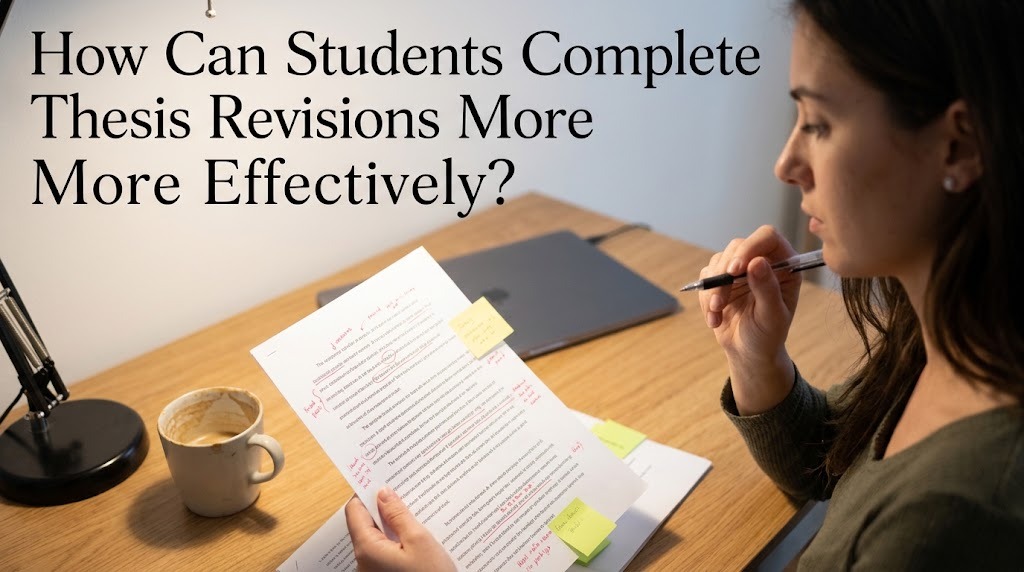
Completing thesis revisions is an important stage for students who are preparing their final academic research. After submitting a draft or attending a thesis examination, students may receive various comments from supervisors and examiners. These comments can involve writing structure, research methods, data analysis, references, or explanations that need further clarification. Without a clear approach, handling multiple corrections can become confusing and time-consuming.
To complete thesis revisions more effectively, students need to understand the feedback, organize the required changes, and work according to a realistic schedule. The process becomes easier when each correction is handled systematically rather than attempting to change everything at once. By developing an organized thesis revision strategy, students can improve their research while making steady progress toward final submission.
UNDERSTAND AND ORGANIZE SUPERVISOR FEEDBACK
The first step in completing thesis revisions effectively is understanding the comments provided by supervisors or examiners. Students should read each correction carefully and identify the specific issue that needs attention. Some comments may request simple grammatical improvements, while others may require changes to research explanations, arguments, or methodology. Understanding the purpose of each correction helps prevent unnecessary changes.
After reviewing the feedback, create a detailed list of all required revisions. Group similar comments based on the thesis chapters or the type of correction, such as writing, references, data, and research structure. Students can also use a revision table to record the original comment, the planned action, and the completion status. This method makes the thesis correction process easier to monitor and reduces the possibility of overlooking important instructions.
PRIORITIZE REVISIONS BASED ON IMPORTANCE
Not every thesis correction requires the same amount of time or attention. Some changes are relatively simple, such as correcting spelling or adjusting formatting. Others may involve reviewing research data, improving theoretical explanations, or restructuring entire sections. Therefore, students should determine which revisions need to be completed first.
A practical approach is to prioritize changes that affect the accuracy and consistency of the research. For example, corrections to research methods, data interpretation, and major arguments may need more attention than minor formatting adjustments. However, students should also consider deadlines and any specific instructions from their supervisors. By establishing clear revision priorities, students can use their available time more efficiently without neglecting smaller corrections.
CREATE A REALISTIC THESIS REVISION SCHEDULE
A structured schedule can help students maintain consistent progress throughout the revision process. Start by identifying the submission deadline and estimating how much time each correction may require. Divide the work into smaller tasks based on chapters or specific sections rather than setting a broad goal to finish the entire thesis at once.
Students can use a daily or weekly checklist to monitor their progress. For example, one session can be dedicated to reviewing the introduction, while another can focus on the literature review or research findings. It is also important to reserve time for proofreading and checking the document after all major changes have been completed. A realistic thesis revision schedule helps prevent last-minute pressure and gives students enough time to review their work carefully.
COMMUNICATE WITH THESIS SUPERVISORS
Effective communication with supervisors is essential when completing thesis revisions. Students may encounter comments that are unclear, contradictory, or difficult to apply to their research. Instead of guessing what a correction means, they should prepare specific questions and discuss the issue with their supervisors. This can prevent misunderstandings and reduce the need for repeated revisions.
Students should also provide updates when submitting revised chapters or asking for feedback. A clear revision summary can help supervisors understand which changes have been made and where they can review them. Maintaining polite and professional communication is equally important, particularly when discussing deadlines or requesting clarification. Through effective supervisor communication, students can make sure their revisions remain aligned with academic expectations.
REVIEW THE REVISED THESIS BEFORE RESUBMISSION
After completing the requested corrections, students should review the entire thesis rather than checking only the sections that were changed. A revision in one chapter may affect explanations, terminology, or references in another section. For example, changes to research objectives may require adjustments to the methodology or conclusion to maintain consistency throughout the document.
The final review should include grammar, paragraph structure, citations, reference lists, tables, figures, and formatting. Students should also compare the revised document with the original feedback to confirm that every requested correction has been addressed. Keeping a separate copy of the previous draft can help track important changes. This final thesis proofreading and review process reduces avoidable mistakes before the document is submitted again.
CONCLUSION
Students can complete thesis revisions more effectively by understanding supervisor feedback, organizing corrections, setting priorities, creating a realistic schedule, and maintaining clear communication. These steps help make the revision process more structured and prevent students from overlooking important academic requirements.
Before resubmitting the thesis, students should review all changes and ensure that the document remains consistent from the introduction to the conclusion. Thesis revision may require patience and several rounds of improvement, but a systematic approach can make the process more manageable. With careful planning and consistent effort, students can produce a stronger final thesis and complete their academic requirements more confidently.
Recent Posts

Bagaimana Sistem SKS pada Program Kuliah... 22.11.2026/47 View

How Does Technology Make Daily Evaluation... 21.11.2026/74 View

Apa Strategi Menghadapi Kesenjangan antara Kompetensi... 21.11.2026/75 View

Mengapa Inventaris Aset Penting bagi Kelancaran... 21.11.2026/72 View

When Should Musicians Join a Record... 21.11.2026/75 View
