

How Can Students Improve Their Musical Intelligence?
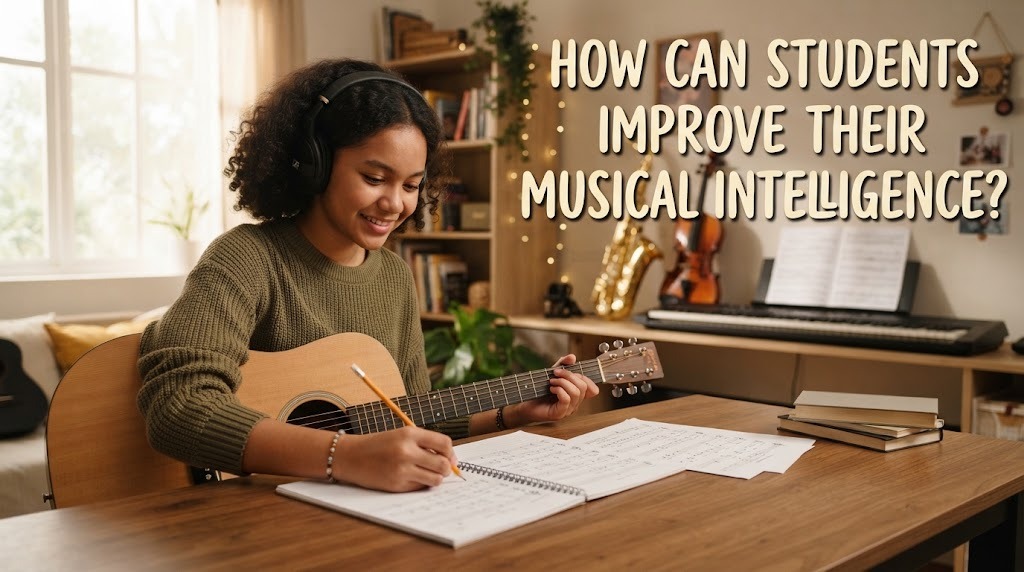
Musical intelligence is the ability to recognize, understand, remember, and create musical patterns, including melodies, rhythms, and sounds. For students, this ability can be developed through regular practice, active listening, and participation in musical activities. Students do not need to be naturally talented musicians to improve their musical skills. With consistent effort and suitable learning methods, they can become more familiar with musical patterns and develop their ability to express themselves through music.
Improving musical intelligence can also provide opportunities to practice concentration, memory, creativity, and coordination. These skills can support learning activities, although the benefits vary between individuals. Students can develop their musical abilities at school, at home, or through extracurricular activities. The most important steps are to start with simple exercises, choose enjoyable activities, and practice consistently.
PRACTICE LISTENING TO MUSIC ACTIVELY
Active listening is one of the easiest ways for students to develop musical intelligence. Instead of listening to music only for entertainment, students can pay attention to its melody, rhythm, tempo, and instruments. They can try to identify changes in the music, recognize repeated patterns, and distinguish between high and low notes. These activities help students become more aware of the different elements that make up a musical composition.
Students can begin with familiar songs and gradually explore different musical styles. For example, they can compare the rhythm of a traditional song with that of a pop song or identify the instruments used in an orchestral performance. Writing down their observations can help them remember what they hear. By practicing active listening regularly, students can improve their ability to recognize and understand musical patterns.
LEARN TO PLAY A MUSICAL INSTRUMENT
Learning a musical instrument provides students with practical experience in understanding and producing sounds. Instruments such as the piano, guitar, violin, and drums offer different ways to explore melodies, rhythms, and musical techniques. Beginners can start with simple notes, basic chords, or short musical patterns before moving on to more challenging pieces. Regular practice helps them become familiar with the instrument and improve their control over sound and timing.
Students should choose an instrument that matches their interests and available resources. They do not need to purchase an expensive instrument because school facilities, community programs, or suitable digital applications may provide alternatives. Learning from a teacher or following reliable instructional materials can also help students develop correct techniques. With patience and consistent practice, students can gradually build their musical confidence and skills.
DEVELOP RHYTHM THROUGH SIMPLE ACTIVITIES
Rhythm is an important part of musical intelligence because it helps people recognize patterns in time. Students can practice rhythm by clapping their hands, tapping their feet, or following the beat of a song. These activities are simple and can be performed without special equipment. Beginners can start with a steady beat and gradually practice more complex rhythmic patterns.
Teachers can also introduce rhythm games in the classroom to make musical learning more interactive. For example, one student can clap a short pattern while other students repeat it. Students can then create their own patterns and challenge their classmates to follow them. Such exercises encourage careful listening, timing, and coordination while allowing students to learn through enjoyable activities.
SING SONGS AND MEMORIZE MELODIES
Singing is another practical way to improve musical intelligence. When students sing, they practice recognizing pitch, following melodies, controlling their voices, and maintaining rhythm. Repeating familiar songs can help them remember musical patterns and become more comfortable with different notes. Singing also provides an accessible way to participate in music without needing to learn an instrument.
Students can begin by singing simple songs and gradually try melodies with wider pitch ranges or more complicated rhythms. They can listen to a recording and compare their singing with the original melody. Joining a school choir or singing with friends can provide additional opportunities to practice. However, students should focus on gradual improvement rather than expecting perfect pitch or professional-level singing from the beginning.
JOIN MUSIC CLUBS AND GROUP ACTIVITIES
Participating in school music clubs, choirs, bands, or other musical groups allows students to learn with others. Group activities provide opportunities to practice listening, follow a shared rhythm, and coordinate musical parts. Students can also learn from classmates who have different levels of experience. Working together toward a performance can encourage responsibility, cooperation, and confidence.
Music clubs may also introduce students to new instruments, musical traditions, and performance techniques. Students who feel nervous about performing can begin with small group activities before taking part in larger events. Regular participation gives them opportunities to receive feedback and learn from their mistakes. These experiences can make musical learning more engaging while helping students become more comfortable expressing themselves.
USE TECHNOLOGY TO SUPPORT MUSICAL LEARNING
Technology provides students with additional ways to practice musical intelligence. Music-learning applications can offer exercises for rhythm, pitch recognition, instrument practice, and basic music theory. Students can also use recording tools to listen to their own singing or instrument practice and identify areas for improvement. These resources can make learning more flexible because students can practice at their own pace.
However, students should choose digital tools that match their learning goals and skill levels. Applications and online videos are useful learning aids, but they may not provide the detailed feedback that an experienced teacher can offer. Students should also balance screen-based learning with practical activities, such as singing, clapping, or playing an instrument. Using technology alongside regular practice can create a more varied and structured learning experience.
CREATE SIMPLE MUSIC AND EXPLORE CREATIVITY
Creating music helps students explore their own ideas instead of only copying existing songs. They can begin by inventing a short melody, combining simple rhythms, or changing the tempo of a familiar tune. Students can also write lyrics about school experiences, nature, or topics they are studying. These activities encourage experimentation and help them understand how musical elements work together.
Students do not need advanced musical knowledge to start composing. They can record their ideas using a phone, a computer, or a basic music application. Listening to the recording afterward can help them decide which parts they want to improve. By experimenting with different sounds and patterns, students can develop musical creativity while gaining confidence in their ability to express original ideas.
SET REALISTIC GOALS AND PRACTICE CONSISTENTLY
Improving musical intelligence requires time, patience, and repeated practice. Students can make the process easier by setting small, specific goals, such as learning a short melody, identifying several instruments, or maintaining a steady beat. These goals make progress easier to observe and help students focus on one skill at a time. Practicing for a short period regularly can be more manageable than trying to learn everything in one long session.
Students should also review their progress and adjust their practice routines when necessary. Mistakes are a normal part of learning and can help identify skills that need more attention. Taking breaks when tired and choosing music they enjoy can also help maintain motivation. By focusing on steady improvement rather than immediate perfection, students can build a healthier and more sustainable relationship with music.
CONCLUSION
Students can improve their musical intelligence through active listening, instrument practice, singing, rhythm exercises, group activities, and creative music-making. Technology and music education can provide additional support, while realistic goals and consistent practice help students maintain their progress. These activities allow students to explore musical patterns and develop their abilities at their own pace.
Musical intelligence does not depend entirely on natural talent. Students with different backgrounds and starting abilities can learn new musical skills through suitable practice and guidance. By making music a regular part of their learning experiences, students can strengthen their musical understanding and enjoy opportunities to express their creativity.
Recent Posts

Bagaimana Sistem SKS pada Program Kuliah... 22.11.2026/27 View

How Does Technology Make Daily Evaluation... 21.11.2026/65 View

Apa Strategi Menghadapi Kesenjangan antara Kompetensi... 21.11.2026/65 View

Mengapa Inventaris Aset Penting bagi Kelancaran... 21.11.2026/62 View

When Should Musicians Join a Record... 21.11.2026/63 View
