

How Can Students Manage Multiple Thesis Revision Comments?
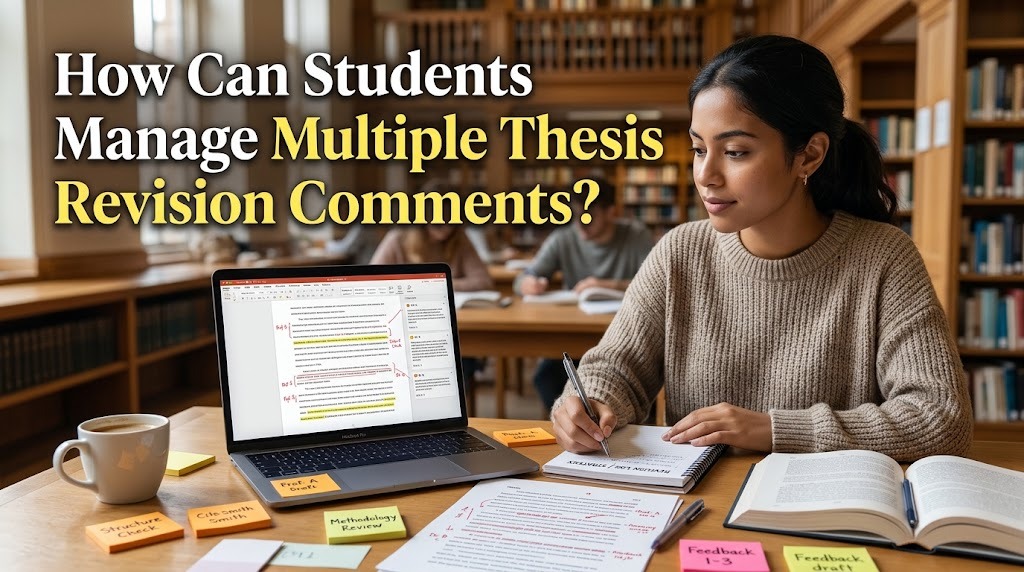
Receiving multiple thesis revision comments from supervisors or examiners can feel challenging, especially when the feedback covers several chapters and different aspects of the research. Students may need to correct the research background, improve theoretical explanations, adjust the methodology, or clarify the discussion of findings. Without an organized approach, it can be difficult to determine where to begin and how to ensure that every comment is addressed.
Managing several revision comments requires careful planning, clear communication, and consistent document review. Students should understand each instruction, organize corrections based on their importance, and track their progress throughout the process. With a structured method, the thesis revision process can become more manageable and less confusing.
COLLECT AND ORGANIZE ALL REVISION COMMENTS
The first step is to gather all comments received from supervisors and examiners in one place. Feedback may come from consultation notes, annotated documents, emails, or examination forms. Keeping these comments together helps students avoid overlooking important instructions or confusing feedback from different review sessions.
After collecting the comments, students can organize them according to the relevant thesis chapters or topics. For example, feedback about the research background can be grouped separately from comments about methodology, data analysis, and references. A structured list makes it easier to understand the total number of corrections and identify which sections require attention. It also provides a useful reference when reviewing the completed revisions.
PRIORITIZE COMMENTS BASED ON IMPORTANCE
Not all thesis revision comments have the same level of importance or complexity. Some involve minor improvements, such as correcting grammar or adjusting formatting, while others may affect the research questions, theoretical framework, or methodology. Students should identify which corrections have the greatest impact on the overall quality and consistency of the thesis.
Major revisions that influence several chapters generally need careful attention before minor technical adjustments are finalized. However, students should also consider approaching deadlines and any instructions that must be completed before the next consultation. Creating priority categories, such as high, medium, and low, can help students decide how to allocate their time. This approach prevents them from spending too much time on small details while more substantial issues remain unresolved.
USE A REVISION TABLE TO TRACK EVERY CORRECTION
A thesis revision table can help students monitor multiple comments systematically. The table may include the original feedback, the chapter or page concerned, the correction required, the action taken, and the completion status. Students can also add notes explaining how a particular comment has been addressed.
This method makes it easier to compare the supervisor's instructions with the revised document. It can also be useful during follow-up consultations because students can show which corrections have been completed and which still require clarification. If several people provide feedback, students may record the source of each comment to avoid confusion. Keeping an updated revision table provides a clear record of the work completed throughout the process.
MAKE CORRECTIONS WHILE MAINTAINING CONSISTENCY BETWEEN CHAPTERS
When revising several sections, students should consider how changes in one chapter may affect other parts of the thesis. For example, modifying the research objectives may require adjustments to the research questions, methodology, analysis, and conclusion. If students only correct the section mentioned in a comment, the document may contain inconsistent information.
Maintaining thesis consistency requires reviewing related sections after making substantial changes. Students should check whether the research title, objectives, theoretical framework, methods, and conclusions remain aligned. They should also ensure that newly added explanations are supported by appropriate academic references. Reviewing the connections between chapters helps prevent contradictions and improves the overall structure of the research.
DISCUSS UNCLEAR COMMENTS AND REVIEW THE FINAL DOCUMENT
Some revision comments may be difficult to interpret, particularly when they involve technical research concepts or require substantial changes. Instead of guessing what the supervisor means, students should ask for clarification during consultation or through the communication method agreed upon. They can explain which part is unclear and, if possible, present their understanding of the requested correction.
After completing the revisions, students should conduct a final thesis review. This includes checking every comment against the revised document, reviewing language and formatting, verifying citations, and ensuring that no important section has been overlooked. Students should also save an updated version of the document and maintain a record of changes. A careful final review can help identify incomplete corrections before the thesis is submitted again.
CONCLUSION
Students can manage multiple thesis revision comments by collecting feedback, organizing corrections, setting priorities, and using a revision table to monitor progress. They should also maintain consistency between chapters and communicate with supervisors whenever instructions are unclear. These steps help students understand the scope of the work and prevent important corrections from being overlooked.
The revision process becomes more manageable when students approach each correction systematically rather than trying to complete everything at once. By tracking changes, reviewing related sections, and checking the final document carefully, students can improve the quality of their research. Consistent planning and clear communication are important for completing thesis revisions effectively.
Recent Posts

Bagaimana Sistem SKS pada Program Kuliah... 22.11.2026/47 View

How Does Technology Make Daily Evaluation... 21.11.2026/74 View

Apa Strategi Menghadapi Kesenjangan antara Kompetensi... 21.11.2026/75 View

Mengapa Inventaris Aset Penting bagi Kelancaran... 21.11.2026/72 View

When Should Musicians Join a Record... 21.11.2026/75 View
