

How Can Students Master High Value Skills Before Graduating?
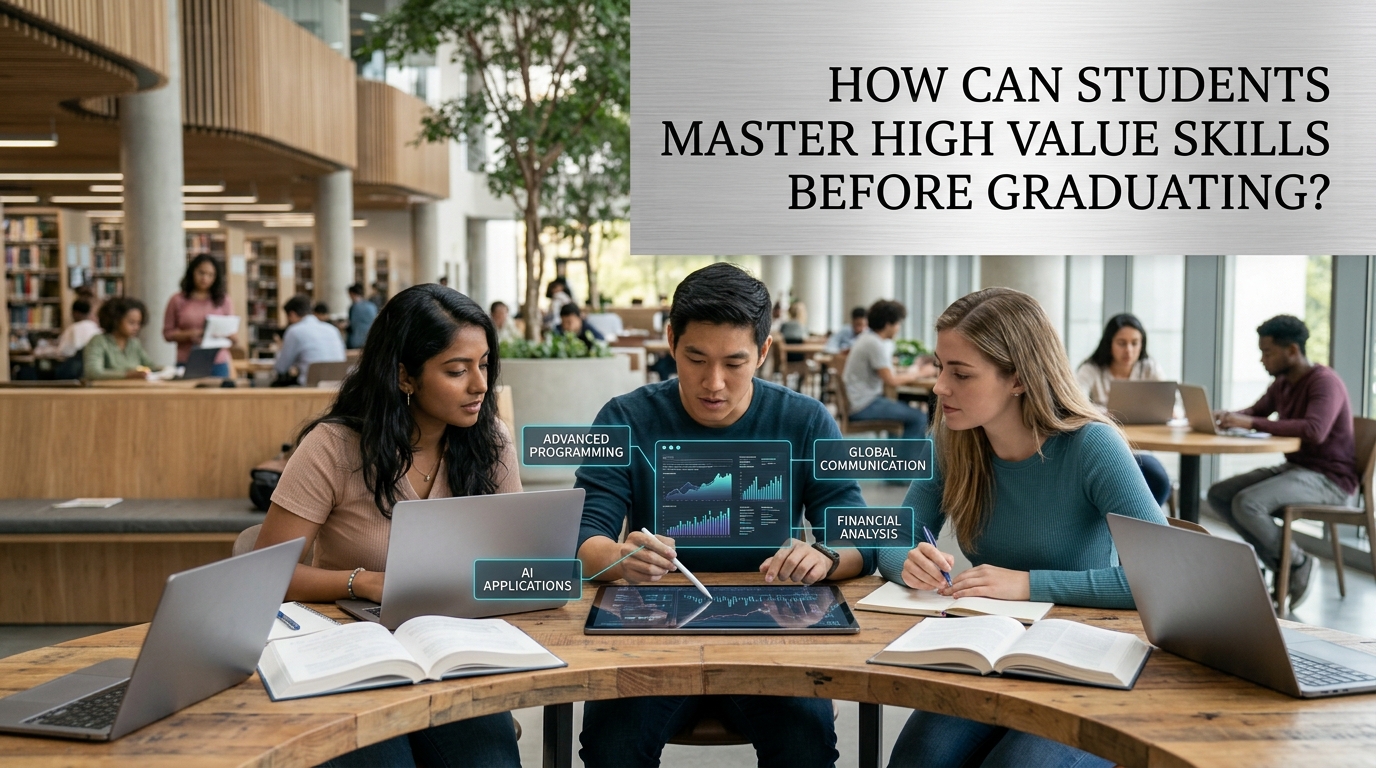
Graduating from university is an important milestone, but having a degree alone may not always be enough to succeed in today's competitive job market. Employers increasingly look for graduates who have practical abilities, strong communication, problem-solving skills, and the ability to adapt to changing workplace demands. Therefore, students need to prepare themselves by developing valuable skills before completing their education.
High-value skills are abilities that help individuals perform tasks effectively, solve real-world problems, and contribute to professional environments. These skills can improve career opportunities and help graduates become more confident when entering the workforce. By taking advantage of campus activities, internships, online courses, and practical projects, students can build a stronger foundation for their future careers.
1. IDENTIFYING THE MOST VALUABLE SKILLS FOR THE FUTURE
The first step in mastering high-value skills is understanding what abilities are needed in the modern workplace. Students should explore career opportunities and identify the competencies commonly required in their preferred industries. Some important skills include critical thinking, communication, digital literacy, leadership, teamwork, and problem-solving.
Students should also pay attention to changes in technology and industry demands. For example, knowledge of artificial intelligence, data analysis, and digital marketing can be useful in many professional fields. Choosing relevant skills based on personal interests and career goals makes the learning process more focused and effective.
2. IMPROVING COMMUNICATION AND PRESENTATION SKILLS
Communication is one of the most important abilities students need before graduation. Professionals must be able to express ideas clearly, listen to others, and share information in an understandable way. Good communication also helps individuals build positive relationships with colleagues, clients, and supervisors.
Students can develop these abilities by participating in class discussions, presentations, group assignments, and campus organizations. Practicing public speaking can also increase confidence when explaining ideas in front of an audience. Effective communication will help graduates become more prepared for interviews, professional meetings, and workplace collaboration.
3. DEVELOPING DIGITAL AND TECHNOLOGY SKILLS
Digital technology has become an essential part of almost every industry. Students should learn how to use productivity applications, digital communication platforms, and other tools relevant to their chosen careers. Basic knowledge of spreadsheets, document management, presentation software, and online collaboration can improve their work efficiency.
In addition, students can explore more advanced skills such as programming, artificial intelligence, cybersecurity, and data analysis. They do not need to master every technology available, but they should understand which tools are most useful for their professional goals. Digital literacy allows graduates to adapt more easily to modern working environments.
4. GAINING EXPERIENCE THROUGH INTERNSHIPS AND PROJECTS
Practical experience is an effective way to develop skills before graduation. Internships allow students to understand workplace responsibilities, professional communication, and industry expectations. They also provide opportunities to apply academic knowledge to real situations.
Besides internships, students can participate in research projects, business competitions, volunteering, or freelance activities. These experiences help them develop responsibility, teamwork, and problem-solving abilities. Building a portfolio of completed projects can also demonstrate practical competencies to potential employers.
5. BUILDING CRITICAL THINKING AND PROBLEM-SOLVING ABILITIES
Critical thinking helps students evaluate information, understand different perspectives, and make logical decisions. These abilities are important because professional environments often involve complex challenges that cannot be solved through memorization alone. Students need to learn how to identify problems, examine possible causes, and consider suitable solutions.
One way to improve these skills is by participating in discussions, case studies, research activities, and project-based learning. Students should also practice questioning information and using reliable evidence before reaching conclusions. Strong analytical thinking can help graduates make better decisions and handle professional responsibilities more effectively.
6. LEARNING LEADERSHIP AND TEAMWORK
Leadership and teamwork are valuable skills because many workplace activities require people to cooperate toward shared goals. Students can develop leadership abilities by becoming active members of student organizations, managing events, or coordinating group projects. These activities teach them how to organize tasks, communicate expectations, and take responsibility.
Teamwork also requires respect, patience, and the ability to appreciate different opinions. Students should learn how to contribute ideas while listening to suggestions from other team members. Leadership and collaboration can help graduates become reliable employees and prepare them for future management responsibilities.
7. TAKING ADVANTAGE OF ONLINE COURSES AND CERTIFICATIONS
Online learning provides students with flexible opportunities to develop additional competencies outside the classroom. Many educational platforms offer courses in business, technology, communication, design, and professional development. Students can choose subjects that support their academic interests and career plans.
Professional certifications can also demonstrate knowledge in specific areas, depending on the course provider and industry requirements. However, students should focus on learning useful abilities rather than collecting certificates without practical understanding. Combining online education with real-world practice can make their skills more valuable.
8. BUILDING A PROFESSIONAL NETWORK AND PERSONAL BRAND
Networking helps students connect with lecturers, alumni, industry professionals, and potential employers. These relationships can provide useful information about career opportunities, industry developments, and professional expectations. Students can start building networks by attending seminars, career fairs, workshops, and professional events.
Another important step is developing a positive personal brand. Students can create a professional LinkedIn profile, share relevant projects, and present their achievements clearly. A strong professional portfolio and network can help graduates demonstrate their abilities and become more visible to potential employers.
CONCLUSION
Mastering high-value skills before graduating is an important investment in students' future careers. Communication, digital literacy, critical thinking, leadership, teamwork, and practical experience can help graduates become more competitive in the job market.
Students should not wait until graduation to start preparing for professional life. They can begin by identifying relevant skills, joining practical activities, taking online courses, and building professional connections. Through consistent learning and continuous self-development, students can become more confident, adaptable, and ready to face the challenges of the modern workplace.
Recent Posts

Bagaimana Sistem SKS pada Program Kuliah... 22.11.2026/40 View

How Does Technology Make Daily Evaluation... 21.11.2026/71 View

Apa Strategi Menghadapi Kesenjangan antara Kompetensi... 21.11.2026/73 View

Mengapa Inventaris Aset Penting bagi Kelancaran... 21.11.2026/69 View

When Should Musicians Join a Record... 21.11.2026/73 View
